- All
- African projects
- assessment
- assessment selected projects
- Assessment selected projects 2
- Assessment selected projects 3
- Assessment selected projects 4
- ASTRA
- Cost Benefit Analysis
- Electric mobility and ITS
- Local Public Transport
- MOMOS
- planning
- planning selected projects
- planning selected projects 2
- planning selected projects 3
- planning selected projects 4
- planning selected projects 5
- projects
- Railways projects
- research
- research selected projects
- research selected projects 2
- research selected projects 3
- studies
- studies selected projects 1
- studies selected projects 2
- studies selected projects 3
- studies selected projects 4
- studies selected projects 5
- TRTingegneria
- TRUST
- urban mobility
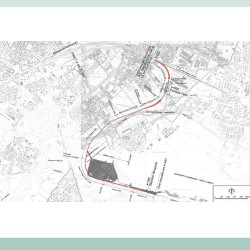
- Technical support in the drafting of the Territorial Plan of the Province of Piacenza (Piano Territoriale di Area Vasta) TRT has been commissioned by the Province of Piacenza to provide technical support in the drafting of the Territorial Plan of the Province (PTAV) in line with the new Regional Planning Law No. 24/2017. Project activities included the definition and evaluation of alternative mobility and transport scenarios within the time frame of the Territorial Plan of Piacenza Province. In this context, the main tasks concerned: the update of the knowledge framework of the mobility and transport system in the Province of Piacenza; the development of a reference scenario and two alternative evolving scenarios. The first, tendential, includes interventions planned and not implemented by the current Territorial Plan (PTCP). The second scenario is based on a selection of interventions and measures that respond to the ASI (Avoid, Shift, Improve) strategy, including measures to manage mobility demand and in favour of alternative modes to motorized private vehicles; the evaluation of alternative scenarios, both from a transport and environmental perspective, was also carried out with the support of the traffic simulation model at the 2032 horizon; the provision of technical support to the Public Administration in the interaction with the stakeholders; the providing of technical contribution in the drafting of intermediate and final reports. The final document includes four preliminary modelling tests to identify the best route alternative for the so-called “median road“ of the province.. A further test concerned the complex interconnection system between motorways A21, A1 and State Road SS9. The intervention includes: a new connection between the Rottofreno tollgate on the A21 and the Basso Lodigiano tollgate on the A1, the downgrading of the Piacenza section of the A21, a new bridge over the Po river as a variant to the SS9. The evaluation of these alternatives included transport, environmental and territorial aspects, also thanks to the support of Politecnica. For more information visit the official website – Only available in italian
- City of Bergamo – New railway station in the strategic urban context of the new exhibition center As part of the transformation area “Fiera Nuova-Boccaleone Park” – At_e / s29 – UMI 2, to be implemented in the strategic urban context of the “New Exhibition Center” of the Municipality of Bergamo, TRT has provided transport consultancy specialized for the feasibility study for the construction of a railway station along the new Bergamo – Airport railway line. TRT led the study alongside a team of railway design experts (GVG Engineering) in the development in the development of the plans, profiles and railway sections for the new railway station. The new station will be located in an intermediate position, on the edge of the Bergamo Exhibition Center, ensuring a direct connection from the city station and the Bergamo Orio al Serio Airport. The station will be in a viaduct, ensuring the east-west permeability of both the road network and the cycle-pedestrian connections as well as providing a new interchange parking hub serving the airport the urban area and the exhibition center.
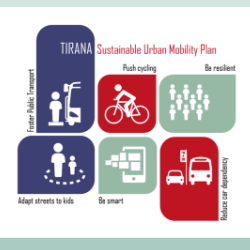
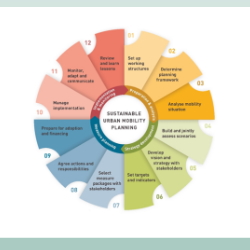
- The first Sustainable Urban Mobility Plan for the capital city of Tirana, Albania The study is part of a larger initiative called SUMSEEC II (Energy-efficient Urban Mobility in South-eastern European Countries), funded by the German Ministry for Economic Cooperation and implemented by GIZ. TRT supported the Municipality of Tirana in the development of their first SUMP, according to the latest European guidelines. The process started in October 2019, and was finalized in July 2020. The planning process pursued a strong collaboration with the different city departments and local stakeholders. Four large workshop were organized at relevant milestones, to guarantee the participatory approach that characterize a SUMP. The first part of the process was aimed at building a comprehensive analysis of the current city status based on previous studies, evidences collected on the field, discussions and feedbacks gathered from the stakeholders in dedicated workshop and surveys held until January 2020. The second part, focused on the drafting of the planning document itself, was accompanied by series of online focus groups and questionnaires that guaranteed and facilitated the participative process despite the lockdown in Tirana during the COVID-19 pandemic outbreak in Spring 2020. The proposed planning scenario is the result of the assessment of three alternative options by means of a Multi-Criteria Analysis. It includes a set of coordinated measures structured in six key strategies identified as founding policy pillars that respond to Tirana’s mobility challenges. For more information “SUMP for the City of Tirana”. Case study published on Eltis Platform
- Drafting of Operational tools guidelines for the promotion of sustainable mobility measures. PRIT (Integrated Regional Transport Plan) guidelines update The support provided by TRT for the drafting of the Guidelines to boost sustainable innovative mobility in the urban areas is part of the definition of the new Integrated Regional Transport Plan (PRIT 2025) of the Emilia-Romagna Region. The objective of the guidelines prepared by the Regional Administration Territorial Planning Service is to provide support to local administrations in the their preparation of Sustainable Urban Mobility Plans (SUMP), specifically guiding them on matters like: The need of collecting quantitative and qualitative data in order to develop a framework to support the analysis the mobility demand trends and characteristics, also taking into account the pandemic crisis. The analysis of innovative tools and actions related to the concept of sustainable mobility planning. These include ITS tools, use of big data in the context of mobility forecast studies, dissemination and enhancement actions related to sharing mobility and self driving vehicles. The development of collective services more suitable for intercepting the real demand for mobility, such as on-demand transport services and Mobility as a Service models. The guidelines presented in June 2021 are accompanied by an evaluation structure (MOMOS Model) capable of recognizing the sustainability dimension of the covered actions. For more information: It is possible to download the technical fact-sheets on the Regional government website (only available in Italian) The Emilia-Romagna Region presented the results of the project in the conference “Planning transport: PRIT2025 and sustainable mobility” held on 10 November 2022 in the Aula Magna of the regional headquarters. The slides and the conference program are available here.
- Implementation and monitoring of the Sustainable Urban Mobility Plan of the city of Parma During the year 2019 the Master Mobility Plan coordinated the strategies of the SUMP implementation through the formation of “thematic tables” participated by external experts and by members the Mobility Sector of Parma Municipality. The “thematic tables” included 4 main areas: cycling, urban goods logistics, public transport and ITS. Furthermore the activities of the Master Mobility Plan were oriented towards the development of the first steps for the implementation of the urban area Low Emission Zone (LEZ). The effort was to present the LEZ as a permanent easy to apply and understand measure aimed at overcoming the logic of temporary and emergency initiatives to improve air quality. The assignment also provided for the coordination of the monitoring activities of the SUMP: These activities consisted in the collection and systemization of mobility trends data in Parma over the past 2-3 years and included a field surveys with traffic counts on the urban radials, on the main intersections and on cycling mobility. TRT was also responsible of the drafting of the Sustainable Urban Mobility Plan and the General Urban Traffic Plan of the city of Parma.
- Training course on Sustainable Urban Mobility Plans for five Western Balkan countries TRT was selected by GIZ (the German Cooperation) to design and manage a training course targeted to urban mobility experts, public officials and local practitioners from five different Western Balkan countries (Serbia, Bosnia Herzegovina, North Macedonia, Montenegro, Albania). The training programme was designed as an intense, full-time, one-week long, interactive course (“Boot Camp”). It was held in May 2019 in Podgorica, Montenegro, with the participation of 25 trainees. Participants were experts in the field of traffic, urban or strategic planning, from local self-governances, academia, relevant NGOs or similar. The training course had two main goals: i) to improve the knowledge and to increasing the capacities of the participants, in order to enable them to support a Sustainable Urban Mobility Plans (SUMP) development process in line with the ELTIS European guidelines; ii) to select potential candidates for a “regional expert pool” to be established by GIZ in the Balkan countries. in the Balkan countries. Activities performed by TRT included the development of the programme, the drafting of training materials, the management of the sessions on site with two experienced trainers, and the final evaluation of the proficiency of participants.
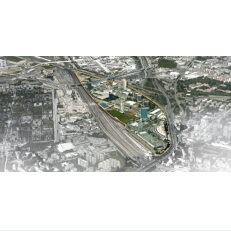
- Study for the definition of sustainable regeneration strategies in Stephenson intermodal urban node (Milano) TRT has lied down the transport strategy supporting the sustainable urban regeneration of Stephenson area coordinate with the surrounding developing district of Expo area. The study encompasses a deep analysis of accessibility and potential impact at socio-economic and demographic scale induced by the introduction of a new rail passenger service into Stephenson area. The strategy include the redefinition of intermodal urban role for Stephenson area by introducing new railway connection and station within the area and the related road connections for increasing the accessibility to the area. This include: Interchange parking area with slot dimensioning Bus line path and stops including planning of new service lines Pedestrian and cycling connection
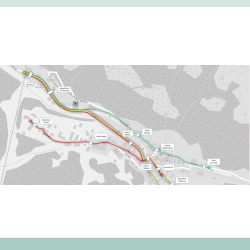
- Santa Caterina Valfurva – Smart Territory – Autofree The assistance for the implementation of the Santa Caterina Smart Territory strategy is focused on the Santa Caterina car-free project. The activities, which take place in collaboration with Ambiente Italia (leader) and Polinomia, concern four points: Parking policy; Definition of practical interventions on urban furniture; Ski Bus service provision; Strategies for implementing interventions to limit vehicles access to the road to Forni, second largest regional alpine glacier. TRT was in charge of putting in place solutions for vehicle traffic reduction in the tourist resort of Santa Caterina, through the design of public transport services that guarantee access to resident and tourists. Moreover, TRT contributed to the identification of possible solutions for the progressive closure to traffic of the Forni’s road (from Santa Caterina to Forni Glacier), through measures of regulation and/or pricing. Both strategies aim to reduce the traffic that crosses the center of Santa Caterina, increasing the environmental quality and the tourist attractiveness of the town.
- Sustainable Urban Mobility Plan (SUMP) and the Urban Traffic Plan (PUT) of the Municipality of Piacenza, complemented/integrated by the Strategic Environmental Assessment (SEA) The Municipality of Piacenza (102,000 inhabitants approx.) has commissioned TRT Trasporti e Territorio, through a public tender, to draft the Sustainable Urban Mobility Plan and the Urban Transport Plan of the city of Piacenza. The drafting of the SUMP of Piacenza was developed in accordance with the ELTIS’ methodology and, at the national level, with the guidelines issued by the Ministry of Infrastructure and Transport (Decree August 4, 2017). The SUMP was launched in October 2018 and it consists of the following activities: updating of the local mobility and planning context; evaluation of the current scenario (diagnostic framework and SWOT analysis) and definition of general and specific objectives and indicators; elaboration of the Plan and quantification of resources, including the identification of alternative scenarios (RS and SP), the ex-ante evaluation (technical, economic and environmental), the quantification of financial resources and the definition of the monitoring system; adoption and approval of the plan. In parallel, a traffic simulation tool was developed for technical, environmental and economic assessment. A crucial element of the Plan’s drafting process was the participatory process, which included: i) a survey aimed at those who live, work and study in Piacenza, with the dual purpose to define the transport demand and to know the needs of those who move daily across the city; ii) thematic and territorial focus groups; iii) informal evenings to explain the Plan to residents; iv) a final conference. The Plan was subjected to Strategic Environmental Assessment, adopted with the Municipal Council Resolution n.2020 / 20 – of 24/01/2020 and approved by the City Council Resolution n.57 of 28/12/2020. Tavola SP_05, Scenario di Piano – Ciclabilità For more information Documents available on comune.piacenza.it (only available in italian) “Sustainable Mobility Planning in Piacenza, Italy”. Case study published on Eltis Platform Related projects Monitoring Report of the Sustainable Urban Mobility Plan of the Municipality of Piacenza [tw_button icon=”” link=”https://www.trt.it/archivio-progetti/” size=”small” rounded=”false” style=”flat” hover=”default” color=”#223468″ target=”_self”]Projects[/tw_button]