- All
- African projects
- assessment
- assessment selected projects
- Assessment selected projects 2
- Assessment selected projects 3
- Assessment selected projects 4
- ASTRA
- Cost Benefit Analysis
- Electric mobility and ITS
- Local Public Transport
- MOMOS
- planning
- planning selected projects
- planning selected projects 2
- planning selected projects 3
- planning selected projects 4
- planning selected projects 5
- projects
- Railways projects
- research
- research selected projects
- research selected projects 2
- research selected projects 3
- studies
- studies selected projects 1
- studies selected projects 2
- studies selected projects 3
- studies selected projects 4
- studies selected projects 5
- TRTingegneria
- TRUST
- urban mobility
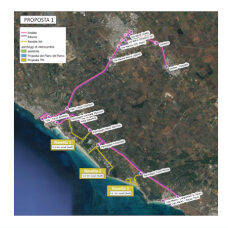
- Design and technical assistance for the implementation and tendering of a seasonal public transport service in the Municipality of Ugento (Lecce, Italy) TRTIngegneria was commissioned by the municipality of Ugento to support the definition of a public transport service to be provided during the summer months to connect all the coastal localities in its territory (Torre San Giovanni, Fontanelle, Torre Mozza and Torre Vado), as well as between the more inland areas (the urban centre and the Gemini hamlet) and the coast. The activities concern in particular the establishment of a new municipal bus line and some shuttle services, the revision of the extra-urban public transport services already offered in the area, as well as the preparation of tender documents for the assignment of the new seasonal transport service. The design of the new bus line includes the identification and verification of stopping points, the definition of routes and the operating schedule. The new service is proposed as an integration with the current offer of extra-urban services connecting Ugento with the municipalities of: Casarano, Gallipoli and Santa Maria di Leuca as well as with the planned TAD flexible transport system of the Area Interna Sud Salento. The service will be tested during the 2023 tourist season in order to calibrate the final tender scheme and prepare the subsequent multi-year tender. TRTIngegneria also provided indications with respect to the overall mobility system of the coastal area, verifying the offer of parking in dedicated parking areas, parking on the road and the forecast of a shuttle system from the parking areas and stops to the access to the sea and bathing facilities
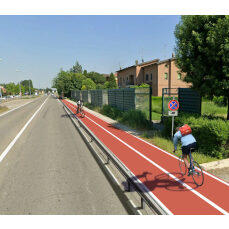
- Technical-economic feasibility project for the bicycle path along via Emilia Ovest in the section between viale Virgilio and the village of Marzaglia TRTIngegneria was selected after a call for tenders to draw up a technical-economic feasibility project for a bicycle infrastructure parallel to the SS9 via Emilia Ovest in the Modena area. The project infrastructure, envisaged by PUMS2030, connects the roundabout between the SS9 and viale Virgilio with the village of Marzaglia, on the border with the municipality of Rubiera. In the road junction of viale Virgilio there are some existing and planned cycle paths that allow to reach the centre of Modena and the productive areas located on the north side of via Emilia Ovest. The cycle path passes through different contexts, both urban, peri-urban and country, integrating into already partly urbanised, acting as a reconnecting element for slow and sustainable mobility in the western sector of Modena. Along its route it encounters several elements that constrain its path, in particular a section already built (at the railway underground passage under the standard Bologna-Milan line), a heritage-listed building, the consolidated urban grid of Cittanova town as well as the presence of shops and important mobility infrastructures, such as a split-level intersection for access to the Grandemilia shopping centre. The project follows the indications for the technical-economic feasibility project indicated in Article 23 of Legislative Decree 50/2016. The body of the project consists of the general documentation with the technical report, the preliminary maintenance plan, the plan for the use of excavated earth, the economic framework, the summary calculation of expenditure, the measures aimed at protecting health and safety in the workplace, and the pre-feasibility studies for the environment, landscape and prior verification of archaeological interest. Then there is a non-technical summary and the general report that contains the regulatory and planning references, the description of the state of affairs, the description and evaluation of the different alternatives with their relative interferences, the availability of areas, compliance with the DNSH principle, the timetable and the economic and financial aspects. Another part of the project body are the graphic drawings. These include the general framework chorography, the planimetry of the actual and project state (the latter covering all the project alternatives on topographical relief, on photomosaic and on the excerpts of the territorial planning instruments), the longitudinal profile, the road signs, the detailed plan of the interferences with the plants and underground services, the description of the special manufactured articles and structures, the standard sections, the current cross sections, the general indication of the work-site areas and the photo-insertions.
- MIMOSA: Feasibility study on the accessibility optimization of passengers with reduced mobility (PRM) in the ports of Ancona and Pesaro The MIMOSA project (MarItime and Multimodal Sustainable pAssenger transport solutions and services) aims to improve the quality, safety, and environmental sustainability of marine and coastal transport services and nodes by promoting multimodality in the Programme area. Within this project, TRT Trasporti e Territorio has been appointed by the Central Adriatic Ports Authority to conduct an analysis of accessibility optimization for people with reduced mobility (PRMs) in the ports of Ancona and Pesaro. The purpose of the study is to analyze the current state of accessible infrastructure and services and to identify possible improvements to the available services for passengers with physical, sensory (hearing and visual impairments), and mental-learning disabilities in the ports of Ancona and Pesaro, in accordance with the legislative framework.. In order to carry out the study, several activities have been undertaken, including fieldwork and mapping activities which allowed to map and verify the current status of accessible mobility infrastructures and services for passengers with disabilities in the ports of Ancona and Pesaro. Furthermore, a participatory process was conducted based on individual interviews and final plenary meetings with local stakeholders, such as institutional bodies, maritime and local public transport operators, and associations of PRMs. The preliminary results that emerged from the fieldwork and the participatory process activities allowed to perform a SWOT analysis, identifying strengths, weaknesses, opportunities and threats. Then, the study has collected a series of national and international best practices to further identify possible improvements to the infrastructures and services currently offered to PRMs in the ports. Finally, a web accessibility analysis was conducted and a dedicated webpage on accessible transport infrastructures and services currently available in the ports of Ancona and Pesaro was developed. The first results emerging from the study are: the provision of a dedicated transport service for PRMs connecting the port of Ancona to the station and the airport; and the integration of the study in the Plan for the Removal of Architectural Barriers (PEBA) of the Municipality of Pesaro.
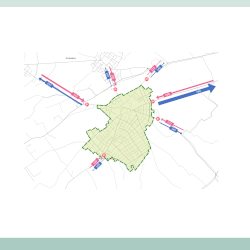
- General Urban Traffic Plan of Monteroni di Lecce The VI Municipal Police Sector of the City of Monteroni di Lecce has assigned TRT Trasporti e Territorio S.r.l. the task of drafting the General Urban Traffic Plan, a task formalised through executive determination no. 1083/RG of 31/12/2021. The development of the traffic plan of Monteroni will follow the indications contained in the Italian ministerial directives of 1995 and the most recent updates of “Nuovo Codice della Strada” (the Italian traffic code), which provide for the implementation of useful tools to improve the safety of alternative modes of transport and of weaker users. This is a short-term implementation tool aimed at achieving improvements in traffic conditions and road safety, with the reduction of noise and air pollution and the containment of energy consumption while respecting environmental values. The traffic plan is divided into two parts. The first includes the cognitive framework with the aim of describing the current state of the city’s traffic system. Our analysis includes: regulatory sources; the framework of supra-local and local planning and programming; the description of the territorial structure and localisation of mobility attractor poles; the description of transport networks supply and services, including the road network, parking, public transport and the bicycle network; traffic demand; environmental and social impacts related to the mobility system. On the basis of the indications coming from the cognitive framework, the second phase will lead to the identification of objectives and criteria for the Plan’s interventions. The various aspects of the Plan will be developed, with special focus on topics such as road classification (including E bis and F bis roads; cycle routes), school zones and the perimeter of the Zone of Special Urban Importance, as well as the main critical junctions.
- Sustainable Urban Mobility Plan (SUMP) of Syracuse, Italy, and di Siracusa and related sector insights Following a tender procedure, the Municipality of Syracuse commissioned to Sintagma and TRT Ingegneria to update the Sustainable Urban Mobility Plan (SUMP), which the city adopted in 2019. SUMP development is divided into two phases. In the first one, the cognitive framework was reconstructed, updating the mobility system with regard to its current state. In particular, the planning-programmatic framework at regional, provincial and local level, the territorial and socio-economic framework of the plan area, the supply of transport networks and services, the demand for mobility and the social (accident rate) and environmental (atmospheric pollutants, fossil fuel consumption, etc.) impacts determined by the mobility system were defined. The second phase, which is currently being drafted, consists of the drafting of the Plan proposal, which will take into account the results of the SWOT analysis (in particular, the identification of critical issues and opportunities), the identification of the objectives and strategies of the PUMS, shared with the structures of the public administration. Parallel to the first phase and during the second phase, the participation process has been developed with the involvement of citizens and users of the city in the definition of the proposed Plan.. Participation activities have been organised through an extensive communication campaign, involving the direct involvement of Syracuse citizens, who are called upon to give their input by filling in an online questionnaire, thanks to which it is possible to investigate the mobility habits of the population and report any proposals. To complete the process, meetings dedicated to stakeholders and citizens have been organised to present the Plan document. Subsequently, accompanying the PUMS document, the new General Urban Traffic Plan will also be drafted, together with specific sectoral insights on particularly important topics such as, for example, mobility of all for all, home-school mobility, electric mobility.. For further content visit siracusapums.it (in italian) which contains the documents produced and presents the modalities of participation.
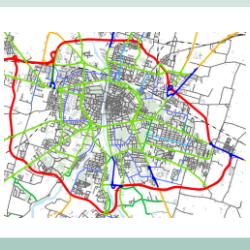
- Drafting of the General Urban Traffic Plan (PGTU) for the city of Parma The Municipality of Parma entrusted TRT with the service of drafting the General Urban Traffic Plan (PGTU) with the executive determination n. DD-2020-2813 of 23/12/2020. TRT presented the proposed Plan that is awaiting adoption and approval by the Municipality of Parma. Parma PGTU di Parma is structured as an implementation and short-term tool of the Sustainable Urban Mobility Plan (SUMP), a ten-year strategic instrument that the city of Parma adopted in 2017. TRT was also responsible of the drafting of the Sustainable Urban Mobility Plan of the city of Parma and, in 2019, was commissioned to coordinate the implementation and monitoring of Parma’s SUMP Parma PGTU follows the ministerial directives of 1995 and the subsequent updates of the New Highway Code, which provide guidance on the plan’s action themes, with indications on both transport supply and demand. The TMP was developed in two phases. The first phase reconstructed an updated knowledge framework of the mobility system, delving into its key aspects: the regulatory framework; the planning and programming framework, including the status of implementation of the current PUMS; the provision of transport networks and services, including the existing road network and classification as well as access regulation and zones 30; the roadside, in-structure and interchange parking system; motorised urban public transport; cycling and sharing services; mobility management actions; transport demand; the social and environmental impacts of the mobility system. The second phase was developed from the reading of the cognitive framework and the selection of objectives identified by ministerial directives. On this basis, the PGTU identified short-term measures inferred from those foreseen by the SUMP (2017) and updated taking into account the new opportunities introduced in the last two years as measures in favour of sustainable mobility. In particular, the topics covered by the Parma PGTU include: a new functional classification of the network, adapted to the recent changes to the road network and the traffic calming measures recently introduced; streets upgrading, securing roads, regulating access and moderating interventions (Zone 30, school roads, etc.); the establishment of “Area Verde” (Green Area), a Low Emission Zone covering the urbanised territory of Parma and the Blue Area (ZTL), as a revision of the system for regulating access to the urban and central area; the revision of the network of urban public transport services and closer modal integration with the bicycle network; parking policy (supply, regulation and pricing); the improvement of cycling through the introduction of cycle roads and routes, the realisation of measures for widespread cycling (Zone 30) and the implementation of new sharing and micro-mobility services.
- Sustainable Urban Mobility Plan and Urban Plan for Cycling Mobility of the Metropolitan City of Naples The Metropolitan City of Naples has commissioned the temporary grouping of companies consisting of TRT Ingegneria (agent), Sintagma (Principal) and TPS Pro (agent) to draft the Sustainable Urban Mobility Plans (SUMP) and the related “Biciplan” (Urban Plan for Cycling Mobility). The SUMP is draft in accordance with the guidelines issued by the former MIT today MIMS. Launched in September 2021, the drafting of the SUMP involves several phases: Definition of the “territorial knowledge framework”; Definition of Plan targets and objectives; Definition of policies, strategies and actions; Construction of scenarios and definition of the Plan Proposal; VAS and VIA (strategic and impact – environmental assessments). Along the drafting, the participatory process plays a fundamental role in all the activities underpinning the SUMP according to its own Participation and Communication Plan. TRT contribution in the SUMP drafting includes – in addition to participation along the entire process of the Plan elaboration – the drafting of the Biciplan and two thematic studies: freight transport and urban logistics and transport of people with reduced mobility. The Urban Plan of Cycling Mobility (Biciplan) promotes the use of bicycles as a mode of transport for daily, touristic and recreational activities, improving the safety of cyclists. The Biciplan identifies the strategic metropolitan network with itineraries that connect, in synergy with public transport, the urban centres as well as main attraction and intermodal poles. Sustainable urban freight transport and logistics address the rationalization of freight transport on a metropolitan scale cutting negative impacts and externalities linked with the distribution and the transportation of goods in urban areas. Transport of people with reduced mobility analyses measures to ensure maximum accessibility, autonomy and ease of travel through universally accessible means by removing architectural and virtual barriers. The fundamental objective is the definition of coordinated actions concerning the structure of services, accessibility to transport infrastructures (railway and underground service stations, interchange parking lots, ports, airports, etc.) and the increased participation of people with reduced mobility to public spaces. For more information (only available in italian) Documenti consultabili sul sito del PUMS di Città Metropolitana di Napoli News (only available in italian) Napoli: Borrelli incontra progettisti del PUMS. Tra i temi il tram veloce per la zona Nord, 13 maggio 2022
- Prato SUMP monitoring report in accordance with the indicators of DM 396 of 28/08/2019 TRT was commissioned by the Municipality of Prato to draw up the SUMP monitoring report. The SUMP was approved by Municipal Council Resolution no. 51 of 2017. The activity consists in verifying the state of implementation of the measures foreseen in the Sustainable Urban Mobility Plan as of February 2022, while highlighting the evolution of the descriptive variables of urban mobility (demand, supply and environmental and social impacts). This is an activity envisaged by Article 4 of the Ministry’s PUMS Guidelines (DM 397/2017). In particular, the assignment includes the following macro activities: comparison of indicators selected from the current SUMP (approved in June the 1st, 2017) and therefore prior to the issuance of the SUMP Guidelines (DM No. 397 of 4 August 2017 and the subsequent update introduced by DM 396 of 28 August 2019); adjustment of the PUMS indicators to DM 396 of 28 August 2019 and their estimation to the base year (2017) and 2021; verification of the SUMP status of implementation as for the individual measures envisaged in the two Reference and Plan Scenarios; adaptation of SUMP objectives and actions; recommendations and indications for future updating of the current SUMP as set out in the 2017 Ministerial Guidelines. The first part of the activities consists of comparing all the indicators within the current SUMP with those indicated in DM 396 of 28/08/2019 in order to align the SUMP with the new ministerial provisions. Secondly, it verifies the status of implementation of the measures foreseen by the SUMP on the basis of the close interaction between TRT and the technical structures of the Municipal Administration, in order to account for the activity put in place during the 2017-2021 period in implementing the SUMP. The combination of these activities makes it possible, on the one hand, to estimate the trend of indicators representative of the PUMS objectives and, on the other, to understand the choices made by the Administration with respect to the implementation of the measures. Finally, the intersection of the two pieces of information makes it possible to give an account of the trend of the targets set by the SUMP and to modulate the Administration’s action accordingly through the implementation of the actions in favor of sustainable mobility envisaged by the SUMP and its subsequent update. TRT was also responsible of the drafting of the Sustainable Urban Mobility Plan, the Parking Master Plan and the Urban Traffic Plan of the city of Prato In 2022, TRT also drafted Prato’s e-Mobility Plan.
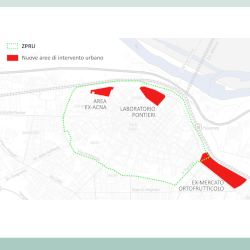
- Parking supply analysis in the Municipality of Piacenza in a medium-long term perspective The Municipality of Piacenza committed TRT Trasporti e Territorio for an analysis of the current parking supply and its evolution in the medium-long time frame in relation to the transformations that will affect the Municipality in the next 10 years future. The study was carried out according to the actions that the Municipality of Piacenza has developed recently, through an important revision of the mobility planning tools. Parking policies are of particular importance and may influence the entire mobility pattern of the city. In fact, last December 2020 the Municipal Council approved the Sustainable Urban Mobility Plan (SUMP) and the Urban Traffic Plan (the Italian so called “PUT” Piano Urbano del Traffico) is currently waiting for its adoption. The city’s parking supply is always evolving, also according to the urban planning development and the accessibility of new areas that have recently become available. It is therefore of particular importance to monitor the evolution of the parking supply analysing in detail the changes that may undergo according to the measures, strategies and choices of the city’s urban plans. Analyses have shown that the areas related to the development of the New Hospital, the Ex-ACNA area, the Ex-Laboratorio Pontieri and the Ex-Mercato Ortofrutticolo would lead to an increase of about 2,100-2,300 parking spaces available in the historical centre for a total of an increase by 31%-34%. [tw_button icon=”” link=”http://www.trt.it/en/Projects/” size=”small” rounded=”false” style=”flat” hover=”default” color=”#223468″ target=”_self”]Projects[/tw_button]