- All
- African projects
- assessment
- assessment selected projects
- Assessment selected projects 2
- Assessment selected projects 3
- Assessment selected projects 4
- ASTRA
- Cost Benefit Analysis
- Electric mobility and ITS
- MOMOS
- planning
- planning selected projects
- planning selected projects 2
- planning selected projects 3
- planning selected projects 4
- planning selected projects 5
- projects
- Railways projects
- research
- research selected projects
- research selected projects 2
- research selected projects 3
- studies
- studies selected projects 1
- studies selected projects 2
- studies selected projects 3
- studies selected projects 4
- studies selected projects 5
- TRTingegneria
- TRUST
- urban mobility
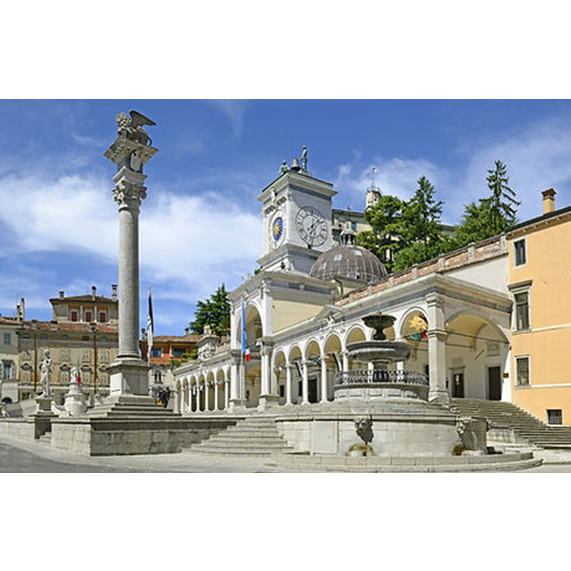
- Drafting of the new Sustainable Urban Mobility Plan and updating of the General Urban Traffic Plan for the city of Udine After a tender process, TRTIngegneria, in partnership with ISFORT Istituto Superiore di Formazione e Ricerca per i Trasporti, Ambiente Italia and GVG Engineering, was selected by the Municipality of Udine to draft the city’s first Sustainable Urban Mobility Plan (SUMP) and update its General Urban Traffic Plan (PGTU). With regard to the PUMS, the working group’s activities are structured according to the following methodological steps, in line with the 2019 guidelines of the Ministry of Transport and the new Regulation (EU) 2024/1679 (the city of Udine is a TEN-T urban node): All phases are accompanied by a broad and structured communication and participation campaign, which involves citizens and stakeholders through public meetings, technical round tables, focus groups and online questionnaires. The PGTU is developed on the basis of the objectives and measures defined in the short-term scenario of the PUMS, detailing the characteristics and feasibility of the individual actions. During the drafting of the PGTU, a series of urban traffic nodes are subject to detailed assessment through the application of a micro-dynamic simulation model (VISSIM) integrated with the multimodal model developed for the PUMS.
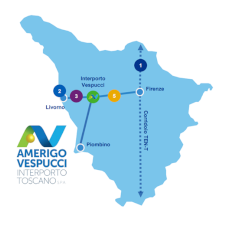
- Port of Livorno and Interporto Vespucci – Development and interaction between the Rail Plan and Darsena Europa The study, developed on behalf of Vega Engineering for the AdSP of the Northern Tyrrhenian Sea, was aimed at the functional analysis of the port – freight village system in the Livorno area to assess its potential and opportunities following the realisation and full implementation of the Piano del Ferro and the Darsena Europa. To this end, a cognitive framework was defined on the characteristics of supply and demand, current and future, of the port-freight village system and the definition of the functional evolution of the system in relation to the realisation of the planned infrastructural interventions around it. To support the definition of the port and freight village system, an analysis of the main Italian freight villages was also carried out in order to identify their characteristics, good practices and strong points to be transferred, if necessary, to the specific context of Livorno. Following the definition of the evolutionary scenarios, the infrastructural potential of the intermodal terminal was verified, and the future prospects of the entire port-freight village system were assessed, integrating this activity with the support of a simplified economic-financial analysis for the various evolutionary scenarios.
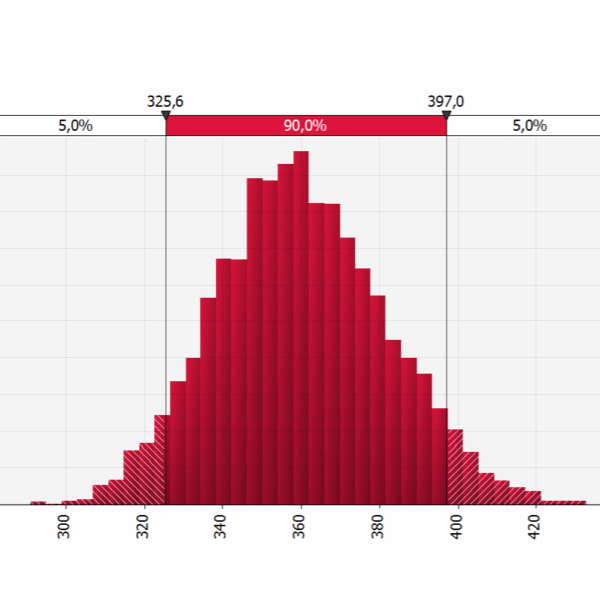
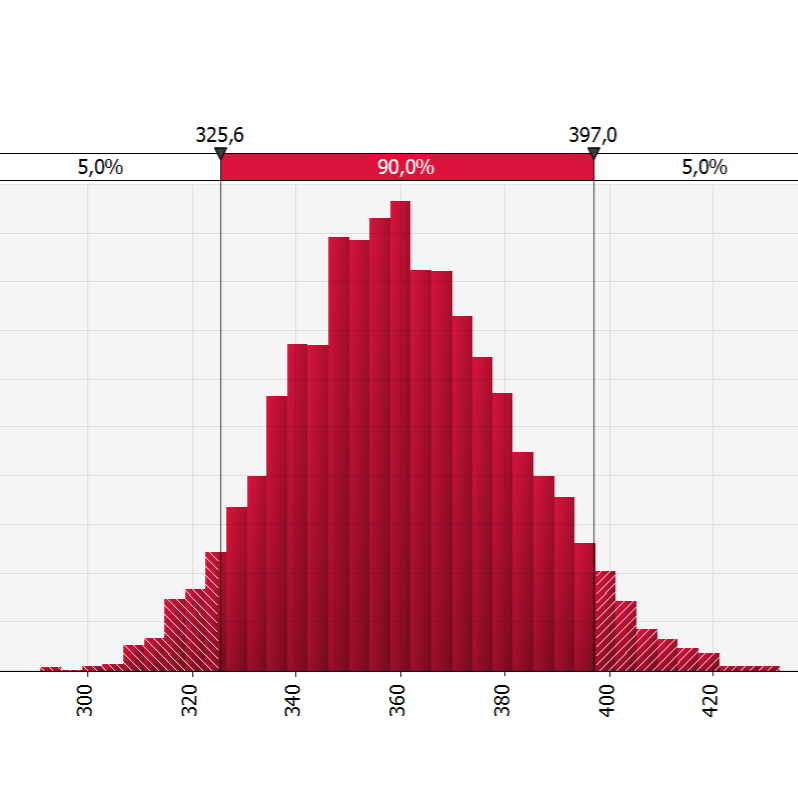
- Feasibility project of the mass transport system for the connection between the area of the railway station located in Latina Scalo and the city centre TRTingegneria as member of the consortium formed by Tecnosistem (leader) and One Works (partner), has been commissioned to draft the Technical and Economic Feasibility Project – PFTE – for the public transport connection between the railway station (located in Latina Scalo) and the city center of Latina. Within the project, TRTIngegneria is responsible for the preparation of the cost-benefit analysis and risk analyses. The Cost-Benefit Analysis evaluates, by comparison, different alternatives of the public transport lines’ routes through the calculation of their main economic indicators (Economic Net Present Value – ENPV and Economic Internal Rate of Return – EIRR). The basic approach of every evaluation is the comparison of different alternative scenarios against the reference scenario of no project implementation. The analysis is conducted considering the MIT Guidelines for the evaluation of investments in public works (2017) and the recent Addendums for the submission of applications for access to resources designated for Rapid Mass Transport by Fixed Installations and for the evaluation of railway projects (2021). As required by the ministerial guidelines, the economic analysis is accompanied by the qualitative risk analysis and the quantitative risk analysis, that has been developed using the specialized software (@Risk). The @Risk software employs Monte Carlo simulation, a statistical technique that involves running multiple simulations using random variables to generate possible outcomes for a decision or event. The quantitative risk analysis is enhanced with sensitivity analysis, scenario analysis, and their optimization. For the main statistical variables (e.g., investment costs, operational costs, benefits, etc.), the software allows choosing from numerous distribution curves and generates numerical and graphic outputs with the calculation of P90 and/or P80 and P50 probabilities for the results of the analyses conducted.
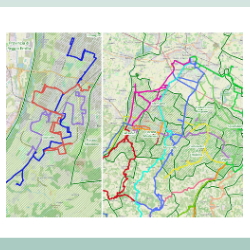
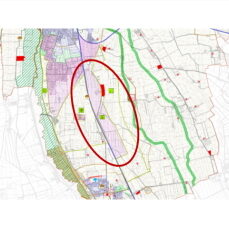
- Technical assistance to assess the potential demand for a public transport system in the ceramic district area and connections to Modena The Transport Infrastructure and Sustainable Mobility Sector – General Directorate for Territorial and Environmental Management of the Emilia-Romagna Region entrusted TRT Ingegneria with the “Technical assistance aimed at assessing the potential demand for a public transport system in the area of the ceramic district and connections with Modena”. The purpose of the study was to carry out an analysis of possible alternatives for the local public transport system along the corridor between Sassuolo and Vignola. In the first instance the study analysed the main characteristics of the area considering: current rail and road public transport offer, both in terms of routes and active services; travel demand based on available sources, both local and regional. In particular, reference was made to the Origin-Destination (OD) matrices estimated by PRIT2025, the PUMS of Modena and the Distretto Ceramico, as well as data on the demand transported by LPT services in the area; various sector planning documents currently in force, in order to better understand what is envisaged in the corridor under study. Starting from this knowledge base, the study identified five different alternatives for new public transport services between Sassuolo and Vignola for a subsequent preliminary assessment. The preliminary assessment cross-referenced demand data with supply data referring to the different systems (capacity, performance, costs, investment and management, etc.) and was complemented by a multi-criteria analysis that followed three main steps: definition of evaluation criteria and sub-criteria; estimation of the criteria weights through the involvement of local administrators and stakeholders by means of interviews; normalisation of the measurements to ensure comparability.
- Urban reorganization and landscape requalification sheet – Logistic hub in Isola della Scala The Municipality of Isola della Scala, affected by the provisions of the «Quadrante Europa Area Plan» (PAQE), which include – among others – the development of a logistics hub on its territory, has entrusted TRT Ingegneria with the service of drafting a Masterplan called «Urban reorganization and landscape requalification sheet». The focal point of the logistics hub is the provision for an intermodal centre, an infrastructure specialized in rail-to-rail and rail-to-road exchange functions located along the Verona-Bologna railway line (on the Brenner route and part of the TEN-T «Scandinavian-Mediterranean» corridor). Methodologically, the drafting process of the Masterplan is structured into the following macro-actions:
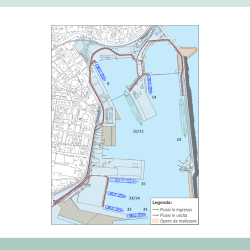
- Eastern Sicilian Sea Port System Authority – Study of the compatibility of the project forecasts of the Catania Port Master Plan with the growth of the reference traffic The study, carried out on behalf of the Port System Authority of the Eastern Sicilian Sea, provides a verification of the compatibility of the traffic expected in the coming years for the port of Catania with respect to what is foreseen by the new Port Master Plan (PMP). The need for this evaluation arises by the revision of the PMP by the Port System Authority of the Eastern Sicilian Sea, which provides for a substantial reorganization of the areas dedicated to the various types of traffic. The work was carried out through an analysis of current and future demand for both passenger and freight traffic and through an analysis of current and future infrastructure supply, based on the forecasts of the new PMP. For the purpose of assessing traffic compatibility, demand and supply data were then cross-referenced in order to identify possible criticalities and necessary alternative solutions. The study focused on traffic flows concerning Ro-Ro (and Ro-Pax) and cruise traffic, as these categories are predominant over the rest of port traffic. The compatibility verifications carried out concerned: the current and future Ro-Ro vehicle storage capacity based on the growth forecasts of this traffic; the loading/unloading capacity of Ro-Ro rolling stock based on currently available equipment; the ability to manage within the port area tourist buses serving cruise traffic, both in the current and future conditions, and in particular peak conditions; the impact that increased port traffic will have on the local road system. In conclusion, the infrastructure adjustment forecasts of the new PMP are consistent with the expected growth in demand, both on freight and passenger side.
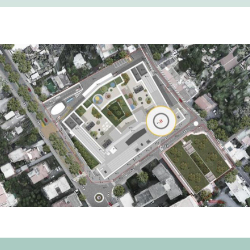
- New Hospital of “Penisola Sorrentina e della Costiera Amalfitana”, Municipality of Sant’Agnello (NA) – Transport Impact TRT Trasporti e Territorio was commissioned by Azienda Sanitaria Locale Napoli 3 Sud to carry out a Transport Impact Study related to the New Hospital of the Sorrento Peninsula and Amalfi Coast in the Municipality of Sant’Agnello. The aim of the project is to verify the impact generated on traffic in the study area, in order to highlight any critical issues on the future road network and identify possible solutions to mitigate them. The study also includes indications on parking. The traffic impact assessment analyzes the traffic flow conditions in two scenarios: the Existing Condition and, subsequently, the Project Scenario during the morning peak hour of a typical weekday. This assessment was conducted using a sophisticated dynamic micro-simulation tool for traffic flow, specifically implemented through PTV Vissim software. Through the modeling tool, the main transportation indicators necessary for evaluating the impact on flow quality compared to the current situation and identifying existing challenges were extracted and quantified. These indicators specifically include speed, delays, queue lengths, and Levels of Service. [tw_button icon=”” link=”http://www.trt.it/en/Projects/” size=”small” rounded=”false” style=”flat” hover=”default” color=”#223468″ target=”_self”]Projects[/tw_button]
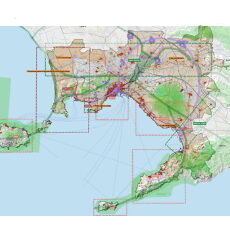
- Drafting mobility scenarios for the Territorial Plan for the Metropolitan City of Naples TRTIng, grouped with Telos, Ambiente Italia, Geores, Nemo and Sociolab, was in charge of drafting the Territorial Plan of the Metropolitan (PTM) City of Naples. In particular, TRT supports the working group in analyzing the current assets of mobility and transport infrastructures and in defining future policies and interventions taking into account the SUMP (Sustainable Urban Mobility Plan) of the Metropolitan City currently being adopted. The PTM of the Metropolitan City of Naples wants to be a shared territorial project to effectively pursue the objectives of sustainable development and the reduction of land consumption, strengthening and enhancing the infrastructure networks and public mobility systems in synergy with the SUMP. The plan focuses on urban regeneration and on the redevelopment of the existing building heritage, the upgrading and redevelopment of services and public spaces, the construction of the metropolitan ecological network as well as the protection and enhancement of all landscapes.
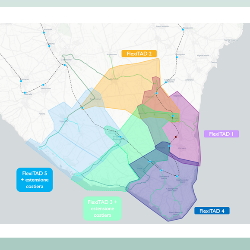
- Designing Demand Aligned Transportation System (TAD) of the South Salento Inland Area South Salento – Capo di Leuca is an association of 16 municipalities in Puglia located in the extreme southern tip of the province of Lecce. A territory among those selected by the National Strategy of Inner Areas (SNAI) in which about 125,000 people reside, characterized by phenomena of demographic decline and marginalization. One of the pivotal projects of the territorial cohesion and development strategy, financed through the SNAI with 3.5M€, involves the implementation of a “demand-aligned transport system (TAD)” based on three macro actions: the optimization of existing local public transport services to and from the inland area from the capital and other main service centers (suburban bus and rail service) the reorganization and enhancement of bus lines for connections between the municipalities in the area and between the hinterland and the coast the activation of an additional flexible collective transport service with minibuses (on demand or on call) TRT worked on the study to assess the mobility demand expressed by the area’s population and on the detailed design of the TAD system, including the definition of the operating and governance model and the features and functionality of the IT reservation platform. TAD study and project were based on the results of the European project HiReach, which investigated the issues of inclusive mobility and “mobility poverty” just in South Salento by also testing the first flexible transportation service in summer 2020 in collaboration with Ferrovie del Sud Est (Italian FS Group).