- All
- African projects
- assessment
- assessment selected projects
- Assessment selected projects 2
- Assessment selected projects 3
- Assessment selected projects 4
- ASTRA
- Cost Benefit Analysis
- Electric mobility and ITS
- Local Public Transport
- MOMOS
- planning
- planning selected projects
- planning selected projects 2
- planning selected projects 3
- planning selected projects 4
- planning selected projects 5
- projects
- Railways projects
- research
- research selected projects
- research selected projects 2
- research selected projects 3
- studies
- studies selected projects 1
- studies selected projects 2
- studies selected projects 3
- studies selected projects 4
- studies selected projects 5
- TRTingegneria
- TRUST
- urban mobility
- Flex-Rail – Paradigm shifts for railway – Technology uptake strategies for a lean, integrated and flexible railway system Shift2Rail (S2R, shift2rail.org) develops the building blocks for the future rail system, as envisaged in the Multi‐Annual Action Plan (MAAP). However, S2R’s work programmes need to be continuously monitored and updated to ensure that they optimally make use of the potential of new technological innovations and developments rising in the society, other industries and specifically within the rail sector. The Flex‐Rail project has the objective of identifying and assessing technological possibilities and innovative concepts that can shape rail operating and business models, aiming to contribute to the formulation of required paradigm shifts for the rail sector. In this view, Flex-Rail has the vision to target a lean, integrated and flexible railway system to stimulate further innovation of the rail sector and ensure that rail the services can address the future user needs. In particular, the Flex-Rail project addresses the following aspects: forecast the evolution of key fundamental technologies and identification of technical risks and potential blocking points; analysis of possible achievement of future impacts, through the definition and implementation of an impact assessment framework and modelling tool for rail scenario and transition pathways; formulation of technological concepts for a future rail system scenario developed on a participatory process involving the users of the rail system. Also, the scenarios build on the analysis of trends and innovations happening in other transport sectors; assessment of business feasibility and analysis of the current safety requirements. The Flex-Rail project develops an in‐depth overview of the state of the art of ideas and technological trends related to innovations of the transport industry and non‐transport sector technologies. As such, it constitutes a knowledge basis for subsequent activities focussed on (i) the definition of key performance indicators, which are key assessment components, (ii) the identification of gaps and development of future (rail system) transition pathways and (iii) the impact assessment of these transition pathways and scenarios. A dedicate interactive website has been created to explore technological trends an innovations relevant for rail transport(*). On these basis, a dedicated assessment framework has been designed to determine the impact of innovation packages and transition pathways on a number of key performance indicators for rail transport and per System Platform Demonstrator (SPD), as defined in S2R’s MAAP. A gap analysis for each SPD has been developed, considering the fulfilment of user’s requirements of rail and modal competitors and for different market segments. This has allowed to identify potential market segments and rail modal share growth. By evaluating such possible paradigm solutions, with aligning or enabling trends and technologies, future scenarios have been developed and assessed on the basis of an open-innovation process for collecting additional future requirements. Among its activities, Flex-Rail mapped projects, studies, initiatives and experts’ groups outputs related to new technologies and trends within and outside the transport sectors that may directly and indirectly have an influence on the rail transport sector. Mapping such these activities ensured coherence with the worldwide […]
- Modal shift in European transport: a way forward The study, developed for the TRAN committee of the European Parliament for the Year of Multimodality (2018), provides a comprehensive analysis of the progress and potential of modal shift in the EU from road to more sustainable transport modes, with respect to the policy objectives set in the 2011 White Paper on transport. The study focuses both on passenger and freight transport, highlighting the main barriers and factors that are hampering a more effective modal shift at EU level, providing policy recommendations for the way forward. The analysis carried out highlights that, at EU level, a modal shift from road to more sustainable transport means (rail, inland waterways, public transport) is taking place at a lower pace, compared to the objectives previously set. The relevant measures proposed, besides broadly confirming the actions so far undertaken, include the increase of investments on multimodal projects, the improvement of multimodal access and connectivity of all the EU regions and to enhance the use of ITS technologies. [tw_button icon=”” link=”https://www.trt.it/archivio-progetti/” size=”small” rounded=”false” style=”flat” hover=”default” color=”#223468″ target=”_self”]Projects[/tw_button]
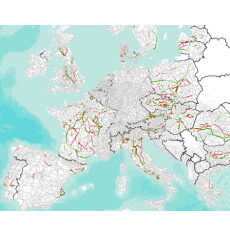
- Specific contract for long-term quantitative assessment of policy scenarios for the EU transport system Since 2016, TRT holds a framework contract for the simulation of long-term scenarios relating to the evolution of the transport system up to 2050 in EU 27 Member States. Scenarios and their variants are assessed with the use of European scale simulation models by TRT and E3Modelling. The modelling tools are: TRUST, for the quantification of traffic impacts on road and rail networks and of specific emissions on the European territory; PRIMES-TREMOVE, for the quantification of the evolution of the vehicle fleet of different transport modes and of the related energy consumption starting from changes in costs and/or legislation on technologies; GEM-E3, for the quantification of macroeconomic impacts. Studies carried out under the framework contract concern the development of baselines, scenarios and variants focusing on transport, energy and macroeconomic systems and providing results at EU member state level. Within the Framework Contract a new Reference Scenario 2020 which takes into account the expected medium-term impact of the COVID-19 outbreak has been produced.
- The Impact Assessment study, developed for the European Commission, aims to identify and assess the impacts of policy measures on facilitating the deployment of multimodal ITS services By enabling communication between vehicles, infrastructure and other road users, Cooperative Intelligent Transport Systems (C-ITS) can greatly improve safety and efficiency in road transport. Here is a look at some of the most recent developments in C-ITS and how quickly the technology could change the way we drive and interact with each other in traffic. The wide-scale deployment of Cooperative Intelligent Transport Systems could contribute to delivering several Commission’s objectives for transport, such as those on safety, reduced congestion, enhanced mobility and environmental performance. Together with Ricardo Energy&Environment, TRT supported the Directorate for Mobility and Transport of the European Commission in three different studies over a six year period. In 2020-2021 for the development of an Impact Assessment Support Study for the revision of the Intelligent Transport Systems Directive (2010/40/EU) to support the EC with evidence-based analysis. In 2017-2018 developing the legal framework required to support the widespread deployment of C-ITS services in Europe by 2019: a set of policy options and deployment scenarios were assessed with the European scale modelling tools ASTRA and TRUST for the analysis and comparison of the impacts in terms of economic, environmental and social indicators. In 2015 for the preparation of the Communication strategy and the Action plan for the deployment of C-ITS in Europe, providing the analysis of costs and potential benefits based on different scenarios. To support the analysis, the ASTRA and TRUST models are applied to provide quantitative indicators to evaluate the impacts of various policy options and deployment scenarios. For more information Final report of 2015 study Final report of 2017-2018 study
- Sustainable Transport Infrastructure Charging and Internalisation of Transport Externalities The objective of the study was to assess the extent to which the “user pays” and the “polluter pays” principles were implemented. This allowed the European Commission to take stock of the progress of Member States towards the goal of full internalisation of external and infrastructure costs of transport and to identify options for further internalisation. The scope of the study involved all external costs, all transport modes and, geographically, EU28 plus Norway, Switzerland, USA (2 States), Canada (2 provinces) and Japan. To realise the general objective and address the scope of the study information has been collected extensively about: infrastructure costs (i.e., investment, renewal and operating), transport-related charges, earmarking of fiscal revenues and compensations paid by the users. The analyses carried out in this study showed that the transport taxes and charges levied in the EU Member States are in general insufficient to fully internalise the external and infrastructure costs of transport. For most vehicle categories, only 15% to 25% of the external and infrastructure costs are covered by tax/charge revenues. The cost coverage ratio for passenger cars was found higher (about 50%), which was mainly because of the relatively high fuel and vehicle tax levels applied in (some of) the EU Member States for these vehicles. For inland waterways and maritime transport, much lower cost coverage ratios were found (i.e., 6% and 4%, respectively), reflecting the limited tax/charge burden levied on these modes in the EU. Even if one excludes fixed infrastructure costs from the analyses, the taxes and charges did not cover the external and variable infrastructure costs for most vehicle categories. High-speed trains are an exception, as for these trains the current taxes and charges did cover all external and variable infrastructure costs. This finding has been supported by the results of the analyses of the marginal social cost (MSC) coverage ratios. Despite the limitations of this analyses, it provides a first indication that there was a lack of charging in accordance with the MSC principle in the EU28. The revenues from transport taxes and charges in the EU28 were partly earmarked for expenditure for transport infrastructure. However, significant differences did exist between modes. For road transport, about 10% of the taxes/charges are earmarked, while for rail transport this is about 85%. For the other modes, only fragmented data on earmarking was identified, showing that (at least part of) the (air)port charges are earmarked to cover infrastructure expenditures. Although taxes and charges are efficient policy instruments to reduce the external costs of transport, the study recognize that other types of policy instruments and non-pricing policies (e.g., command-and-control measures and subsidies) may effectively complement tax and charge schemes, for example by providing EU-wide harmonised incentives to invest in certain reduction technologies. With regard to the activities of the study, TRT was responsible to (i) develop estimations of the external costs related to congestion for all transport modes (quantitatively for road), (ii) elaborate estimations of the infrastructure costs […]
- Study on the deployment of Cooperative ITS in Europe The objective of the study is to support the Commission Services in the preparation of a Communication and Roadmap on the deployment of cooperative ITS (С-ITS) in Europe, as part of the Commission’s digital single market strategy. In order to identify the most appropriate EU strategy, a set of credible scenarios for deployment have been developed. This clarify the benefits and costs of C-ITS to different actors as a result of different development pathways. TRT supported the cost-benefit analysis by modelling the impacts of deployment scenarios through the usage of European scale modelling tools ASTRA and TRUST.
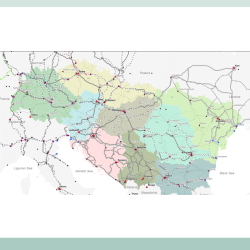
- Transport Study for the Danube Macro-Region The study was conceived for the EU Strategy, specifically for the Priority Area 1b of Mobility and Multimodality, addressing road, rail and air transport modes. The EU Strategy tackled mobility challenges and aimed at identifying opportunities to support the development of transport networks within the so-called Danube Macro-Region, whose geographical scope embraces fourteen European countries. The overall objective of the study was to create an integrated multimodal transport study. The tasks of the study were organised to cover the following activities: perform an extensive review of studies, at national and supranational level, and databases to collect information on the transport sectors, socio-economic characteristics, future demand projections as well as proposed transport projects. elaborate a baseline scenario of the Danube Macro-Region analysing (i) the transport demand and forecasts, (ii) physical and non-physical bottlenecks and (iii) environmental and safety issues. identify relevant linkages to ports emerged from the Inland Waterway 1a study that could be tied with the three modes considered. split the Danube Macro-Region in a number of Functional Regions to go beyond a country centric approach. evaluate current priorities and developments in linkage to the TEN-T core network corridors. carry out a stakeholders consultation for projects identification. The study identified 23 relevant projects representative of the broadest types of transport problems identified in the Danube Macro-Region, or that could be faced in the future. The projects were all considered relevant for the development of the transport sector and the final list stemmed from a long list of interventions proposed by the CNCs studies, the SEETO Multi Annual Plans, the updated REBIS study, as well as the national transport plans and strategies. Also, other projects proposed by interested stakeholders were taken into consideration. The proposed projects were selected taking into account relevant criteria: estimated investment costs, timing of implementation, ability to address bottlenecks or safety issues and geographical and modal distribution. The analysis rendered a comprehensive description of the proposed projects despite the fact that some information was missing. The approach followed and the screening and data collected for all the projects from the various studies, plans and strategies gathered, could be a useful starting point for further and specific analyses and for the identification of a lively pipeline of relevant projects in the region. The framework of the identified Functional Regions could give additional guidance in this sense.
- Support study for the impact assessment for the revision of EETS legislation The implementation of an interoperable electronic tolling systems (European Electronic Toll Service – EETS) was one of the objectives of the European Commission. This study supported the European Commission to assess the impact of the revision of Directive 2004/52/EC establishing the rules to introduce the electronic tolling systems for trucks and passengers cars, in order to automatize and simplify the revenues collection process. This study supported the impact assessment of the European Commission in: analysing and reporting the outcomes of the consultation exercises conducted as part of the ex-post evaluation and impact assessment. providing missing data and information to complete the problem definition defined by the Commission and validating the latter or proposing changes. assessing the impacts of a lack of interoperability comparing three policy options against a baseline scenario. The impacts were estimated for road users (i.e., trucks, coaches and private cars) and toll chargers, with regard to direct and indirect costs. calculating the impacts related to development scenarios with respect to cars, trucks and coaches travelling on international journeys. Overall, taking into account the effectiveness, the efficiency and the comparison of other impact categories, the support study identified the legislative approach (i.e., the option of introducing market correction entirely via legislation) as the one more likely to ensure a level playing field across a wider region and performing better than the self-regulated option. Based on the impact assessment carried out, the solution of both regulatory and market failures with legislative means emerged as the preferred option for future implementation. TRT was responsible for the following activities: development of the model for quantifying the cost and time-losses for road users due to lack of interoperability of electronic tolls in the EU; development of the baseline scenarios within the Excel-based model; development of the policy scenarios in the model and assessment of the economic impacts. For more information Final report – Support study for the Impact Assessment for the Revision of EETS Legislation (Directive 2004/52/EC & Decision 2009/750/EC)
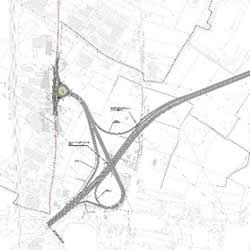
- Technical assessment of the 4th lot of the road bypass of the city of Treviso (Italy) The study concerns transport analysis performed by TRT for the Municipality of Treviso, with the aim of assessing the feasibility of Lot IV of Treviso road bypass. These transport analysis offer a transport assessment of the infrastructure usefulness, in relation to the urban mobility of the city and to the surrounding areas. Some of the potential benefits on the road network have been considered and estimated: decrease in traffic flows, reduction in travel times and potential improvements in traffic safety. In addition, the feasibility of a different layout has been assessed, i.e. the redesign the intersection of the new road with the regional route S.R.348, by envisaging a solution for its extension.