- All
- African projects
- assessment
- assessment selected projects
- Assessment selected projects 2
- Assessment selected projects 3
- Assessment selected projects 4
- ASTRA
- Cost Benefit Analysis
- Electric mobility and ITS
- Local Public Transport
- MOMOS
- planning
- planning selected projects
- planning selected projects 2
- planning selected projects 3
- planning selected projects 4
- planning selected projects 5
- projects
- Railways projects
- research
- research selected projects
- research selected projects 2
- research selected projects 3
- studies
- studies selected projects 1
- studies selected projects 2
- studies selected projects 3
- studies selected projects 4
- studies selected projects 5
- TRTingegneria
- TRUST
- urban mobility
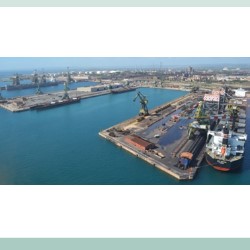
- Analysis of docks’ capacity in concession to Arcelor Mittal Spa in the port of Taranto TRT has been contracted to carry out an assessment of the actual capacity of the docks taking into account the current production level of the steel plant. The need for the analysis was expressed by the AdSP Management Committee in agreement with the local authorities. Due to the significant reduction that affected the plant’s production capacity in recent years with the main consequence of the inevitable decline in port traffic, the analysis was conducted with the main objective of responding to the need for rationalization and efficiency of the logistics and port infrastructure organization. During the study, statistical data and potential future scenarios for the relaunch of the plant were considered, highlighting the existing oversizing of the docks intended for raw materials and products handling, with respect to the actual operational needs. At the end of the analysis, strategies to promote the efficient use of the docks and the functional and environmental progress of the freight handling have been included. The need for solutions with reduced environmental impact, in line with the requirements and expected performance, was also stressed.
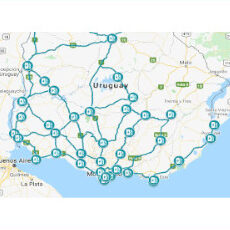
- Technical Assistance to Develop a Business Model to Finance and Scale-up E-Mobility in Uruguay Uruguay has an emerging electric vehicle sector, with good growth prospects and a strong policy agenda on fleet electrification. The country has committed to several mitigation measures in the transport sector, such as the introduction of electric vehicles in public transport, of utility electric vehicles and the installation of the first electrical route of Latin America connecting Colonia-Montevideo-Chui. The main objective of this project is to provide a policy and regulatory guide for a smooth transition to e-mobility in Uruguay and help the country to achieve an efficient and sustainable transport decarbonisation, through: Diagnosis of the current infrastructure and regulatory situation of e-mobility; Assessment of the several pilot projects already developed; Identification of desired business models and financing scheme for e-buses and private EVs; Propose a policy and regulatory guide to achieve overall e-mobility expansion targets in a time-line consistent with Uruguayan Nationally Determined Contributions (NDCs) to the Paris Agreement objectives; Propose a consistent and sustainable body of fiscal incentives and subsidies to favour and promote the previous e-mobility targets. The project is carried out by an international consortium led by MRC Consultants and Transaction Advisers (ES) and composed by TRT (IT) and SEG Ingeniería (UY). TRT is specifically involved in the project component related to private e-mobility, as well as in the fiscal impact assessment to proposed measures and policies. The project will provide a set of outputs including: E-bus financing alternative sschemes with estimated cost impact, timeframe, and impact on rolling stock; Assessment of long-term fiscal impact and ways to ensure efficiency and sustainability of alternative schemes; Regulatory and fiscal incentive schemes to sustainably increase use of private e-vehicles; Long-term fiscal impact analysis of incentives and tax revenues from foregone taxes, and elaborate recommendations; Two public workshops and related materials available for knowledge sharing.
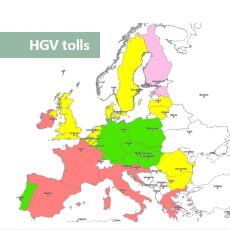
- Assessment of infrastructure costs calculation, tolls calculation and variation for heavy goods vehicles in Member States Directive 1999/62/EC and following amendments provide the legal framework for the application of toll charges to heavy vehicles in the EU, stipulating that road infrastructure charging shall be based on the recovery of infrastructure costs and of traffic-related externalities. Before implementing or amending tolling arrangements, Member States must provide the Commission with a detailed description of the new system. As contractor of the FWC, TRT verifies whether the tolling arrangement notified to the Commission fully respects the provisions of the Directive. The methodology applied for the assessment includes: determination of the scope of the tolling scheme notified by the Member State; identification of costs eligible to be recovered through tolls; allocation of infrastructure costs across vehicles categories; calculation of the weighted average tolls and cost recovery rate. In its assessment reports, TRT provides sound and evidence‐based analyses of the methodology used for infrastructure costs calculation, assessment of compliancy with the Directive’s core principles, as well as recommendations for possible modifications and improvements. Thus far TRT has assessed nine cases, including tolling arrangements from Italy, Spain, France, Bulgaria, Poland and Hungary.
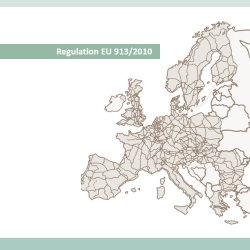
- Evaluation of Regulation (EU) No 913/2010 concerning a European rail network for competitive freight The evaluation support study covered all the provisions of the Regulation, all the European countries participating in a Rail Freight Corridor (RFC) and addressed the period from the establishment of the RFCs until 2020. The key overall challenge addressed by the Regulation is the need to improve the competitiveness of rail freight compared to other transport modes. The starting point of the Regulation is that the quality of the rail freight capacity provided by the infrastructure managers to the operators of international rail freight services needs to improve in order to make it happens. The study identified the impact of the Regulation by comparing the actual developments in the rail freight sector, i.e. with the Regulation in place, with respect to a baseline situation describing the likely developments that would have occurred without this policy intervention. The study also took into account the activities related to the RFCs going beyond the provisions of the Regulation, addressing for instance technical and operational interoperability along the RFCs. Furthermore, the study covered the activities of the rail sector undertaken in the period of analysis and contributing to the objectives of the Regulation. Practically, the study examined the relevance, effectiveness, efficiency, coherence and EU added value of the Regulation. The analysis was based on data collected from a range of primary and secondary sources and direct input from concerned stakeholders, collected using interviews and surveys with national authorities, the rail industry and the Commission’s open public consultation. The study has found that the Regulation has been implemented as far as the designation, the governance and the investment and management of the RFCs are concerned. The concerned stakeholders have fulfilled the provisions of the Regulation in a formal sense and within their actual scope. Viewed on its own, however, the Regulation has had a relatively limited impact in achieving the general, specific and operational objectives and has not led to a broad adoption of the tools, which have produced the intended effects only to a limited extent. TRT acted as leader of the study team built in partnership with M-Five (DE), MC-Vienna (AT) and TEPR (UK). TRT was responsible for (i) the design of the evaluation, (ii) the definition of an evaluation baseline, (iii) the analysis of the stakeholders consultation, (iv) the analysis of the effectiveness and efficiency of the Regulation and (v) the estimation of costs and benefits from the implementation. For more information Evaluation of EU regulation on TEN-T rail freight corridors, the study carried out by TRT. Go to the publication
- Evaluation of the White Paper ‘Roadmap to a single European transport area – towards a competitive and resource efficient transport system’ The 2011 Transport White Paper “Roadmap to a Single European Transport Area – Towards a competitive and resource efficient transport system” is the document with which the European Commission has outlined the strategy on the future EU transport system and which defines the political agenda for the next decades. The main objectives of the strategy are (i) reduce carbon dioxide emissions in transport to a level that is 60 % below that of 1990; (ii) reduce the transport sector’s dependence on oil; (iii) reduce congestion growth. The strategy is articulated through 40 action points and 132 initiatives aimed at achieving 10 operational targets at different time horizons (2030 and 2050). TRT, member of the consortium led by Ricardo NL and participated by M-Five, E3Modelling and TEPR is responsible for carrying out the mid-term evaluation of the effectiveness of the strategy in order to support the European Commission in identifying any proposals for revising the document. The purpose of the evaluation is to provide a robust evidence-based assessment of the White Paper and the actions following from it since its adoption in 2011. It examines the effectiveness, efficiency, coherence, relevance and EU added value of the White Paper in line with the Better Regulation Guidelines. The evaluation looks at the identified needs for transport policy, the objectives and goals set in the White Paper, the proposed initiatives, reached outcomes and their results, as well as the overall impact of the strategy since it was put in place. The results of the evaluation are intended to inform subsequent decisions of the Commission on possible priorities for the future agenda of EU transport policy. For more information Evaluation of the White Paper ‘Roadmap to a single European transport area – towards a competitive and resource efficient transport system’. Final report, March 2021
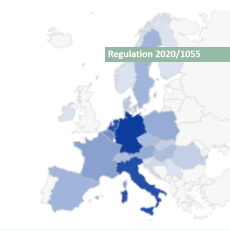
- Data gathering and analysis of the impacts of cabotage restrictions on combined transport road legs: support study for the evaluation of Regulation 2020/1055 (Mobility Package 1) Regulation 2020/1055 will allow Member States to apply the so-called cabotage restrictions to road legs of international combined transport operations if those road legs do not cross a border. The objective of the study was to provide the Commission with an analysis on the market impacts of the new restrictions. To that end, TRT conducted a survey among major combined transport organisers and terminal operators, covering all modal combinations and a wide range of Member States. The survey focused on the collection of data and information on combined transport road legs, and on the compliance strategies and impacts foreseen by the respondents. Based on the results of the survey, the study evaluated the quantitative impacts of cabotage restrictions on the European combined transport market, including estimates of the expected change in combined transport volumes, market share, modal shift and other transport activity indicators. According to the results, the rail-road segment would suffer more than the other modes considered (short sea shipping and inland navigation) mainly because of the tighter competition of the road only carriage. Relevance of the various compliance measures for CTOs (% of CT operations concerned by each measure) For more information Mobility Package 1 and impacts on combined transport sector, the study carried out by TRT. Go to the publication
- Nantes Debat Publique – Nantes Atlantique airport, traffic forecasts due diligence On January 2018, the French Prime Minister announced the decision to abandon the project for the construction of the new airport of Notre‐Dame‐des‐Landes and develop the existing Nantes‐Atlantique airport under the management of the Direction Générale de l’Aviation Civile (DGAC). The development of the Nantes‐Atlantic airport by 2040 was subject to prior consultation of the Commission Nationale du Débat Publique (CNDP), in order to inform in a transparent way the participants and discuss mobility needs, protection issues populations, environmental issues, socio‐economic impacts as well as territorial integration of the project. This consultation was envisaged to gather the opinions, stakeholder expectations and proposals for the development of the existing airport, and the options studied by the DGAC to meet needs in short (2025), medium (2030) and long (2040) terms. The objective of the analysis was to assess the solidity of the traffic forecast, taking into account the stakeholders’ opinions that evaluated the projections either underestimating the traffic potential or overestimating it due to taxation, stabilisation of the economic growth and climate change related regulations. The analysis of the traffic forecast was based on documents and studies related provided by the CNDP. Additional documentation was gathered in relation to air transport market development and transport demand projections at different geographical levels. The study identified the following factors as potentially influencing air traffic growth at the airport in the future. Operating airlines and networks. The penetration of low cost airlines in the air market of the region significantly supported the development of the airport traffic during the past. Relationship between airlines networks, travellers profile and socioeconomic context of the region. The network, especially for the international segment, is reflected by the profile of the travellers identified according to the surveys carried out. Competition with other French airports, although it was found low due the small size of the closest airport (Rennes) and negligible interaction with other comparable regional airports. Competition with high-speed trains and long-distance buses. The extensions of the TGV network might divert some air demand at 2030 (LGV Bretagne‐Pays de la Loire) and 2050 (Ligne nouvelle Ouest Bretagne Pays de la Loire). Policies for internalisation of external costs, because the French Government announced an environmental tax levied on airlines flying out of the country. The political scenario (i.e., Brexit) and macro‐economic (e.g., increase the oil price). The study found that the forecast of 2019 did not overestimate the development of the airport at 2030. At 2030‐2050, the growth seem less likely to happen, because the offer of connections could reach the saturation. For more information, please check Debat public website
- Financial and economic analysis of the new metro line Afragola AV-Napoli and of a moving walkways at Colli Aminei station The project consists of an evaluation of two transport infrastructure projects: the new metro line Afragola-Napoli (LAN) and of a moving walkways at the Colli Aminei metro station (CAM). Respectively, these projects have been planned by the regional administration to connect the Afragola high-speed rail station with Naples inner city, and to improve the accessibility of the (sloping) Colli Aminei metro station. Based on a detailed traffic analysis, TRT carried out a financial and economic evaluation (cost benefit analysis) of the projects, considering on the one hand the project investment and operating costs, and on the other hand the impacts expected from the induced modal shift (lower road traffic levels, travel time savings, reduction of traffic externalities, etc.). The evaluation took into consideration different project layouts of LAN and CAM, contributing to identify the best alternative from a cost-benefit point of view. As provided by the national guidelines on transport project evaluation, a risk analysis was also developed including a qualitative risk analysis, a quantitative risk analysis, a sensitivity analysis.
- Evaluation of noise differentiated track access charges schemes: Support study to the evaluation of Implementing Regulation 2015/429 The Regulation 2015/429 establishes rules for Noise Differentiated Track Access Charge (NDTAC) schemes. The purpose of the study is to provide insight on the performance of the Regulation and its impacts in the EU. To that end, it answers 19 evaluation questions grouped under the evaluation criteria of effectiveness, efficiency, relevance, sustainability, coherence and EU added value. The primary geographical scope of the evaluation is the three Member States were the Regulation has been applied (AT, DE, NL), along with Switzerland (the first country to create a NDTAC scheme aiming at reducing rail noise by incentivising the retrofitting of noisy wagons with composite brake blocks). The wider EU is also considered, in order to understand the impacts that the NDTAC schemes in these four countries have had in countries that did not implement such schemes. The analysis is based on data collected from a range of primary and secondary sources including data on the freight wagons fleet and direct input from relevant stakeholders collected using interviews and surveys with rail industry, authorities and a public consultation.