- All
- African projects
- assessment
- assessment selected projects
- Assessment selected projects 2
- Assessment selected projects 3
- Assessment selected projects 4
- ASTRA
- Cost Benefit Analysis
- Electric mobility and ITS
- Local Public Transport
- MOMOS
- planning
- planning selected projects
- planning selected projects 2
- planning selected projects 3
- planning selected projects 4
- planning selected projects 5
- projects
- Railways projects
- research
- research selected projects
- research selected projects 2
- research selected projects 3
- studies
- studies selected projects 1
- studies selected projects 2
- studies selected projects 3
- studies selected projects 4
- studies selected projects 5
- TRTingegneria
- TRUST
- urban mobility
- Data analysis for the project of electric vehicles in Latvia Objectives of the study The study had several objectives. First, assessing and analysing the situation regarding electric mobility in Latvia, considering the trend of the share of electric cars in the fleet and the infrastructural endowment of charging facilities, also assessing their geographical distribution. Then, verifying the state-of-the-art and the potential of hydrogen cars as well as the conditions that could facilitate their penetration into the fleet. Then, developing scenarios for the growth of electric mobility and, based on those, quantifying the need for electric infrastructures and the resulting environmental benefits. Some results of the study The study showed that the registration of electric vehicles (mainly passenger cars) has grown at a high rate in recent years, but the share of these vehicles in the fleet remains limited. The provision of public charging infrastructure appears consistent with needs in all Latvian regions. The role of public administrations as pioneers for the deployment of electric vehicles is relevant. Regarding hydrogen cars, the analysis showed that they currently represent a negligible share of the fleet, with significant numbers in only a few countries. Given also the attitude of manufacturers, it seems preferable at the moment for public intervention to focus on the electric mode. Future scenarios of electric vehicle penetration were defined as projections based on European-scale studies, considering at what extent the observed trend so far has been more or less consistent to the predictions of these studies. In general, the scenarios suggest that in the short to medium term it will be mainly electric cars that will enter the fleet, while in the long term the highest shares of electric penetration will be achieved for commercial vehicles. From an emissions point of view, electrification of the fleet will provide a contribution, but the improvement of the efficiency of conventional vehicles can be even more relevant.
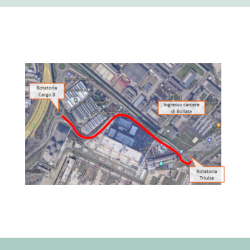
- Due diligence of the documentation supporting the road project for the new Galeazzi hospital, Milan TRT was commissioned to carry out a verification of the demand data used for the Arexpo-MIND project in Milan (redevelopment of the area that hosted the Expo Milano 2015 event) for the area of the new Galeazzi-Sant’Ambrogio hospital, the parking demand and supply, and the viability of the new hospital. The study, focused on the analysis of the documentation made available by the client (taken from the environmental impact studies of the PII Post Expo, which is part of the Arexpo-MIND area’s project, from the annexed Mobility Report of the urban planning project as well as from other internal documents). Data from the official documents were compared with alternative sources, including data collected by TRT in previous studies involving hospital facilities and the ITE 10th edition Trip Generation manual. The official documents were analysed to reconstruct the expected mobility demand and the resulting parking demand. This information was then compared with data from other hospital facilities (one hospital located in an urban area and a second one in a suburban area), with an estimate of the trips conducted by TRT on the basis of data from the Galeazzi hospital shared by the client, and with the estimate of the generating coefficients deduced from the Trip Generation manual. The comparison was carried out using specific indicators that made it possible to compare different hospitals, using the number of total and peak hour trips, peak hour factor, trips per hospital bed, and the ratio of trips with total population involved. A similar approach was followed for the analysis of parking demand and consequent supply, analysing available documentation, identifying the overall supply of dedicated and public parking, in order to compare it with other realities known to TRT through previous studies. Lastly, the access road layout of the new hospital was analysed, verifying the adequacy of the dimensions, the provisional shape of the accesses at the Cargo 8 and Cargo 10 gates (the name remaining from the management of the Expo 2015 area) and the definitive one, taking into account the interference of ordinary traffic with the emergency traffic directed to the emergency room, also proposing a different configuration in the use of the accesses.
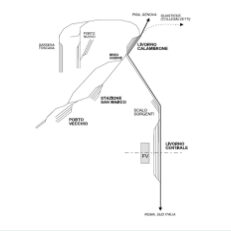
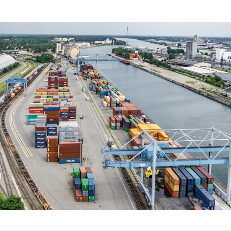
- Feasibility study and preliminary design of the railway network of the Northern Tyrrhenian sea port system TRT, with Vega Engineering, was in charge of the feasibility project for the development of railway network of the ports of Livorno and Piombino. The objective of the work is to quantify the transport demand observed in the past, with reference to the movement of goods and passengers and, at the same time, to estimate the future freight flows, also using the transport simulation model –TRUST, developed by TRTv that works at European scale. The project proposals envisage the improvement of the capacity of the existing terminals and their progressive adaptation to international standards. On the basis of the proposed project alternatives, a specific study was made of the railway capacity of the system in terms of the number of trains that can be operated by the two ports, verifying that the long-term demand forecasts can be met by the planned planning schemes, while also maintaining residual capacity . The transport performance of the railway system, together with the design characteristics (costs, construction times, etc.), constitute the database that has allowed the development of a Multicriteria Analysis that has compared the different design alternatives. A Cost Benefit Analysis was conducted, to assess the advantages and disadvantages of the project for the community.
- Impact assessment on measures to better manage and coordinate international rail traffic, including through revised rules for capacity allocation and infrastructure charging in rail The impact assessment study is intended to provide evidence-based support for developing a new initiative implementing: Action 19: Measures to better manage and coordinate international rail traffic, including – if necessary – through revised rules for capacity allocation and infrastructure charging in rail Action 24: EU 2021 Rail Corridor Initiative – Revise the Rail Freight Corridor Regulation of the European Commission’s Smart Mobility Strategy (COM/2020/789 final) for achieving the objectives of the EU Green Deal (COM/2019/640 final). In the Green Deal and the Strategy vision for the future EU transport system, a substantial part of the 75% of inland freight carried today by road should shift onto rail and inland waterways. Moreover, rail freight traffic is projected to increase by 50% by 2030 and double by 2050; by 2030, rail and waterborne-based intermodal transport will be able to compete on equal footing with road-only transport in the EU.
- Impact assessment support study for the new proposal addressing the development of multimodal digital mobility services and a cost-benefit analysis for the revision of Delegated Regulation (EU) 2017/1926 on multimodal travel information services Maximising multimodality and intermodality in passenger mobility is a key element in reducing transport’s contribution to climate change while ensuring that transport systems operate efficiently, both within Member States and also across the EU’s internal borders. Multimodal digital mobility services (MDMS) are, in turn, crucial to foster multimodality as they promote comparability, transparency, and the selling of products across operators and modes. MDMS bring direct benefits to users: they help people to navigate and access an increasingly complex and diverse range of transport offerings, including a range of shared mobility services, as well as to understand the role and benefits of active modes, that will help them meet their mobility needs in different, more sustainable ways. This can also help to increase accessibility more generally, and so help to reduce social exclusion, by enabling those most in need to access the mobility services that enable them to participate more fully in society. Services that support multimodal transport also help to make transport more efficient and sustainable by increasing the utilisation of the various transport services, improving their operation, and nudging users towards the more sustainable options. The study is crucial in informing the scope and focus of the actions that are necessary at the EU level to ensure that MDMS can fully contribute to the aims of the Smart Mobility Strategy and the Green Deal and, more importantly, bring their associated benefits to users and the environment.
- Analysis accompanying the Impact Assessment for the revision of Directive 92/106/EEC (Combined Transport Directive) The project aims to provide a robust evidence-based analysis to develop an impact assessment on the possible revision of the Combined Transport Directive. The objective of the revision is to increase the share of rail, SSS and IWW in the EU freight transport, reducing GHG emissions as well as other transport externalities such as congestion and accidents. The impact assessment should inform the specific measures to be included and the level of ambition of the revised Directive, including the following tasks: Task 1: analysis of the main problems and policy objectives identified by the Commission Task 2: Assessment of the policy measures according to their legal, political and technical feasibility Task 3: Analysis of the baseline scenario, including both the status-quo and the likely evolution of the problem drivers Task 4: Assessment of the economic, social and environmental impacts of each policy option Task 5 and 6: comparison of options and selection of the preferred policy options TRT is involved mainly in Task 3 and 4, providing among others EU scale modelling (ASTRA) for estimations of key variables (transport activity, modal share, fuel consumption, emissions, etc.) for the baseline and policy scenarios, and tailored cost models to quantify the economic impacts of the proposed measures and combination of measures.
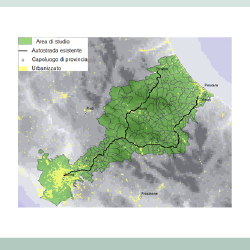
- Strada-dei-Parchi: Traffic study and cost benefit analysis of A24-A25 motorway The objective of the project was the traffic study, the cost-benefit and risk analysis of different of A24 and A25 motorways’ layout alternatives. The AIMSUN traffic simulation model was used to evaluate the impacts of the different route design variants, with special focus on travel times and accessibility. The Cost-Benefit Analysis of the alternative scenarios was combined with the sensitivity analysis of the main variables (e.g. investment costs, maintenance, etc.) and the risk analysis to evaluate the effects of uncertain variables (eg traffic demand, investment costs, incidence of weather conditions) represented with different probability distributions of occurrence. The Cost-benefit Analysis provided the economic indicators: Net Present Value – NPV and Economic Internal. Particular attention was paid to the assessment of the weather conditions impact on traffic and travel times in the various design alternatives.
- Study on costs and benefits of the sustainable urban mobility transition The study had the objective to assess the impacts of different sustainable urban mobility transition scenarios, producing a quantitative analysis of their costs and benefits for European cities by 2030 and 2050. The calculation is based on an improvement and extension of the MOMOS model, which allows to calculate the costs and benefits of the transition through a set of indicators. To take into account differences among 779 European cities, the quantification of results has been applied to 12 city prototypes, which considered different dimensions (small, medium, and large cities) and geographic areas (southern, central/western, northern, and eastern Europe). The project considered three potential scenarios, based on a combination of policy measures taken from key EU initiatives: Promote and regulate, based on changing behaviour and promotion; Plan and build, focused on investments in technology and infrastructure; Mixed, which combines policies from the previous two scenarios. The three scenarios were built on specific combinations and applications of policy measures, belonging to six different policy groups: Shared Mobility and Demand Management; Innovative Services; Green Public Transport and Logistics Fleets & Charging Infrastructure; Pricing Schemes; Transport Infrastructure; Traffic management and control. The outputs of the study consisted in a series of indicators from three domains: transport (modal split, car ownership), environment (CO2 emissions, fatalities), and economic (city costs, revenues, and externalities). Also, a policy effectiveness comparison determined the best policy measures, in terms of associated cost/revenues and CO2 reduction, according to different city sizes. For more information: Full results of the study can be explored with this interactive tool. The study’s Full Report can be downloaded here. Additional info can also be found on the EIT Urban Mobility website For more information: New contract Interactive tool to explore results of 2021 study 2021 study’s Full Report EIT Urban Mobility website on 2021 study
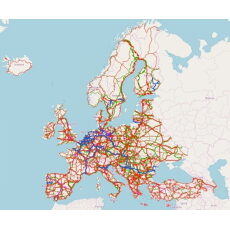
- Impact assessment for the revision of regulation (eu) n° 1315/2013 on union guide-lines for the development of the trans-european transport network The European Union with the Green Deal (proposal EC COM(2019) 640 final) has agreed to implement the Paris Climate Agreement leading the EU towards climate neutrality in 2050. In a more detailed communication in 2020 the European Commission proposed to step-up the climate policy ambition for 2030 and reduce GHG emissions of the EU by 55% compared to 1990 (EC COM(2020) 562). For the transport sector the EC published a new smart and sustainable mobility strategy in December 2020 (EC COM(2020) 789) presenting the strategic policy framework that would deliver the GHG reductions required by the transport sector for 2030 and until 2050. As part of this highly dynamic policy framework the EC has foreseen the revision of several existing transport regulations. The revision of the TEN-T guidelines is one of the major transport related policies besides the revision of the Alternative Fuels Infrastructure and the Intelligent Transport System directives and the planned revision of the Rail Freight Corridors regulation. This study carries out the analysis accompanying the impact assessment for the revision of Regulation (EU) N° 1315/2013 on Union Guidelines for the development of the trans-European transport network. Supported by two European scale modelling tools ASTRA and TRUST, the study provides the assessment of three alternative policy options in terms of their transport, economic, social and environmental impacts and identifies the most promising one. The report is available on the website of the “Publications Office of the European Union” at this link.