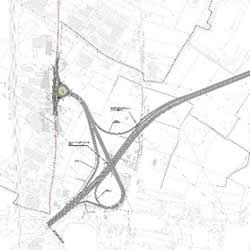
- Technical assessment of the 4th lot of the road bypass of the city of Treviso (Italy) The study concerns transport analysis performed by TRT for the Municipality of Treviso, with the aim of assessing the feasibility of Lot IV of Treviso road bypass. These transport analysis offer a transport assessment of the infrastructure usefulness, in relation to the urban mobility of the city and to the surrounding areas. Some of the potential benefits on the road network have been considered and estimated: decrease in traffic flows, reduction in travel times and potential improvements in traffic safety. In addition, the feasibility of a different layout has been assessed, i.e. the redesign the intersection of the new road with the regional route S.R.348, by envisaging a solution for its extension.
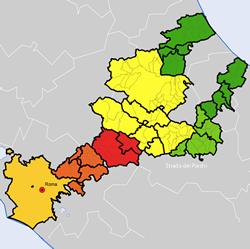
- Preparation of the Urban Mobility Plan of the city of Prato in Italy TRT, as a result of a tendering procedure, has been selected by the City of Prato to support their offices in the preparation of the SUMP. The Plan takes as reference methodology the “SUMP guidelines” prepared by the EU Commission (with the contribution, among others, of TRT). The SUMP process has been developed in four steps: background analysis of the mobility-related framework and its environmental, social and economic impact in Prato; identification of the strategies for the construction of the SUMP scenarios, as a result of the background analysis, the selected objectives and the priorities raised through public listening (surveys and thematic/territorial focus groups); design of two different scenarios: reference solution and SUMP scenario – the latter is characterised by a set of coherent transport measures aimed at achieving specific objectives; evaluation procedure, implementing a ex ante transport model (AIMSUN) and a policy evaluation procedure (MOMOS) derived from the Urban Road Map 2030 tool. The SUMP of Prato has been presented to the local community, stakeholders and decision makers in October 2016. The Plan has been approved by the City Council in June 2017. TRT was also responsible of the drafting of the Parking Master Plan and the Urban Traffic Plan of the city of Prato In 2022, TRT also drafted Prato’s e-Mobility Plan and the SUMP monitoring report in accordance with the indicators of DM 396 of 28/08/2019. For more information (Only available in italian) Official SUMP webpage hosted in the website of the Municipality. It contains all the information related to the SUMP process in Prato Webpage where project deliverables and annexes can be found Link to download the final SUMP document
- Financial and business model for a bike station to be realised next to the «Milano Lambrate» railway station The study focused on the definition of a financial and business model for the set-up of a bike station (a safe parking for bicycles, accompanied and supplemented by complementary activities), with particular reference to the case of Lambrate railway station, a strategic public transport node in the city of Milan. The financial and business model has been developed in order to maintain a modular and parametric approach, as well as to provide the transferability of results to other similar contexts.
- EasyConnecting – Feasibility analysis of two new maritime services between the port of Ravenna and IPA countries TRT conducted a study on the feasibility of two new services. Analysis of the Ro- Ro traffic at national level, in the Adriatic Sea and from the port of Ravenna. Identification of potential routes between ports of Ravenna and IPA area (Adriatic Cross-border Cooperation Programme), focusing on the Albanian ports. Investigation of the potential of new scheduled services based on the evaluation of the operating costs of new services as compared to the use of a Ro-Ro ship. Evaluation of the economic and operational feasibility of the two liner services and drafting a business plan guidelines for the two selected services
- U-TURN – Rethinking Urban Transportation through advanced tools and supply chain collaboration The U-TURN project, funded by the European Commission as part of the strategic HORIZON 2020 program, aimed to identify new models for urban food transportation based on collaborative logistics, with the objective to reduce the environmental impacts of food deliveries in urban areas, providing new innovative low-impacts transport solutions. The project was developed by a consortium with European-wide coverage and involvement of top industrial, academic, consulting and technology partners to propose and test innovative business models to achieve more efficient operations – both environmentally and economically. During the project, a “smart” transport matching tool and a collaborative web platform were developed and tested by 3PLs, online retailers and local farmers to measure the impact of collaborative logistics practices. TRT, in addition to the research and methodological activity, led the Italian pilot case, focusing on the farms located around Milan, with the objective to optimise the transport distribution flows from the farms to the city centre through collaborative logistics solutions. Local food producers around Milan have a high preference for using their personal vehicles to transport goods rather than co-operating, therefore TRT proposed and tested, through the web-based platform, new collaborative business models addressing farmers’ requirements and actual challenges faced by the km-zero food market sector. During the project, TRT involved local farms and public stakeholders, driving the development of the pilot case, to demonstrate the opportunity to cut down travel distance, number of vehicles and their environmental impact, allowing the farmers to save time for their core business activity by introducing the collaborative logistics concept in rural areas. For more information Article “Logistica Collaborativa per le cascine milanesi“ (Collaborative Logistics in Milanese farmhouses) – September 2017 Article “La logistica tra le cascine milanesi” (Logistics in Milan farmhouses) – June 2017
- Transport and cost-benefit analysis for the feasibility study of the adjustment of the A24 and A25 motorways in Italy The study included the following activities: transport analysis of A24 and A25 motorways through the use of the AIMSUN simulation model to evaluate the impacts resulting from the implementation of some route alternatives; accessibility analysis in the current conditions, in the project scenario and in relation to the construction phases with particular regard to safety conditions; cost-benefit analysis of alternative scenarios of the planned interventions for the two highways, combined with the risk analysis of some variables such as growth in traffic demand over time.
- Urban Traffic Plan of Cantù (Italy) and its update TRT has been selected by the Municipality of Cantù in order to draw up the Urban Traffic Plan for the city. Cantù, 38,000 inhabitants, is located in the hilly suburbs of Como, North of Milan. In the period 2008-2011, TRT activities have been related to: the reorganization of the road system, the safety improvement of the road network, the improvement of the modal interchange at the railway station. After drafting the Plan, TRT has assisted the Municipality throughout the approval process. Later, in 2014, the City Council has set as its ambitious goal the creation of a Limited Traffic Zone (LTZ) in the city centre. The activity of TRT focused the evaluation of the technical feasibility of the proposal made by the Municipality, as well as the definition and assessment (with the application of a microsimulation traffic model) of alternative scenarios. After the selection of the selected scenario, the Plan has been updated and then approved by the Municipality on 16/03/2017.
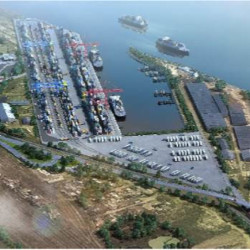
- Study for the creation of the integrated intermodal logistic system in Port of Taranto back area The action, co-funded under the TEN-T programme of the European Commission, completed a study for the enhancement of the existing intermodal facilities in Ferrandina as a pilot phase for the re-organisation of the back-port Logistic System of the Port of Taranto. The action included all the necessary steps from market feasibility studies to final planning and the attainment of building authorisations. The study also assessed the feasibility of financing such works through the establishment of a PPP scheme. TRT as main technical coordinator of the action, provided different types of supports: technical and administrative/financial reporting, organisation of meetings.
- Improving the Fuel Economy Policies Implementation Tool (FEPIT) The FEPIT (Fuel Economy Policies Implementation Tool) is used by the International Energy Agency (IEA) for estimating the impact of some policy measures on the average fuel economy of newly registered cars. This tool is expected to support decisions to implement policy schemes aimed at getting the Global Fuel Economy Initiative (GFEI) target of 4.2 lge/100 km in the year 2030. The model allows to analyse the impacts of several policies aimed at reducing the level of fuel duties taking in consideration the specification of the vehicle fleet of a particular country and of different scenarios. This study provides an updated version of the FEPIT model which contains new parameters coming from a more rigorous methodology. In this version a user guide has also been produced.
- Ex-post evaluation of the road transport social legislation and its enforcement In two distinct assignments, TRT has focussed on the EU legislation currently in force in the area of commercial road freight transport sector. Both entails an ex-post evaluation of the relevant EU norms governing: access to the occupation (Regulation 1071/2009), access to the international road haulage market (Regulation 1072/2009), social aspects (driving times, rest periods and working time) of the road transport sector including enforcement mechanisms across the EU Member States (Regulation 561/2006 and Directives 2002/15/EC and 2006/22/EC). In both assignment an assessment is carried out with respect to the actual performance of these legislative interventions in terms of achieving their objectives, as well as the overall impacts (both intended and unintended) on societal, economic and environmental issues and possible requirements for future action.
- Study on Urban Mobility – Assessing and improving the accessibility of urban areas This study in urban accessibility has been designed in order to advance the understanding of urban accessibility in order to improve the functioning of urban areas and make the transport system in Europe’s urban areas more efficient. The study, carried out by Ricardo and TRT, comprises various tasks. TRT has played a major role in estimating European urban road congestion costs and comparing relative efficiency of urban passenger transport modes. The welfare economic approach is used to define a measure of congestion cost in terms of deadweight loss in cities. The estimation of congestion costs per year (per capita and at urban level) is based on available congestion indexes for a sample of cities and other relevant information (population, value of time, share of car mode split, car occupancy factor). Delay congestion costs were also estimated. The relative performance of different urban transport modes was assessed in relation to capacity; energy use; CO2 emissions and user cost. The above metrics were assessed for private modes (car and motorcycle) and public transport modes (bus and rail). Also, metrics was assessed for metropolitan areas and medium cities, and for peak (or congested) traffic and off-peak (or uncongested) traffic.
- Cost-benefit analyis for the railways links of the Port of Livorno (Italy) The project concerns the improvement of multimodal transport operations at the nodes of the port of Livorno and the Interport of Guasticce (Italy), through specific interventions on rail routes (works for about 200 million Euros). TRT has taken care of the traffic forecasts by means of the European model TRUST. It has analyzed the economic aspects of the project, assessing their financial and economic feasibility (cost-benefit analysis) as well as the socio-economic impacts.
- Advisory support in preparing the Application to CEF 2014, to finance the project “Galaţi multimodal platform” The assistance provided support in preparing the application to 2014 CEF (Connecting Europe Facility) Transport Calls for Proposals, with the aim to finance the project “Galaţi multimodal platform”. The service mainly consisted in the three phases: Phase 1: kick-off meeting and start-up of activities: data collection and preparation of the socio-economic impact assessment; Phase 2: elaboration of the financing application and related annexes: identification of project budget, financial analysis (including Cost Benefit Analysis), preparation of the financing request, preparation of administrative documentation and statement, electronic submission of application file; Phase 3: assistance in the period between submission of the application file and decision of the competent authority on project approval.
- BENEFIT – Business Models for Enhancing Funding and Enabling Financing of Infrastructure In Transport BENEFIT developed an innovative approach by analysing funding schemes within an inter-related system and depending on their Business Model (described by a governance model). These were key elements in the transport infrastructure provision, operation and maintenance and the funding and financing schemes were analysed in this respect. This envisaging the transferability of findings with respect to the lessons learned, the limitations and the impact of the financial and economic crisis. The BENEFIT project took stock of over twenty years of EC’s funded, national and international research and received direct inputs from the OMEGA Centre and COST Action TU1001. BENEFIT undertook an ex-ante analysis and assessment of transport investments and related funding schemes, including innovative procurements. The BENEFIT project looked at infrastructure project delivery performance. Among various infrastructure project outcomes, it focused on four which are at the heart of the analysis of all major project stakeholders and which influence either directly or indirectly all other anticipated outcomes when a specific project is considered for financing (public or other): cost and time to (construction) completion and actual versus forecast traffic and revenues. The BENEFIT project investigated and researched the conditions and factors leading to the achievement of the above four outcomes distinctively from one another and remained stakeholder neutral, as it did not assume the perspective of any project participant. A key conclusion of the BENEFIT project was that transport infrastructure projects performance is rather independent from the financing scheme, as the conditions of improved performance were mostly related to the actual project characteristics and the competences of the involved parties, including in all cases the competence of the public contracting authority and the level of sharing of responsibility (risks) among the involved parties, also based on their ability to manage them. While, the implementation context (i.e., macro-economic conditions, country competitiveness, supporting institutions) was beyond the control of project decision-makers (i.e., exogenous to the project), and might have significantly influenced the project performance, there were other actionable factors (i.e., endogenous to the project) that might have been influenced by them. Each transport infrastructure mode was influenced differently by its implementation context and different combination of factors contributed in each case to achieving the respective target outcomes. The difference was primarily in the ability to fully endorse factors identified to support the achievement of the project outcomes. On the basis of selected indicators and synthesis of findings, the BENEFIT project developed a rating system describing the likelihood of a project to achieve at a certain point of its life cycle the expected targets (i.e., cost and time to (construction) completion and actual versus forecast traffic and revenues). Within the activities of the study, TRT led the research of the consortium to identify lessons learned.
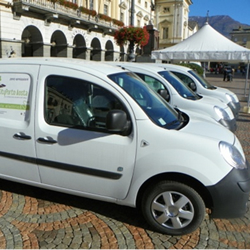
- Technical support for the development of electric mobility in the Aosta Valley Region (Italy) The group of companies consisting of TRT, CEI and the local expert Marcello Dondeynaz was selected by Finaosta for the drafting of the development plan of the Electric Mobility in the Aosta Valley region in Italy. The activity consisted in three phases: First Phase – backgroung analysis of the European and national frameworks (regulatory issues, analysis of pilots and projects in mountainous and tourist areas); Second Phase – definition of the development scenarios for electric mobility, recognizing the different market segments and their needs; Third Phase – development of scenarios and quantification of key variables (supply, demand, financial resources) as the first step for the preparation of the Regional Electric Mobility Plan.
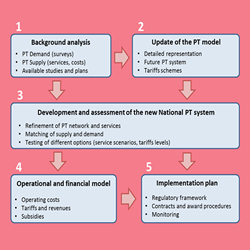
- Development of the National Public Transport System for the Hashemite Kingdom of Jordan TRT, already responsible along with German partner PTV Transport Consult for the preparation of the Jordan National Transport Strategy, has been commissioned for the study to develop and improve the public transport system of Jordan. The project includes: surveys on site focussed on transport demand, supply, costs borne by local operators, fare schemes and subsidies, the definition of a programme for intercity, regional and urban services of the whole Kingdom, a proposal to reform the whole sector, including provision of subsidies, contracts and award procedures. The development of the plan is supported by the multimodal transport model, based on the VISUM software.
- Technical assistance for the implementation of the EA SEA-WAY (Europe Adriatic Sea Way) project, funded under the IPA Adriatic cross-border cooperation programme The general objective of the EA SEA – WAY project is to improve of the accessibility and the mobility of passengers across the Adriatic area and its hinterland, through the development of new cross-border sustainable and integrated transport services and the improvement of physical infrastructures related to those new services. TRT is involved in the project by supporting the Client in relation to the following activities: coordination of the cross-border institutional committee; participation of experts in the thematic cross-border and local working groups; drafting of a cross-border and a local action plans for the project thematic priorities; designing of an Adriatic strategy aiming at developing sustainable passenger transport.
- Update of the railways and logistic masterplan in the Verona area (Italy) The freight rail infrastructure and logistics masterplan in the Verona area (Italy) aims at providing a framework for the evaluation and design of the Isola della Scala intermodal terminal, in consideration of the economic and programmatic situation updated to year 2014. TRT is part of the working group and was responsible for the rail and road infrastructure systems analysis, related to both demand and supply.
- Study on the economic impact of an agreement between the EU and the republic of Turkey and between the EU and Ukraine This assignment identified and quantified the impacts expected from liberalisation of the market access for road freight transport arising from agreements that might be negotiated between the EU and Turkey and between the EU and Ukraine. The study provided the European Commission with an evidenced analysis of the prospective economic impacts of agreements between the EU and both Ukraine and Turkey in the area of road freight services, based on appraisal of a number of carefully specified scenarios of gradual liberalisation of such services.
- Study on the implementation and effects of Directive 2004/54/EC on minimum safety requirements for road tunnels in the trans-European road network The study assessed the state of implementation of the Directive 2004/54/EC and the state of the refurbishment works of the tunnels. The effects of the provisions on safety, environment and traffic were evaluated. The study also estimated the costs for the broadening of the scope of the Directive and collected best practices for the updating of its provisions.
- Study on the effectiveness and on the improvement of the EU legislative framework on road infrastructure safety management (Directive 2008/96/EC) The aim of the study was to assist the European Commission in the evaluation of Directive 2008/96 / EC on the management of road safety in all Member States and to examine possible changes in the light of new technological developments. Starting from a thorough survey with the national authorities, the study conducted: an ex post evaluation of the implementation of Directive 2008/96/EC by measuring the degree of implementation by Member States and the main impacts of its application on road safety; a preliminary analysis of the possible areas of improvement, in particular concerning the safety of pedestrians, cyclists and motorcyclists, vehicles and road infrastructures.
- Technical assistance related to public transport in the POLITE (POlicy Learning in Information Technologies for Public Transport Enhancement) project TRT supported the Province of Ferrara, partner of the POLITE project, in developing the following technical activities: analysis of ICT Best Practices in Local Public Transport, support in definition of ICT policies for Local Public Transport, technical expert support for sessions focused on transferring experiences, organization, management and participation at the training sessions of the project, technical expert support for implementation of measures at local level, development of effective planning tools for implementing best practices at local level.
- Milano-Brescia motorway (Brebemi) A joint project between private and public partners, Brebemi is the first motorway to be realised with project financing in Italy. As traffic consultant, TRT has been supporting BreBeMi since 1997 by taking care of all the project phases: from the pre-feasibility analysis until the last activities. Since the beginning, TRT provided technical support to the whole process: traffic demand analysis, revenue forecasts, economic and financial assessment. According to plans, the new motorway has been opened to traffic on July 2014.
- Development of a business plan, with main focus on the maritime freight traffic, concerning the activation of a new rail service connecting the Port of Venice (Italy) and Villach (Austria) The Venice Port Authority, partner of the Central Europe “Empiric” project, instructed TRT to develop a business plan, with main focus on the maritime freight traffic, concerning the activation of a new rail service between the Port of Venice and Villach. Objectives of the study were: analysing the market, detecting types and quantities of goods to be transported by new rail service as well as identify potential customers, identification of a possible MTO (Multimodal Transport Operator)interested in carry out the service and description of the possible logistics terminals that can be used, definition of a railway operation model with identification of usable infrastructure and slots as well as the frequency of the service and volume of freight, development of economic and financial analysis able to verify the pricing policies to be adopted for startup and maintenance of the service, the potential economic and financial resources in support of activities, the structural investments, the need for incentives for the implementation and maintenance of the service, implementation of an environmental balance analysis through the identification of appropriate environmental indicators.
- PUMAS – Planning Sustainable Regional Urban Mobility in the Alpine Space The PUMAS project is part of the wider territorial cooperation Programme “Alpine Space 2007-2013” which includes the Alpine region neighboring countries. PUMAS aims at testing and validating the methodology developed by the Eltis project (www.mobilityplans.eu) for the drafting of the sustainable mobility plans (SUMP). TRT provides technical assistance to the Venice Municipality, coordinator of the PUMAS project, by providing support in reporting, meeting and seminars organisation, communication and dissemination, drafting documents, evaluation and technical assistance to the seven pilot projects.
- Drafting of tender documents for the provision of urban Public Transport Services of city of Isernia TRT, within the procurement notice on the tender of the provision for urban public transport services, gave support to ATM Molise in the preparation of the technical offer. Activities were related to: territorial analysis, the reconnaissance of the status quo situation about the public transport (services and infrastructures), the identification of the network, lines and new stops, the construction of timetables and the calculation of service and accessibility indicators. Besides, the attention was focussed on the interventions to design the stops (platforms, poles, elimination of conflicts) and upgrade information to users (timetables, electronic displays, maps related to the urban mobility system).
- MEDNET – Mediterranean Network for custom procedures and simplification of clearance in ports – Work Package 4 Technical assistance to the Taranto Port Authority and to Rete Autostrade Mediterranee (RAM) for carrying out research activities within Work Package 4 of the MEDNET project. Main activities included: analysis of customs and security procedures applied in the various Italian ports, analysis of best practices and identification of improvement opportunities.
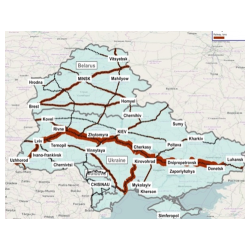
- TRACECA IDEA II – Transport dialogue and interoperability between the EU and its neighbouring countries and central Asian countries Funded by the Directorate General for Neighbouring of the European Commission within the framework of the TRACECA Programme (TRAnsport Corridor Europe Caucasus Asia), the IDEA II project aimed at improving the functioning of the transport corridor connecting Europe with Central Asia. The project activities focused in particular of the TRACECA countries belonging to the Eastern Partnership region (Georgia, Armenia, Azerbaijan, Ukraine and Moldova) and included the detailed analysis of the performance of the rail and road regional transport network in relation to the extension of the EU TEN-T network, the quantitative study of alternative scenarios for traffic at the year 2030 with the support of a transport model, the creation of the transport projects pipeline and prioritisation of those of regional interest, the creation of a web platform for e-learning, the calculation of benchmark indicators for road border-crossing points and ports and the study of the approximation of the aquis communautaire in the road and rail sectors legislation. The consortium led by TRT was composed of Panteia, Dornier and Lutsk University.
- CIVITAS WIKI – Coordination and support action for CIVITAS PLUS II CIVITAS WIKI is the Coordination and Support Action for CIVITAS PLUS II, promoting and demonstrating integrated sustainable urban transport strategies to tackle negative effects of road transport in urban areas. 8 European cities are involved testing, evaluating and disseminating about 50 innovative measures for sustainable urban mobility. CIVITAS WIKI focuses on good practice exchange and dissemination of results and promotion of the CIVITAS Initiative. As a whole offers support to the demonstration projects of CIVITAS Plus II on the implementation, evaluation and dissemination of measures. TRT is specifically involved in the management of the CIVITAS Thematic Groups, whose main objective is fostering knowledge transfer, dissemination of best practices and debate about innovative measures for sustainable urban mobility based on the CIVITAS experience.
- Study on the social and working conditions of road transport hauliers The study discussed the EU legislation relevant to social aspects and access to the market and profession regarding the road freight transport sector. Current social and working conditions of professional drivers were described with particular emphasis on issues such as: employment schemes, problems raised in the enforcement of the European legislation and quality of life. The study formulated recommendations intended to support the decision-making process of EU institutions for improving the social and working conditions of professional drivers.
- LivingRAIL – Living in a sustainable world focused on electrified rail The goal of the LivingRAIL project was to elaborate a vision of a sustainable transport system and society in 2050 where transport needs are overwhelmingly served by electrified rail The analytical work first separated rail transport specific visions of how the sector could perform by 2050 from a broader vision of how Europeans would live and work in 40 years time to eventually combine the two. The analytical work combined literature survey, statistical analyses and model applications with expert workshops, targeted interviews and scenario techniques.
- Study on the stated preferences regarding the use of car-sharing TRT has carried the study on the use of a new car-sharing service for the city of Milan on behalf of the Polytechnic of Milan . The stated preferences method is used to gather information on users’ choices in relation to hypothetical situations, which do not exist or are different from the reality. The survey method was then applied to measure the possible impact of a car-sharing service aimed at “residents” and “companies”. The activities included the identification of a sample (1,000 interviews), the definition of the survey questionnaire (distributed via web) and the processing of the results obtained. The questionnaire included several exercises of choice in hypothetical cases of use of the service, aimed at quantifying a series of behavioral parameters. The elaboration of the results was specifically carried out to quantify the parameters of the transport demand functions, concerning the disposition to share one’s car and to use the service.
- Development of Long Term National Transport Strategy for the Hashemite Kingdom of Jordan The overall objective of the project is the development of the Long-Term National Transport Strategy for Jordan and of an Action Plan for its implementation for the first 5 years. The Strategy has been delivered preparing a multi-modal implementation pipeline of transport projects, which included the feasibility analysis of five different scenarios of implementation, evaluated and prioritised through cost-benefit analysis methodology. A VISUM transport forecast model and an investment appraisal and prioritisation methodology were developed in order to provide quantitative input for the preparation of the Strategy. Capacity building activities of the staff of the Ministry of Transport complemented the project activities. [tw_sh_column][tw_sh_column_item item_animation=”none” item_animation_offset=”” column_size=”1 / 3″][/tw_sh_column_item][tw_sh_column_item item_animation=”none” item_animation_offset=”” column_size=”1 / 3″][/tw_sh_column_item][tw_sh_column_item item_animation=”none” item_animation_offset=”” column_size=”1 / 3″] [/tw_sh_column_item][/tw_sh_column]
- An ex-post evaluation of transport infrastructure charging policy: update of the external cost handbook and impact assessment of future legislative proposals The project is articulated in two stages. A first part of the project dealt with the ex-post assessment of the impacts deriving from the application of the “Eurovignette Directive” which sets the framework for road user charging policy at the European level. The second part of the project carried out an ex-ante impact assessment of the future legislative proposals for road infrastructure charging that will be presented to the European Parliament and the Council.
- Technical assistance to the TranSafe-Alp project TranSAFE-Alp project had the objective of improving the levels of safety and security on the Alpine road network and the management of emergencies, with the final aim of reducing fatalities caused by natural critical events and road accidents. The Veneto Region, the leading partner, commissioned TRT Trasporti e Territorio to provide technical assistance for supporting project management and to contribute with technical and scientific research in several related activities. TRT also developed a financial reporting tool, the identification of the technical requirements of the JITES tool and leaded the coordination of the evaluation activities conducted for assessing the project results.
- The role of women in the green economy – the issue of mobility TRT and IRS Istituto per la Ricerca Sociale have carried out a report on behalf of the European Parliament, Directorate General for Internal Policies of the European Union, which aims at highlighting the characteristics of gender mobility and in particular of women mobility. The study finds its justification from the European Community strategy towards the realization of equality between women and men (European Commission, Strategy for equality between women and men, 2010-2015) and in the Road Map in order to achieve the European targets 20-20-20 (European Parliament resolution of the 11 March 2008).
- Public Transport Plan: Varese Hospital TRT carried out the Public transport plan of Varese Hospital (about 1.900 workers). The objectives of the plan are: to promote the safety and sustainable access to the Hospital by foot and cycling, safer link between the centre of city and the hospital area; to optimize the use of the car, reducing car dependency for the hospital’s workers i.e. improving carpooling and car sharing solution; the definition of new parking lots regulation and pricing system for workers.
- COMPASS – Optimised Co-Modal Passenger Transport for ReducingCarbon Emissions The COMPASS project identified and analysed key trends that affect mobility patterns now and in the future to identify the needs of current and future travellers. The project also identified ICT and ITS-based solutions that have the potential to improve co-modality in passenger transport and assessed them through a number of case studies.
- Study to estimate electric vehicle load profiles for selected EU countries based on travel survey data This study was aimed at building a database of grid load profiles for electric vehicles in six European countries – France, Germany, Italy, Poland, Spain, UK – based on car driving patterns. Data on car driving patterns was collected by means of a sample survey involving 600 individuals in each country. Each participant filled in a on-line (CAWI) car driving diary for a period of seven days. The database allows to estimate individual charging profiles and then daily (24 hours) load profiles under assumptions on the share of electric vehicles in the fleet and on their technical features.
- Introduction of measures (including a bike sharing system) to promote cycling in eastern Lake Iseo area Comunità Montana Sebino Bresciano (Local Authority) and CARIPLO (Bank Foundation) promoted a feasibility study for the development of cycle-pedestrian mobility in the area located along the coastal side of the Iseo Lake (North of Italy). TRT produced the feasibility study focused on the design of a bike-sharing service, business model and regulation framework between local authority and transport operators.