- All
- African projects
- assessment
- assessment selected projects
- Assessment selected projects 2
- Assessment selected projects 3
- Assessment selected projects 4
- ASTRA
- Cost Benefit Analysis
- Electric mobility and ITS
- Local Public Transport
- MOMOS
- planning
- planning selected projects
- planning selected projects 2
- planning selected projects 3
- planning selected projects 4
- planning selected projects 5
- projects
- Railways projects
- research
- research selected projects
- research selected projects 2
- research selected projects 3
- studies
- studies selected projects 1
- studies selected projects 2
- studies selected projects 3
- studies selected projects 4
- studies selected projects 5
- TRTingegneria
- TRUST
- urban mobility
- CIVITAS ELEVATE, Horizon 2020 project – Increasing the Europe-wide impact of the CIVITAS projects CIVITAS ELEVATE is part of the CIVITAS initiative, a network of cities dedicated to cleaner, better transport in Europe and beyond that has implemented over 800 measures and urban transport solutions in more than 80 living lab cities Europe-wide. The knowledge gathered through these practical experiences is supported by a number of research and innovation projects looking at ways of building more resource efficient and competitive transport. CIVITAS ELEVATE’s scope was to increase the Europe-wide impact of the CIVITAS 2020 and other ongoing projects on urban mobility policy making. The project aimed at advancing the CIVITAS community to a higher level of knowledge, exchange, impact, and sustainability while guaranteeing essential high-quality support. It aimed to enrich the current CIVITAS generation and to feed future EU initiatives while building a European mobility community able to navigate transition. The CIVITAS ELEVATE project, active from April 2019 until April 2023, was carried out by a 6-partner consortium that includes M21 (leader), DTV, ICLEI, INOVA+, Breda University of Applied Sciences, and TRT. TRT was responsible of the evaluation and advancing knowledge activities, providing guidance and support to the stakeholders from across CIVITAS 2020. This enhanced the knowledge that the CIVITAS initiative has been building year after year, to improve urban mobility policy making and planning. TRT is also part of the new CIVITAS Coordination and support action MUSE
- Financial and economic analysis of the new metro line Afragola AV-Napoli and of a moving walkways at Colli Aminei station The project consists of an evaluation of two transport infrastructure projects: the new metro line Afragola-Napoli (LAN) and of a moving walkways at the Colli Aminei metro station (CAM). Respectively, these projects have been planned by the regional administration to connect the Afragola high-speed rail station with Naples inner city, and to improve the accessibility of the (sloping) Colli Aminei metro station. Based on a detailed traffic analysis, TRT carried out a financial and economic evaluation (cost benefit analysis) of the projects, considering on the one hand the project investment and operating costs, and on the other hand the impacts expected from the induced modal shift (lower road traffic levels, travel time savings, reduction of traffic externalities, etc.). The evaluation took into consideration different project layouts of LAN and CAM, contributing to identify the best alternative from a cost-benefit point of view. As provided by the national guidelines on transport project evaluation, a risk analysis was also developed including a qualitative risk analysis, a quantitative risk analysis, a sensitivity analysis.
- Corridor Munich-Verona – Study and analysis of the forecasted passenger traffic flows and the related offers of long-distance trains based on the future infrastructure This study was a modelling application targeted at forecasting future rail passenger demand on the Verona – Munich rail corridor. The opening of the Brenner Basis Tunnel (BBT) is expected by the year 2030. Its effect will be to save more than one hour from rail travel time between Munich and Verona. The full completion of infrastructure should provide additional time savings by the year 2040. This study, using modelling tools, aimed at forecasting the additional rail passenger demand onto the corridor as effect of new rail supply in order to provide inputs for the design of long-distance rail passenger services on the corridor. Four future scenarios were explored. All scenarios shared the same demographic and economic assumptions influencing the modification of the overall transport demand in the area. Then, each scenario considered a specific configuration of passenger rail services on the Corridor, especially in terms of frequencies and stops. The forecasts were based on the results of the two models: the TRUST model used by TRT dealt with long-distance origin-destination pairs at NUTS3 level, while the regional demand was simulated in more spatial detail by means of the VMÖ 2025+ model used by the Austrian company TRAFFIX. The project was managed by EBP Schweiz AG. For more information, please check BBT Brenner Base Tunnel website
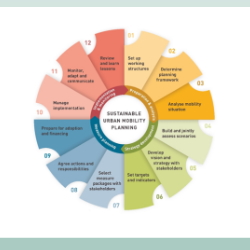
- Implementation and monitoring of the Sustainable Urban Mobility Plan of the city of Parma During the year 2019 the Master Mobility Plan coordinated the strategies of the SUMP implementation through the formation of “thematic tables” participated by external experts and by members the Mobility Sector of Parma Municipality. The “thematic tables” included 4 main areas: cycling, urban goods logistics, public transport and ITS. Furthermore the activities of the Master Mobility Plan were oriented towards the development of the first steps for the implementation of the urban area Low Emission Zone (LEZ). The effort was to present the LEZ as a permanent easy to apply and understand measure aimed at overcoming the logic of temporary and emergency initiatives to improve air quality. The assignment also provided for the coordination of the monitoring activities of the SUMP: These activities consisted in the collection and systemization of mobility trends data in Parma over the past 2-3 years and included a field surveys with traffic counts on the urban radials, on the main intersections and on cycling mobility. TRT was also responsible of the drafting of the Sustainable Urban Mobility Plan and the General Urban Traffic Plan of the city of Parma.
- Evaluation of noise differentiated track access charges schemes: Support study to the evaluation of Implementing Regulation 2015/429 The Regulation 2015/429 establishes rules for Noise Differentiated Track Access Charge (NDTAC) schemes. The purpose of the study is to provide insight on the performance of the Regulation and its impacts in the EU. To that end, it answers 19 evaluation questions grouped under the evaluation criteria of effectiveness, efficiency, relevance, sustainability, coherence and EU added value. The primary geographical scope of the evaluation is the three Member States were the Regulation has been applied (AT, DE, NL), along with Switzerland (the first country to create a NDTAC scheme aiming at reducing rail noise by incentivising the retrofitting of noisy wagons with composite brake blocks). The wider EU is also considered, in order to understand the impacts that the NDTAC schemes in these four countries have had in countries that did not implement such schemes. The analysis is based on data collected from a range of primary and secondary sources including data on the freight wagons fleet and direct input from relevant stakeholders collected using interviews and surveys with rail industry, authorities and a public consultation.
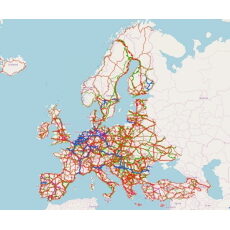
- Economic modelling exercise in support of the multi-modal transport market studies for nine core network corridors The objective of the study is to provide transport and economic modelling support to the nine “Studies on the TEN-T Core Network Corridors and support of the European Coordinators”. Such transport and economic modelling support: Is based on the methodology of the “The impact of TEN-T completion of growth, jobs and the environment” study, Makes reference to the Baseline Scenario of the TEN-T Growth Study; Adopts the same approach for each of the nine corridors. The transport and economic modelling results estimate the impact on travel time and modal shift for macro sections of the different TEN-T corridors and on growth, jobs and decarbonisation by country along the corridors and for EU28, EU15, EU13.
- Training course on Sustainable Urban Mobility Plans for five Western Balkan countries TRT was selected by GIZ (the German Cooperation) to design and manage a training course targeted to urban mobility experts, public officials and local practitioners from five different Western Balkan countries (Serbia, Bosnia Herzegovina, North Macedonia, Montenegro, Albania). The training programme was designed as an intense, full-time, one-week long, interactive course (“Boot Camp”). It was held in May 2019 in Podgorica, Montenegro, with the participation of 25 trainees. Participants were experts in the field of traffic, urban or strategic planning, from local self-governances, academia, relevant NGOs or similar. The training course had two main goals: i) to improve the knowledge and to increasing the capacities of the participants, in order to enable them to support a Sustainable Urban Mobility Plans (SUMP) development process in line with the ELTIS European guidelines; ii) to select potential candidates for a “regional expert pool” to be established by GIZ in the Balkan countries. in the Balkan countries. Activities performed by TRT included the development of the programme, the drafting of training materials, the management of the sessions on site with two experienced trainers, and the final evaluation of the proficiency of participants.
- Electric mobility, a simulation in four metropolitan areas On April 2019 the second edition of the “MobilitAria” report was presented in Rome, in the national headquarters of national railways “Ferrovie dello Stato”. This study, written by Kyoto Club, CNR-IIA (National Council for Research, Atmospheric Pollution Institute – Consiglio Nazionale delle Ricerche, Istituto sull’Inquinamento Atmosferico) with the collaboration of the Transport Research Institute Isfort, presents data on urban mobility and air quality in 14 cities and Metropolitan Areas in Italy for the period 2017-2018.. TRT contributed to a specific section of this edition, reporting the results of the estimated impacts of measures promoting the uptake of electric mobility, focusing both on transport and environmental indicators. The simulations have been performed considering four Metropolitan Cities in Italy (Turin, Milan, Bologna and Bari), implementing applications of the MOMOS model (MOdello per la MObilità Sostenibile) developed by TRT. Selected measures supporting the uptake of electric mobility, such as electric charging stations, access regulation, parking pricing, EV car sharing, etc., have been simulated in the test scenario at 2030, comparing output indicators with respect to a Reference scenario (building on trends of the EU Reference scenario 2016).
- Study on Light Commercial Vehicles (LCVs) fleet and activity in EU TRT has led an international consortium of experts covering 10 EU Member States with the objective to cover the lack of information and data on LCV fleet and activity in EU-28 The study outputs consist of: DBs on LCVs broken down by fuel type, emission standard and age of the vehicle for 10 Member States (64% of EU-28 fleet) Assess the relationship between annual mileage and age of the vehicle in 5 Member States Estimate fixed (taxes) and operating costs (maintenance, insurance, tools) of LCVs Analyse the LCV uses and the activity sectors in EU Review the legal and fiscal regime of the LCVs in EU-28 [tw_button icon=”” link=”https://www.trt.it/archivio-progetti/” size=”small” rounded=”false” style=”flat” hover=”default” color=”#223468″ target=”_self”]Projects[/tw_button]