28 August 2023

We are hiring!

Milan, August 2023 Job profile: sustainable urban mobility policy analyst We aim to recruit a senior/intermediate consultant with expertise in sustainable urban mobility policies to reinforce our specialised and dynamic team in the Milano office. The company TRT Trasporti e Territorio is an Italian consultancy specialised in economics, planning and modelling of transport and mobility. The company provides consultancy services and carries out research activities in quantitative analysis, planning and economic evaluation of transport and land use policies. Founded in 1992, with premises in Milano and Brussels, TRT has gained a strong reputation in its professional and R&D activities supporting public and private decision makers. TRT staff includes experts in the fields of transport modelling, engineering, economics, urban and regional planning, statistics and operation research and is accustomed to working in multidisciplinary teams and international consortia. In Italy TRT clients include the different levels of the Public Administration (from Ministries, regions and, municipalities) as well as transport services operators and real estate investors. In Europe and in extra-European countries, TRT carries out consultancy and research activities for the European Commission, the European Parliament and for financial institutions such as the World Bank and the European Investment Bank.
12 June 2023

TRT joins SLOCAT Partnership!

We are pleased to announce that TRT Trasporti e Territorio has joined the SLOCAT (Sustainable, Low Carbon Transport) Partnership. As the name of the initiative suggests, the partnership focuses on promoting and enabling collaborative knowledge and action for sustainable, low carbon transport. SLOCAT is an international partnership involving more than 90 associations, transportation companies, universities, government agencies, and NGOs, cooperating to promote a more equitable, more resilient and healthier transport and mobility systems. SLOCAT’s main activities include being active in international and local advocacy campaigns on sustainable transport and climate, participating and organizing peer-learning and capacity building initiatives, drafting thematic reports, guidelines and recommendations, etc. Through this collaboration, TRT will have the opportunity to contribute to the development of sustainable and inclusive mobility at the global level, establish synergies with the partnership’s members and have access to a wide network of governmental and non-governmental stakeholders. In particular, TRT will collaborate with them by participating to development of reports and studies, sharing our work and results with partners working on similar issues, and much more.
8 June 2023

New SUMP Topic Guide on Mobility Management

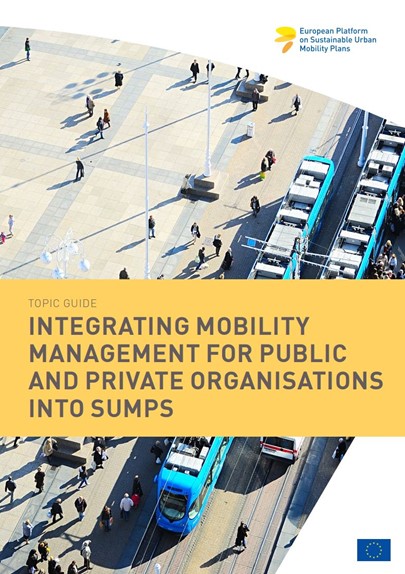
We are pleased to announce today’s publication of the new SUMP Topic Guide on Integrating Mobility Management for Public and Private Organisations into SUMPs, for which TRT is the main author. How can we ensure that an increasing urban population does not translate into more traffic, congestion and pollution in European cities? Mobility management offers solutions to this issue. With its ‘soft approach’, mobility management is highly adaptable in promoting sustainable transport in different local circumstances. With SUMPs and mobility management both seeking to achieve the same overall goal – namely the increased use of sustainable modes of transport – measures associated with mobility management form an essential part of any SUMP. To support urban planners and transport practitioners in this process, a Topic Guide on Integrating Mobility Management for Public and Private Organisations into SUMPs has been developed by the third Policy Support Group of the CIVITAS initiative, which consisted of experts from five organisations (European Platform on Mobility Management, Klimaaktiv mobil, Tisséo Collectivités, Alba Iulia Municipality, Gdansk Municipality), the CIVITAS Policy Advisory Committee, and a group of stakeholders from the mobility management sector, with TRT as lead.
14 March 2023

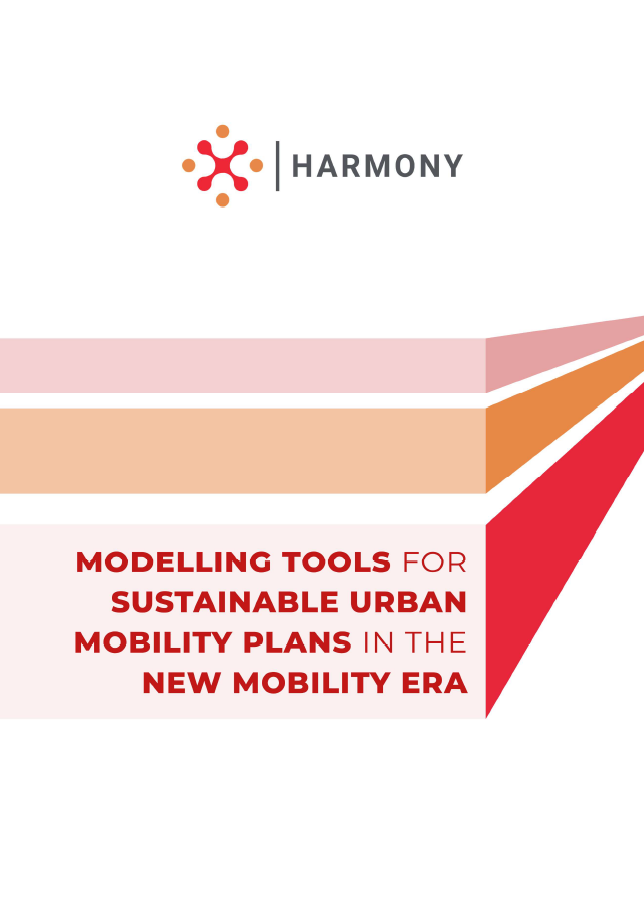
HARMONY Guidelines on Modelling tools for SUMPs in the new mobility era

Despite the acceleration of new mobility solutions and the increasing relevance of models in urban transport planning, particularly in the context of decarbonisation and climate neutrality, a clear, concise and up-to-date guidance document on modelling tools for the urban mobility planner’s community was missing. TRT, as part of the WP8 (Process assessment, SUMPs recommendations and roadmaps) activities within the HARMONY project, drafted the document “Guidelines on Modelling tools for Sustainable Urban Mobility Plans (SUMPs) in the new mobility era” whose aim is to provide local planning authorities with guidance on transport modelling applications in their SUMP implementation process, building on the concept of SUMP, as outlined by the European Commission’s Urban Mobility Package and described in detail in the European SUMP Guidelines 2.0 (second edition). The project highlighted the importance of a bottom-up approach in urban planning, through the implementation of co-creation labs in six metropolitan areas (Athens, Oxfordshire, Rotterdam, Trikala, Turin, and Upper Silesian-Zaglebie Metropolis). Within this context, HARMONY Guidelines on Modelling tools are useful to assess new mobility technologies impacts in the urban environment, answering to questions related to transport models.
28 February 2023

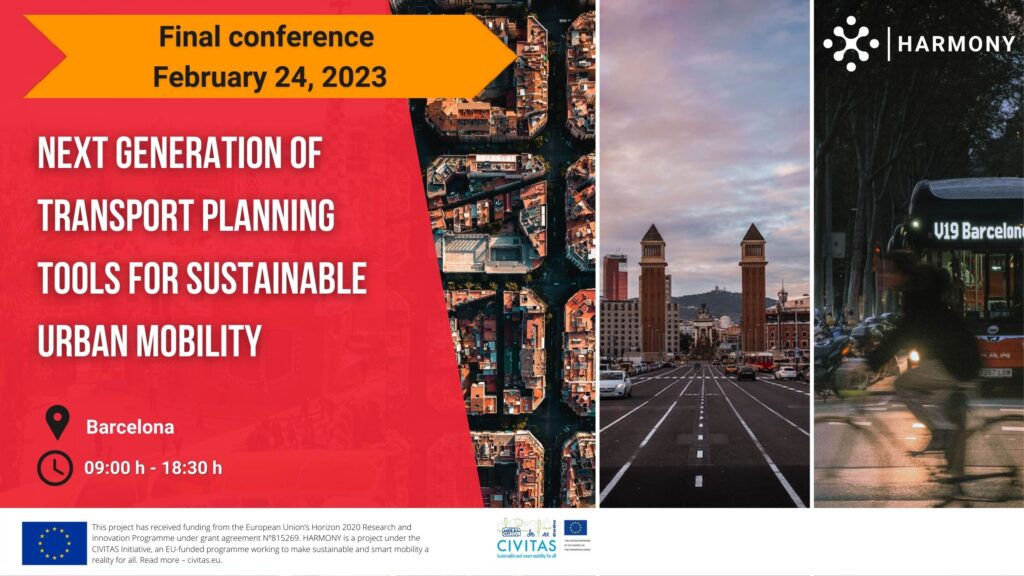
Harmony final conference

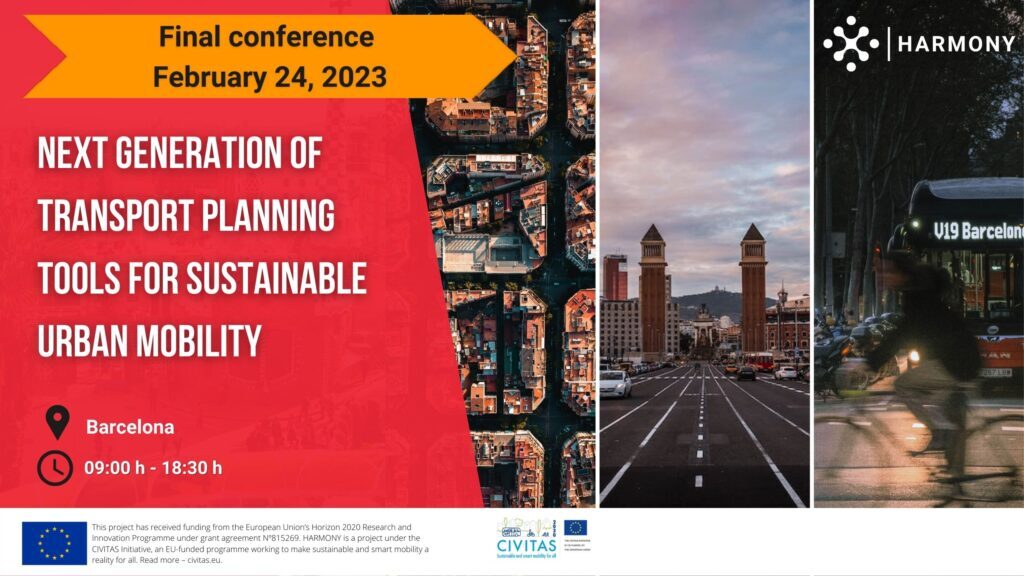
The H2020 funded project HARMONY concludes with the final conference in Barcelona. 20 partners from 9 different countries worked together to enable metropolitan area authorities to lead a sustainable transition to a low-carbon new mobility era. The HARMONY Model Suite has been implemented by linking models at strategical, tactical and operational levels, leading to a spatial and multimodal planning tool. A mobile application – the MOBY App – has been developed to collect urban transport data, to be used in the Activity-Based model, one of the most recent modelling algorithms to simulate mobility habits.
18 January 2023

“Moving goods, shifting to a new paradigm”, article by Logistica Management Magazine

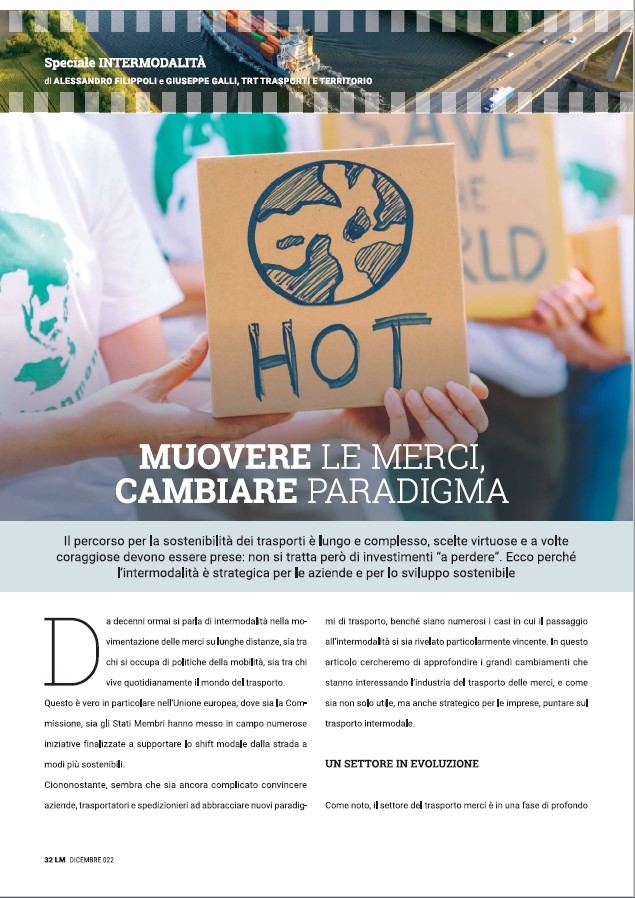
The article “Muovere le merci, cambiare paradigma” (“Moving goods, shifting to a new paradigm”, available in Italian only) was published in the December 2022 issue of Logistica Management, an industry magazine focused on logistics management, as part of its special report on intermodality. Focussing on the growing importance of freight intermodal transport as an alternative to the “all-road” mode, TRT’s Alessandro Filippoli and Giuseppe Galli provide an analysis of this transport choice by highlighting its strengths and weaknesses, also in light of recent policy trends at the European level and the developments of competitive scenarios in the market arena. The need to make wise and farsighted choices is stressed, particularly if companies aim at gaining operational resiliency in face of the technological, normative, and economic changes they are expected to confront with in the years to come. Download the article here.
16 January 2023

HARMONY Model Suite: uno strumento integrato per la pianificazione della mobilità sostenibile a Torino

TRT is happy to announce the publication of a broad study on new mobility patterns, describing the mobility choices of European citizens and how the urban logistics sector is developing in 16 EU cities. The study, conducted for the European Commission – DG MOVE, was commissioned to collect reliable and extensive data on passenger mobility, urban logistics, fleet composition, transport activity and traffic flows in Member States. The passenger mobility survey showed that, on average, EU citizens travelled 27 km per day for an average duration of 80 minutes. The predominant means of transport in 2021 was the car, which was used for almost half of all trips. Excluding trips made by car, walking is the most popular way of moving around in most of the EU, with the Netherlands as a notable exception, where cycling is more popular. New mobility forms are gaining traction: ride-hailing (23%) and ride-sharing (12%) are attracting the most users; however, they are generally used on an occasional basis. The results of the survey were influenced by the COVID-19 pandemic, which affected travel behaviour and restricted travel options. Indeed, 64% of respondents found that the pandemic affected their mobility.
4 November 2022

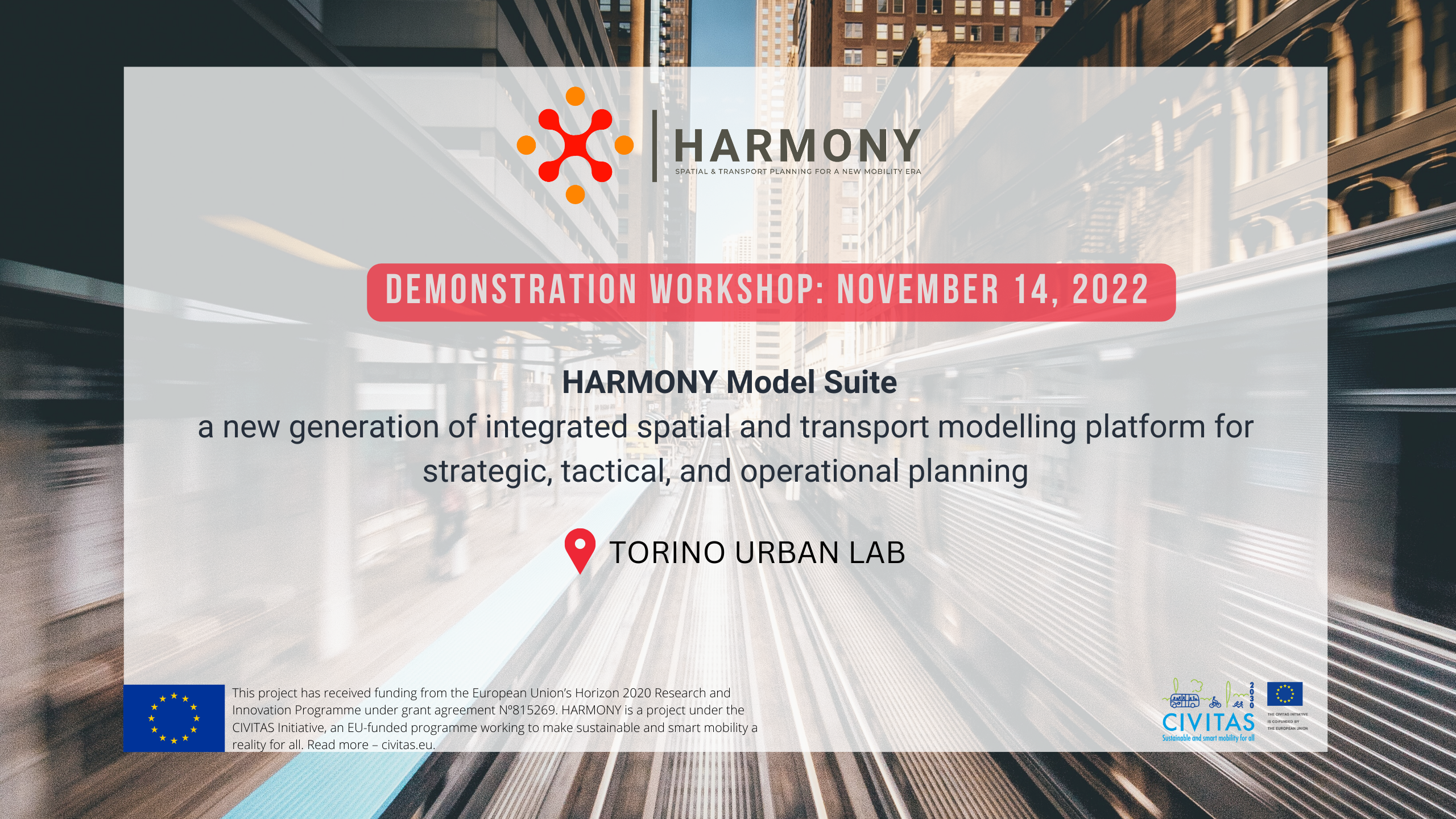
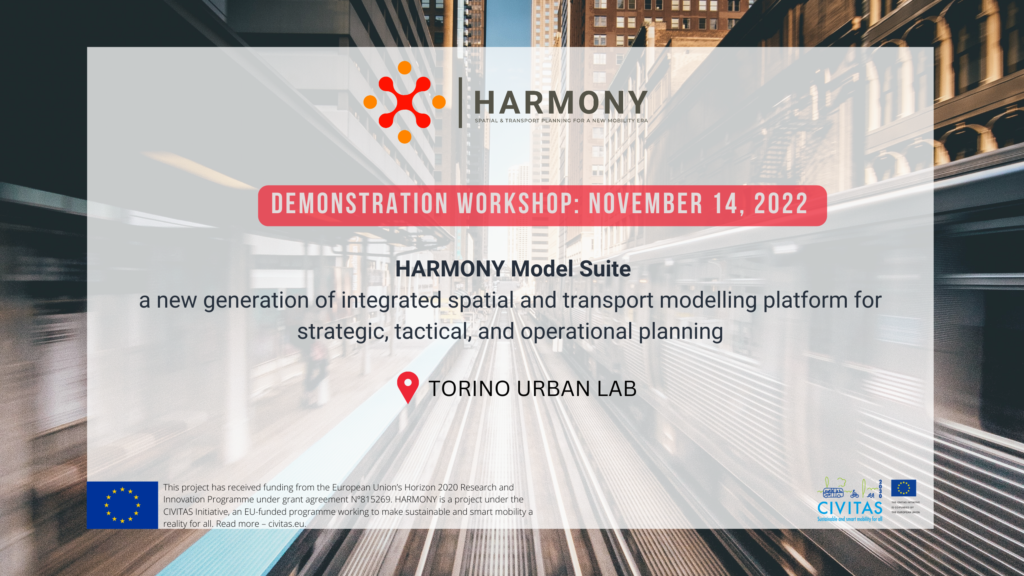
HARMONY Model Suite: an integrated platform for sustainable mobility planning in Turin

WORKSHOP – Turin, November 14th, 2022 – 10.45-15.30   HARMONY is a European project funded by the European Commission within the Horizon 2020 Programme. It began in June 2019 and is scheduled to end in February 2023. The consortium, coordinated by the University College of London, consists of 21 partners from 9 European countries. HARMONY’s main goal is to develop a new generation of harmonised spatial and multimodal transport planning tools which comprehensively model the dynamics of the changing transport sector and spatial organisation, enabling metropolitan area authorities to lead the transition to a low carbon new mobility era in a sustainable manner.
26 October 2022

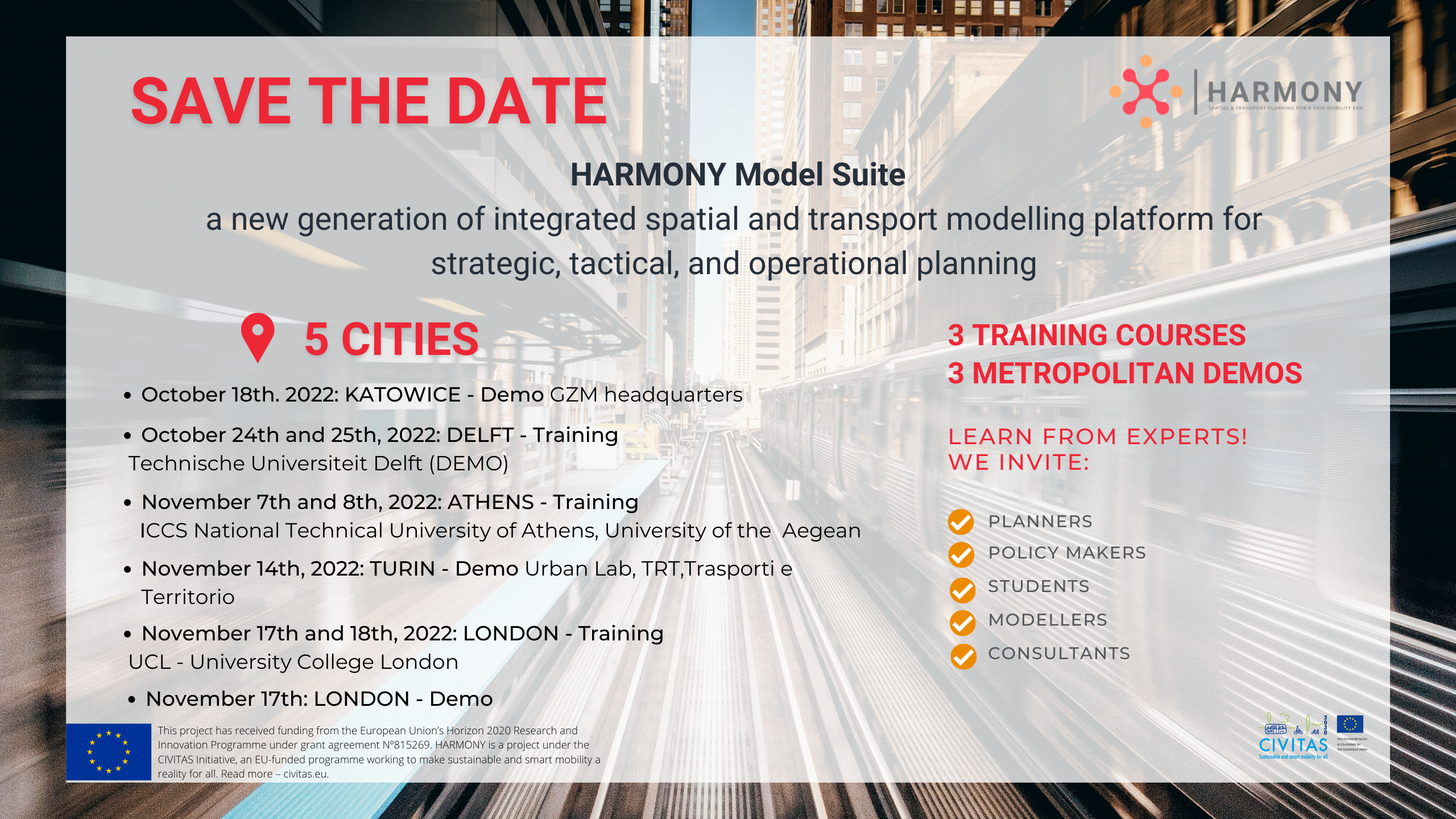
HARMONY H2020 Training Workshops

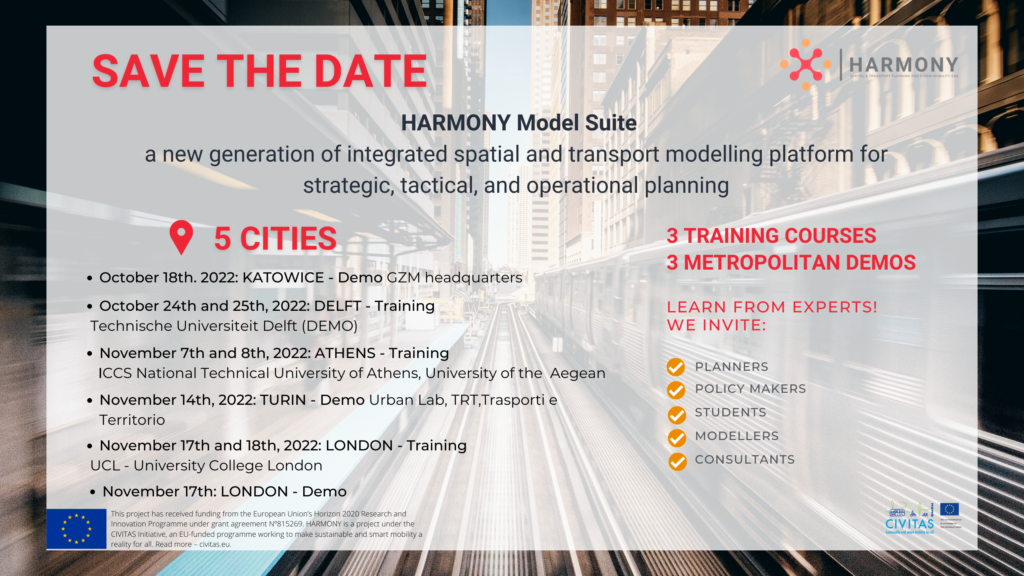
The H2020 funded project HARMONY aims to develop a new generation of harmonised spatial and multimodal transport planning tools, to represent new forms of mobility for freight and people, enabling metropolitan areas authorities to lead the transition to a low carbon new mobility era in a sustainable manner.