- All
- African projects
- assessment
- assessment selected projects
- Assessment selected projects 2
- Assessment selected projects 3
- Assessment selected projects 4
- ASTRA
- Cost Benefit Analysis
- Electric mobility and ITS
- MOMOS
- planning
- planning selected projects
- planning selected projects 2
- planning selected projects 3
- planning selected projects 4
- planning selected projects 5
- projects
- Railways projects
- research
- research selected projects
- research selected projects 2
- research selected projects 3
- studies
- studies selected projects 1
- studies selected projects 2
- studies selected projects 3
- studies selected projects 4
- studies selected projects 5
- TRTingegneria
- TRUST
- urban mobility
- Shift2Sustain: Driving Behavioural Change in Mobility Towards Sustainability Shift2Sustain project started in November 2025, and brings together 17 partners, including 7 pilot cities. The purpose of the project is to promote the adoption of Mobility Management Plans (MMP) for public and private actors, by developing a guidance and testing mobility solutions in the pilot cities. The first objective of the project is the generation of a database of information on existing Mobility Management Plans (MMP) and Mobility Management Schemes (MMS). This work is needed to analyze the state-of-art in Europe and highlight which measures had positive outcomes and why. The analysis is carried out through a desk research and a stakeholder consultation for different countries. Furthermore, S2S aims to implement 7 pilot tests about MMP and MMM solutions in each city participating in the consortium: Oeiras (PT), Turin (IT), Gdansk (PL), Zagreb (HR), Izmir (TR), Sarajevo (BA) and Copenhagen (DK). These actions will be mapped with indicators and expected impacts calculated before and after the projects, to quantitatively and qualitatively assess the results of such pilots. Together with the pilots, it will be developed a digital toolkit composed of a digital serious game and a behavioral gamification app for community involvement. The app will be developed by an external startup, selected after a market consultation. The games are adaptable for the various location and measures implemented, facilitating, enhancing and tracking the implementation of MMM. Thanks to the analysis of the results, a guideline with the lessons learned and policy recommendations will be produced, with the aim to develop mobility training plans, focusing on MMP and MMM. The trainings will be launched through an online course called “Learn2Shift”, a program which provides practical and professional skills. Finally, the consortium will provide technical dissemination of the project contents through events and scientific publication, as well as through the engagement with relevant EU stakeholders.
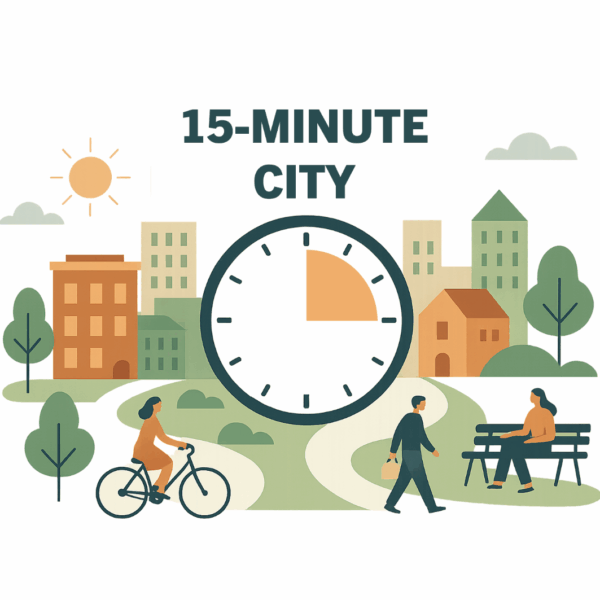
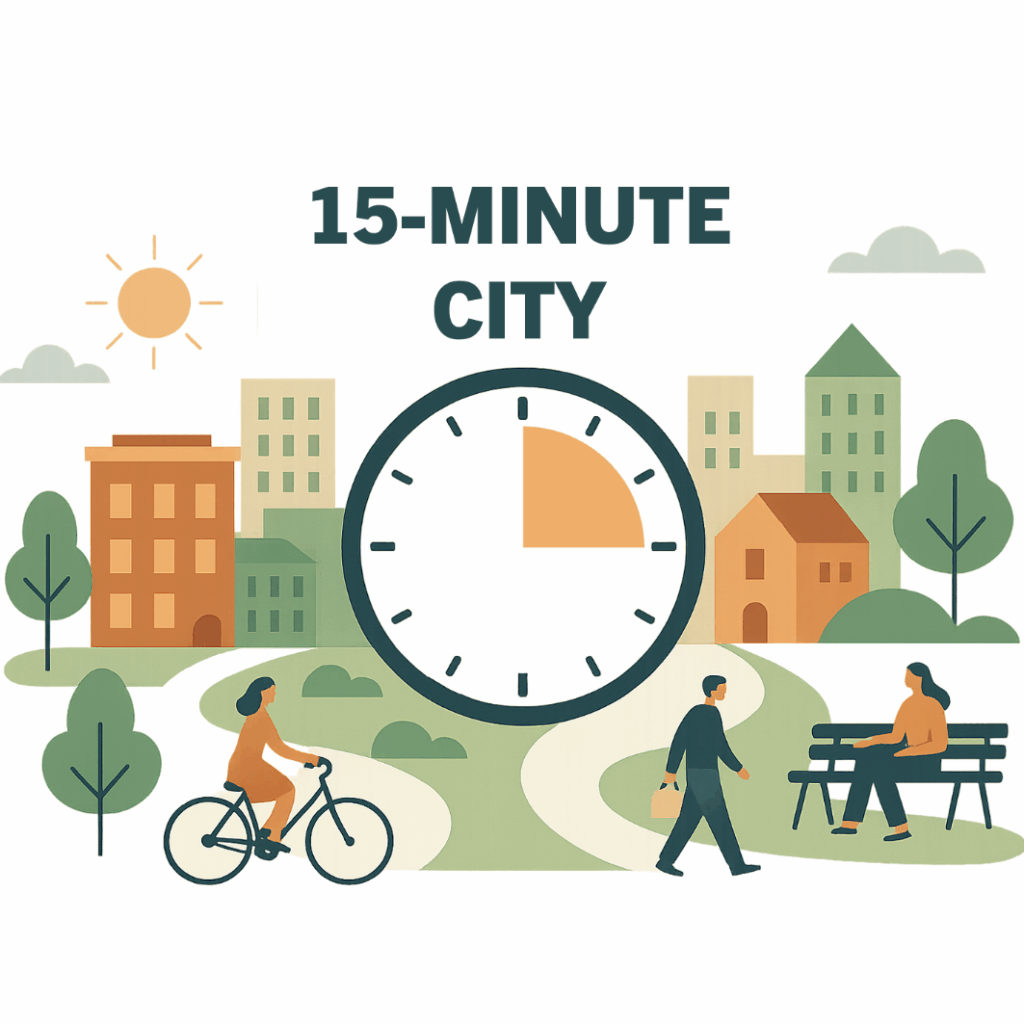
- UVAR4US – Using Urban Vehicle Access Regulations for Reshaping Urban Space The UVAR4US project, coordinated by RiSE (Research Institutes of Sweden) with TRT among its partners, is funded under the Driving Urban Transitions (DUT) partnership within the Horizon Europe programme. The project explores how Urban Vehicle Access Regulations (UVARs) can help create cleaner, more liveable, and people-friendly cities in line with the 15-minute city vision — where daily needs are within a short walk or cycle. UVAR4US studies how access regulations affect mobility, the use of public space, and car dependency. By breaking UVARs down into key “building blocks”, the project identifies how different approaches can be combined to fit local urban contexts and community preferences. An open knowledge base will share examples of existing UVARs and their impact on mobility and urban life. A participation framework will highlight how citizen involvement and transparent decision-making contribute to successful policies. These resources will feed into the UVAR4US Toolkit — a practical set of tools to help cities design and evaluate UVAR strategies that support the 15-minute City model. Four Living Lab cities, each preparing to implement new access regulations, will test and refine the project’s tools and methods in real-life conditions. Why it matters Cities across Europe struggle with congestion, air pollution, and limited public space. UVAR4US aims to show how smarter vehicle access management can reduce car dependency, encourage walking, cycling, and public transport, and improve overall urban quality of life. Participating countries Belgium, Germany, Greece, Italy, Spain, Sweden. Funded project partners Cluster Viooikonomias Kai Perivallontos Dytikis Makedonias, Helsingborgs kommun, Living Prospects Ypiresies Anaptyxis & Perivallontos Etaireia Periorismenis Efthynis, Rupprecht Consult-forschung & Beratung GmbH, TRT Trasporti E Territorio Srl, Universiteit Gent
- Diffusing sustainable mobility options and reducing car dependency in urban areas PolicyMix4Mobility aims to create an inter- and transdisciplinary understanding of policy mixes and their effects based on policy packages that promote sustainable mobility practices and reduce car use in urban areas. This work is informed by a novel conceptual framework, bridging qualitative (case studies), quantitative (modelling) and transdisciplinary (urban labs, forum) methodological approaches to assess existing policy mixes and develop prospective ones. The project involves four European cities of different sizes and diverse socio-spatial conditions and policy contexts, located in Cyprus, Denmark, Germany, and Italy. While they differ in terms of progress towards sustainable mobility, but they share the common ambition to reduce car dependency and promote climate-neutral, socially just urban mobility systems. The project will first develop a conceptual basis for a better understanding of policy mixes aimed at reducing car dependency as well as a monitoring and evaluation framework for assessing the direct and indirect effects of such policy mixes. These will inform the empirical analyses performed through case studies in the four cities and the organization of urban labs. The case studies will enable the collection, analysis, and assessment of qualitative and quantitative data about policy mixes to reduce car dependency and their effects on mobility transitions. To improve the understanding of the effects of mobility and transport policy measures with a strategic approach, the project will also apply the MOMOS assessment tool. The Urban labs will develop in each city tools and methods for institutional, procedural, and social innovations, and actions plans for policy mixes to encourage their development and implementation. A key outcome of the project will be the Mobility Policy Mix Toolbox – a strategic resource designed to support cities and policymakers in navigating the complex politics of mobility transitions.The Consortium is led by IOEW (Germany), including TRT and 6 other partners from Cyprus, Denmark, Germany, Italy. TRT contributes to the project as it comes to: Introduction to the project by the coordinator Dr. Florian Kern (Institute for Ecological Economic Research – IÖW)
- Accelerating net-zero transformation by advancing Europe’s transport pathways and cross-sectoral synergies, with the assessment through a system dynamic modelling framework of current plans and the design of alternative pathways PATH2ZERO aims to provide a comprehensive knowledge base for developing, evaluating and benchmarking net-zero transport pathways, including cross-sectoral assessments and fostering global collaboration. The transport sector accounts for a third of total greenhouse gas (GHG) emissions in the EU, and current planned policies (at EU and national level) alone are expected not be sufficient to meet these targets. Accordingly, there is a need to “develop a new post-2030 energy and climate policy framework to implement the 2040 GHG ambition level” as well as to achieve net-zero GHG emissions by 2050. The project will first develop a common analytical framework for the description of national pathways, with a focus on transport-related content, to collect comparable descriptions of implemented and planned cross-sectoral mitigation plans and transport policy pathways, as well as data for each EU Member State. An interactive dashboard will provide an overview of the current policy frameworks in the EU Member States related to the decarbonisation of the transport sector, facilitating comparative analysis. An advanced modelling framework (STraDyM – Transport Strategies Dynamic Model) will be designed and developed to forecast transport sector activity and emissions up to 2050 at Member State level, integrating them with other sectors for in-depth GHG mitigation assessments, including equity and economic impacts. Existing national transport models (available in five countries) will complement the framework. Finally, the PET-VTT model will be used to model the national and EU level pathways and strategies, including all the energy sectors and mitigation of CO2 emissions (taking transport-related input from the StraDyM and national models). The modelling framework will allow to assess whether the pathways currently implemented and planned in national strategies are likely to achieve the target reduction on the national level, what impact these strategies bear in terms of fairness, costs and risks. Finally, alternative pathways will be designed and simulated, highlighting all target and pathway choices and their trade-offs to evaluate and assess their impacts and effectiveness. The Consortium is led by DLR (Germany), including TRT and 10 other partners from Finland, Spain, Greece, Hungary, Germany, UK, Norway, France, Italy. TRT contributes to the project as it comes to:
- CO-design of e-commerce last-mile DElivery and return options with ZERO emissions CodeZERO is a Horizon Europe research project coordinated by TRT whose objective is to investigate and develop innovative and sustainable zero-emission solutions for last-mile e-commerce deliveries and return options by integrating the perspectives of all various stakeholders. In addressing the question of more sustainable delivery solutions, CodeZERO will not only embrace the reduction of greenhouse gas and pollutants’ emissions from e-commerce deliveries but will also focus on other types of negative impacts such as those on safety, occupancy of public space as well as on delivery costs and working conditions of transport companies’ employees. Attention will be also given to understanding how alternative sustainable solutions might promote diversity, equality, and inclusion and integrate them within the EU transport sector. CodeZERO adopts an interdisciplinary approach combining both desk and field research as well as quantitative and qualitative analysis, following four phases: Analysis phase: understand current delivery options, stakeholder needs and constraints, and environmental impacts; Design phase: Develop consumer awareness campaigns, mechanisms to encourage sustainable choices, and a range of sustainable delivery/return options. Additionally, create a toolset for local authorities to accelerate adoption; Test phase: Pilot test the designed solutions and awareness guidelines in four European cities: Milan (IT), Utrecht (NL), Antwerp (BE), and Oslo (NO); Consolidation phase: Refine communication guidelines and delivery/return options based on pilot data. Develop an interactive tool for stakeholders to analyse the impact of adopting CodeZERO solutions
- Flexibly adapted MetaInnovations, use cases, collaborative business and governance models to accelerate deployment of smart and shared Zero Emission mobility for passengers and freight MetaCCAZE is a “Research and Innovation Action” Horizon Europe project to support the implementation of the Climate-neutral and Smart Cities Mission. Its overreaching mission is to accelerate the user-centred deployment of smart systems and services that combine electric automated and connected mobility and related infrastructure across European cities. The project organizes a series of MetaDesign activities with multisector-stakeholders and population groups to develop co-designed and shared zero-emission mobility use cases, collaborative business and governance models. A toolkit called MetaInnovations will be developed consisting of six main smart technologies (1. grid supply-fleet-demand; 2. AI-Datawarehouse; 3. inductive automated charging; 4. remote control centre for Avs and ADAS for parking and docking; 5. AI-driven re-scheduling tools for e-services; 7. Digital twin optimisation). These technologies will be implemented to improve passenger and freight services (PT, on-demand minibuses, bike sharing and deliveries) and related infrastructures (mobility and logistics hubs, traffic management centres, charging infrastructure) in 4 trailblazer cities (Amsterdam, Munich, Limassol, Tampere). Successful cases will be transferred, implemented and demonstrated in 6 follower cities (Athens, Krakow, Gonzo, Milan, Miskolc, Paris region). TRT is leader of WP1 that sets the ground by reviewing the current situation in the cities and defining the several activities that will help structuring the implementation of the trailblazer and follower cities as well as their cross-fertilization. TRT will also design the standard impact evaluation framework that will be used by the cities to assess the efficiency and to ensure that their impacts aligns with the MISSION and SUMP/SULP targets. Finally, TRT will also prepare the “MetaPolicy Package” to contribute to updates of urban and transport policies and feed the strategic research and innovation agendas (SRIA) of CCAM, 2ZERO, CIVITAS and other initiatives.
- CIVITAS MUSE – Coordination and Support Action for the CIVITAS Initiative The scope of CIVITAS MUSE is to support the CIVITAS community to increase its impact on urban mobility policy making and advance it to a higher level of knowledge, exchange, impact and sustainability, while guaranteeing essential high-quality support. Their main objectives include: to act as a destination for knowledge developed by the CIVITAS Community over the past twenty years To expand and strengthen relationships between cities and stakeholders at all levels To support the enrichment of the wider urban mobility community by providing learning opportunities To represent CIVITAS on the international stage TRT is responsible of the activities related to projects monitoring and evaluation, as well as for the development of policy recommendations. More specifically, the key objectives of TRT work are: Monitor results and implementation activities across CIVITAS and urban mobility projects with reference to what is new and emerging from the CIVITAS Community on urban mobility innovations and policy making. Enhance, consolidate, and bring to the next level the substantial body of knowledge that has and is continuously being produced by urban mobility projects, to improve its accessibility to practitioners. Provide a common realistic, user-friendly and effective evaluation framework as the reference point for mobility measures and concepts, supporting projects in its implementation to harmonise evaluation activities. Provide focused policy support to the CIVITAS Community, informed by Policy Groups contributing to Green Deal objectives, elaborating policy building blocks and content for MUSE learning and communications. For more information, check the previous Coordination and Support Action for the CIVITAS Initiative, CIVITAS Elevate
- HiReach, a project funded by the Horizon 2020 EU research program, addressed the specific mobility needs of segments of the population who are vulnerable to transport poverty and social exclusion Context and overall objectives of the project HiReach addressed the specific mobility needs of those segments of the population vulnerable to transport poverty and social exclusion such as people with temporarily or permanent reduced mobility, children, young and elderly people, women, migrants, ethnic minorities, low income, unemployed and people living in isolated and deprived areas. The project also analysed geographical and spatial elements affecting transport poverty to figure out inclusive mobility options that can properly work in urban-peripheral, peri-urban, rural, and remote or deprived territories. By combining different attributes of available transport concepts and bottom-up initiatives with smart operational schemes and IT applications, HiReach was aimed at the creation of viable business models for small scale, modular and easily replicable mobility services that can be provided at affordable prices or with minimum subsidies, targeting low-density and transport poor segments of the population. The HiReach mechanism for exploring, generating and testing inclusive mobility solutions was based on the creative work of startups and innovative entrepreneurs, but also on social innovation through the direct involvement of different social groups as co-owners of the proposed solutions. The overall ambition was to generate project results in strict linkage with developers and final users. Fieldwork activities have been conducted in 6 European study regions: Counties of Esslingen and Göppingen (Baden-Württemberg, DE), Naxos and Small Cyclades (GR), Inner Area Southern Salento (Puglia Region, IT), Guarda (PT), Buzau (RO), North and South-East Luxembourg. TRT was the project coordinator, leading a 9-partner international consortium. Summary of the project work The first analytical phase of the project explored travel behaviour and social habits of targeted vulnerable groups while assessing their travel demand and mobility needs. An extensive desk research across the EU Member States condensed available data, recent trends and scientific literature associated with transport poverty by targeting spatial specificities, mobility socio-economic landscape(s) as well as visible and hidden mobility needs and attitudes. This step required also the (re)-elaboration of the concept of transport poverty including a complex assessment of inequality and disadvantage, distinguishing between transportation-related disadvantage, social disadvantage and social exclusion. A cornerstone of the HiReach approach was the micro-analysis conducted on the field in six different countries. A set of 47 interviews with experts and stakeholders and the direct involvement of 166 vulnerable users through different focus group sessions served as validation of desk research activities and mobilization of local communities as co-owners of the solutions. In particular, TRT conducted fielwork activities in the Southern Salento area, focusing on the transport challenges of women and people with reduced mobility. A visual and descriptive representation of the identified needs and attitudes, featuring also mixed vulnerability characteristics and traits, was transposed into the elaboration of 6 Personas (see HiReach Insight Package). The following exploratory phase critically assessed the limits and drawbacks of the current supply of public […]
- HARMONY, a project funded by the Horizon 2020 EU research program, applies an holistic approach for providing innovative spatial & transport planning tools to metropolitan and regional authorities, in order to support decision-making and lead a sustainable transition to a new mobility era The main objective of the HARMONY project was to develop a new generation of harmonised spatial and multimodal transport planning tools, modeling comprehensively the dynamics of the changing transport sector and spatial organisation, and enabling metropolitan area authorities to lead the transition to a low carbon new mobility era in a sustainable manner. The main activities of the project were related to: Designing and develop a model suite (the HARMONY MS), integrating land-use models (strategic/long-term), people and freight activity-based models (tactical/mid-term), and multimodal network models (operational/short-term) allowing for vertical planning. Identify new mobility services, concepts and technologies for people and freight for urban, suburban, and regional transport and their business models. Implementing demonstrations with electric AVs, robots, and drones for freight delivery to understand in real-life their requirements. Recommending updates for spatial and transport strategies and SUMPs to deal with mobility transition to decarbonise the transport sector. Applying and validating the model suite on six EU metropolitan areas: Rotterdam(NL), Oxfordshire(UK), Turin(IT), Athens(GR), Trikala(GR), Upper Silesian-Zaglebie Metropolis(PL). The consortium, coordinated by the University College of London, consisted of 21 partners. TRT led the activities related to spatial and transport strategies and SUMPs, and it was involved in the technical activities to design and develop the modelling suite. Furthermore, TRT experts supported the application in the metropolitan area of Turin (IT). HARMONY Model Suite The HARMONY Model Suite has been designed and implemented to enable end-users such as planners, decision makers, researchers and transport operators/providers to couple/link independent models and analyse a portfolio of regional and urban interventions for both passenger and freight mobility, including policies and capital investments, land-use configurations, economic and sociodemographic assumptions, travel demand management strategies and new mobility service concepts. The conceptual architecture of the HARMONY model suite allows to integrate new and existing sub-models with a multi-scale approach, consisting in the Strategic Level (Long-term), the Tactical Level (Mid-Term) and the Operational Level (Short-term). The Strategic Level is mainly composed of regional economic, demographic forecasting, land-use, spatial freight interaction and long-term mobility choice models. The Tactical level is made of a fully agent-based passenger and freight demand model, representing passenger and freight agents’ choices. The Operational Level is representing the transport supply at network level, with demand interactions at high granularity. The Moby App Within the HARMONY project, a new approach for travel demand data collection has been used: a free smartphone application, the MobyApp, was developed for Android and iOS. Downloading the application, the survey participants need only to start the tracking of their trips and activities, and the whole travel diary is tracked by the application. Moreover, a few complementary questionnaires are included in the application, to collect additional information on transport behaviours. The travel survey was performed in Turin and Oxfordshire: […]