28 February 2023

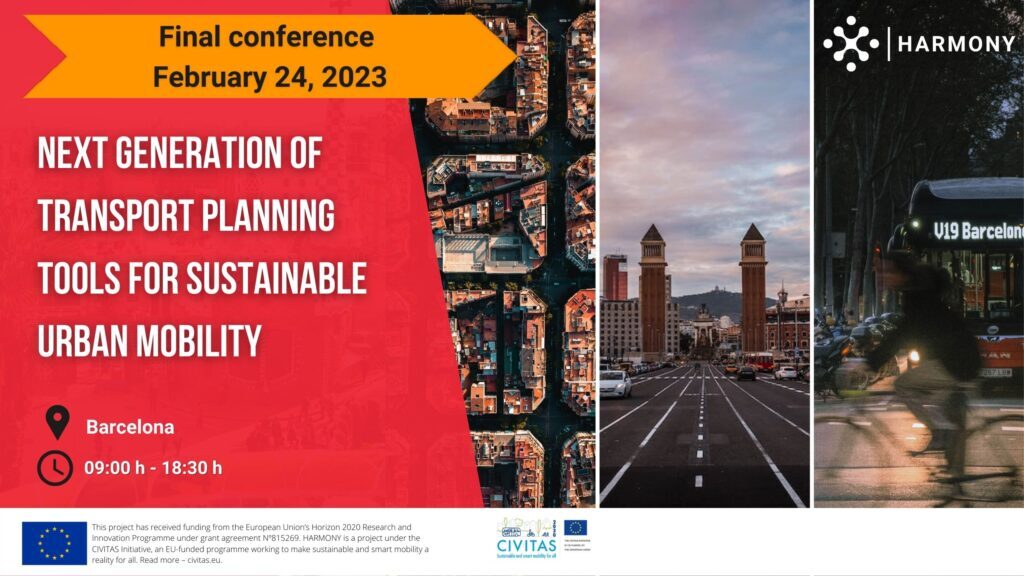
Harmony final conference

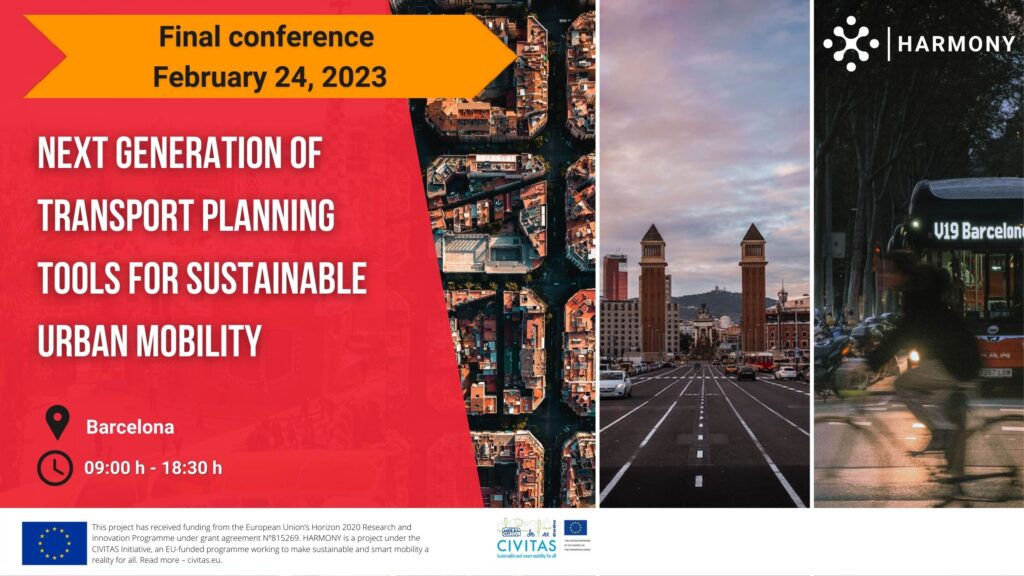
The H2020 funded project HARMONY concludes with the final conference in Barcelona. 20 partners from 9 different countries worked together to enable metropolitan area authorities to lead a sustainable transition to a low-carbon new mobility era. The HARMONY Model Suite has been implemented by linking models at strategical, tactical and operational levels, leading to a spatial and multimodal planning tool. A mobile application – the MOBY App – has been developed to collect urban transport data, to be used in the Activity-Based model, one of the most recent modelling algorithms to simulate mobility habits.
4 November 2022

HARMONY Model Suite: an integrated platform for sustainable mobility planning in Turin

WORKSHOP – Turin, November 14th, 2022 – 10.45-15.30   HARMONY is a European project funded by the European Commission within the Horizon 2020 Programme. It began in June 2019 and is scheduled to end in February 2023. The consortium, coordinated by the University College of London, consists of 21 partners from 9 European countries. HARMONY’s main goal is to develop a new generation of harmonised spatial and multimodal transport planning tools which comprehensively model the dynamics of the changing transport sector and spatial organisation, enabling metropolitan area authorities to lead the transition to a low carbon new mobility era in a sustainable manner.
26 October 2022

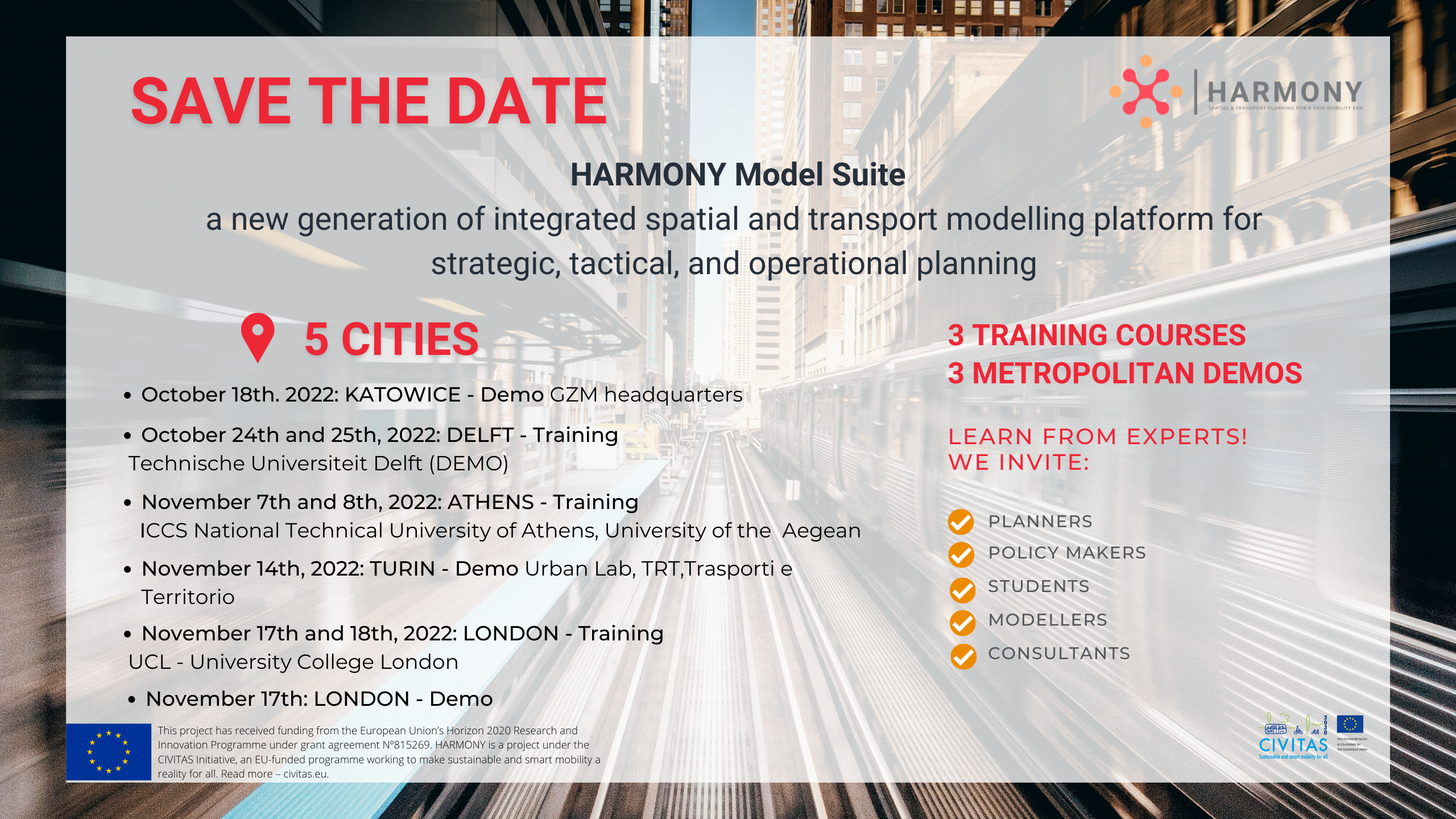
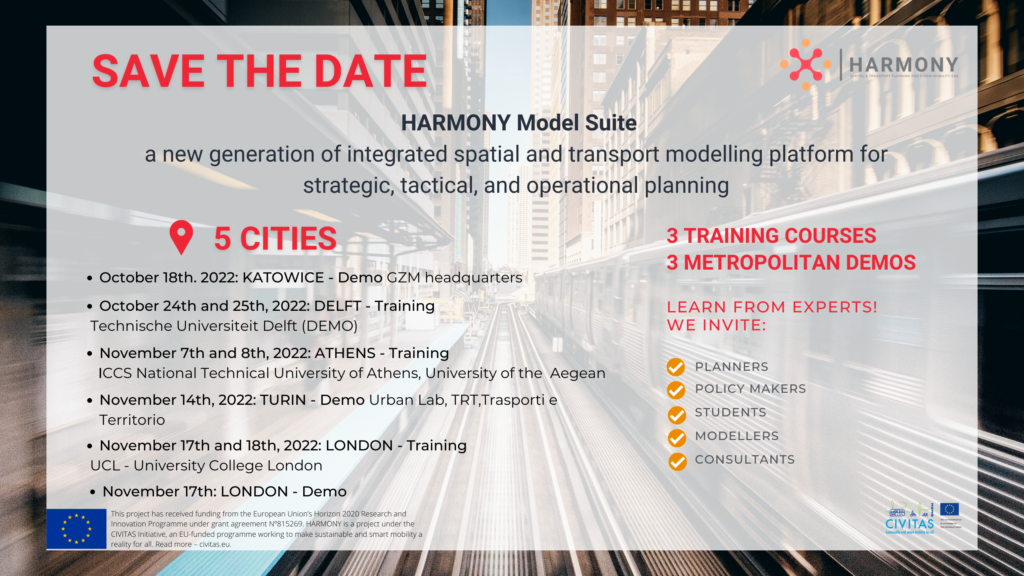
HARMONY H2020 Training Workshops

The H2020 funded project HARMONY aims to develop a new generation of harmonised spatial and multimodal transport planning tools, to represent new forms of mobility for freight and people, enabling metropolitan areas authorities to lead the transition to a low carbon new mobility era in a sustainable manner.
31 May 2022

The Rail Baltica transport demand model project is now completed

Rail Baltica is a rail transport infrastructure project that integrates the Baltic States in the European rail network connecting Poland, Lithuania, Latvia, Estonia and indirectly also Finland. It is a fully interoperable railway line of more than 870 km in length designed for both passenger and freight transport and planned to become operational in 2027. The Rail Baltica transport demand model project, led by TRT, has developed and implemented a multimodal transport model to forecast the passenger and freight demand for the Rail Baltica infrastructure up to the year 2056.
11 November 2021

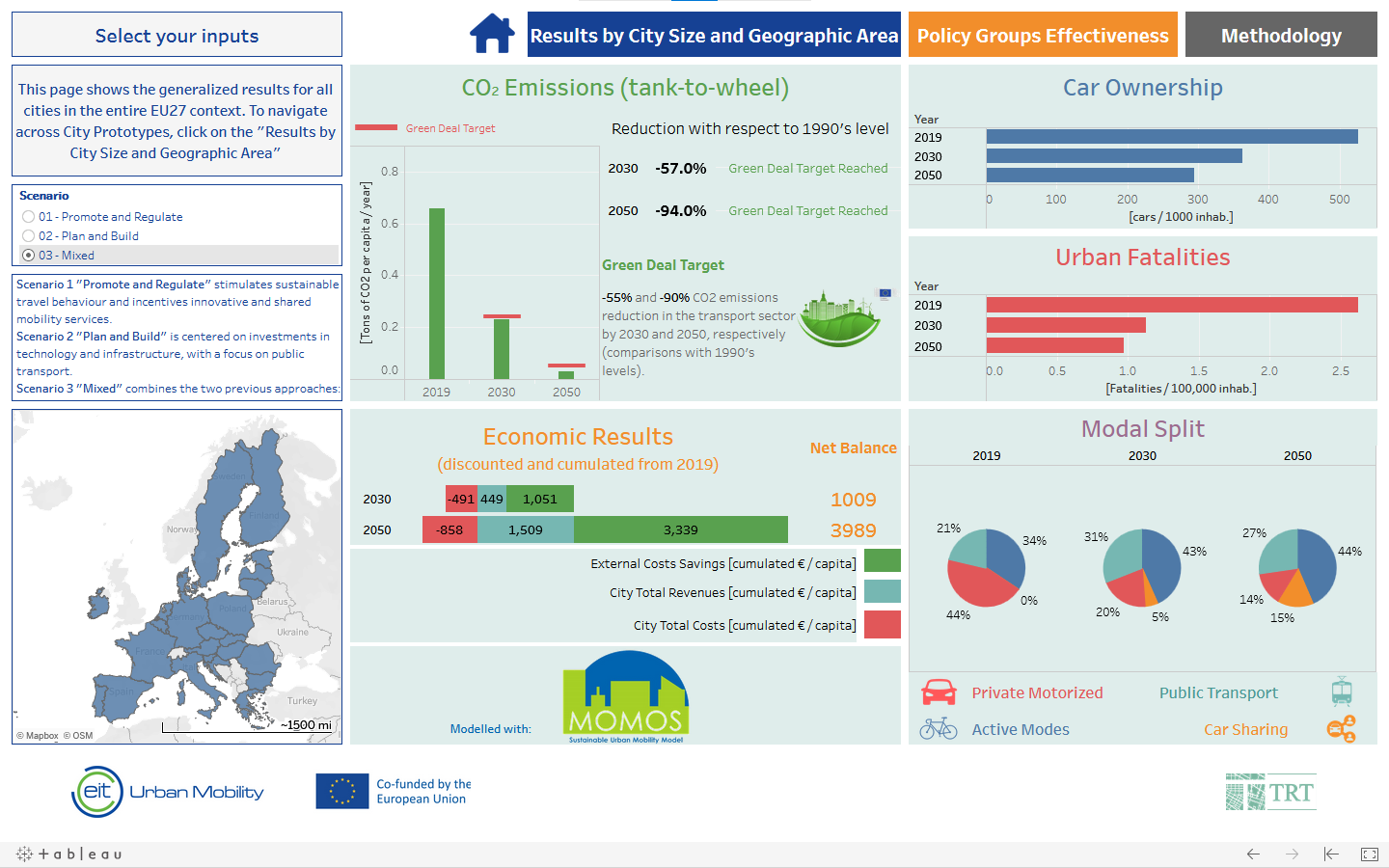
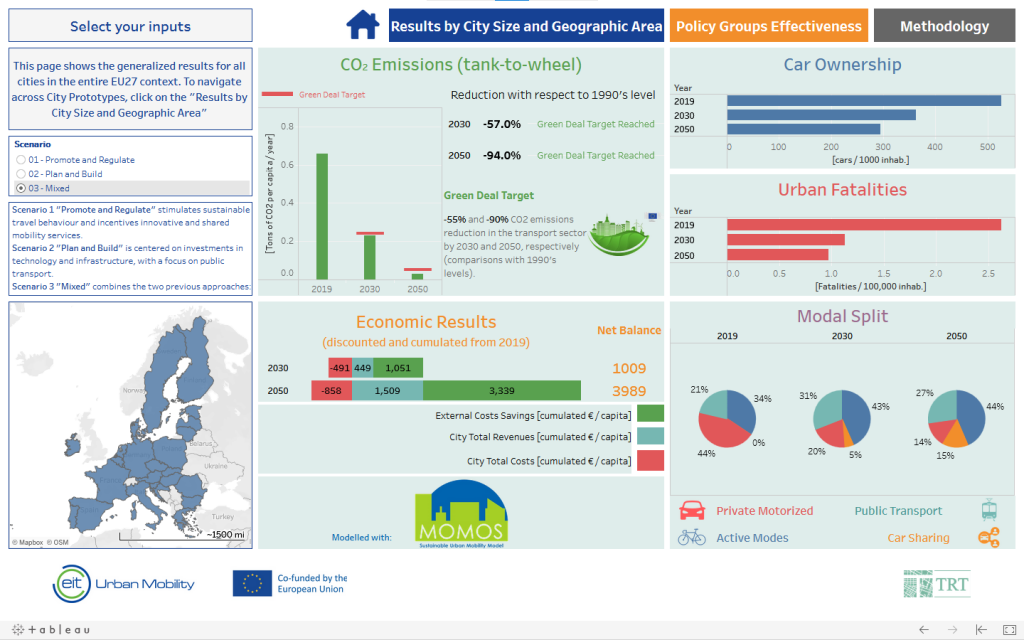
Our study on Costs and Benefits of the Sustainable Urban Mobility Transition is online

How much will the transition to sustainable urban mobility cost in European cities? Which benefits and changes in mobility will it bring? What will be the most cost-effective policies to accelerate this transition? These are some of the questions that a new study from TRT Trasporti e Territorio has been replying to. The study, commissioned by EIT Urban Mobility and released today, produced a quantification of the costs and benefits of the transition to sustainable urban mobility in European cities by 2030 and 2050. The analysis was carried out with the modelling tool MOMOS, which allowed to assess the impacts of different mobility transition scenarios.
1 September 2021

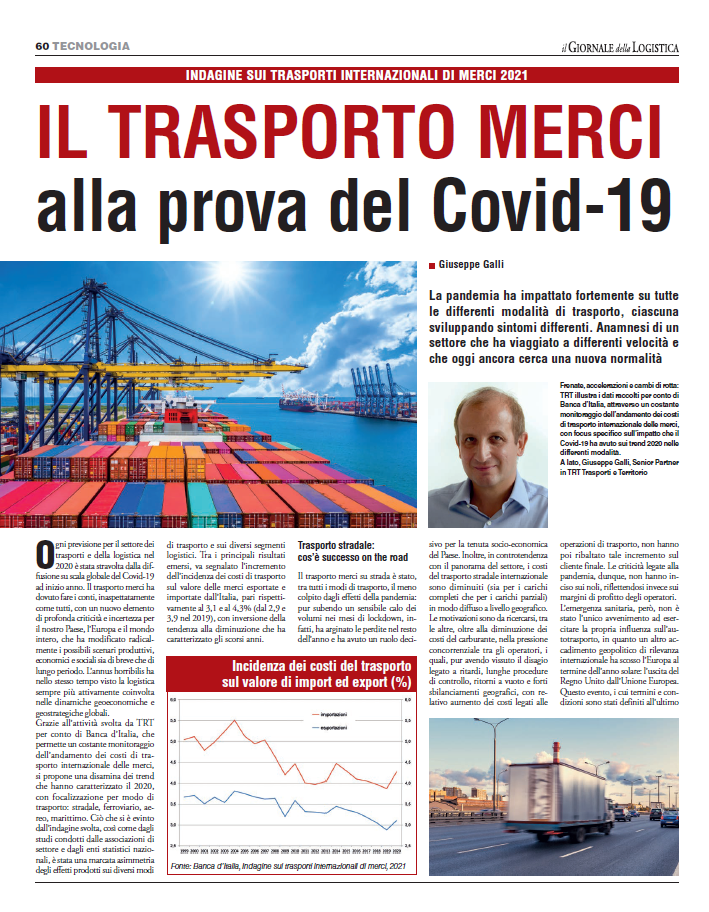
The costs of freight transport during the Covid-19 pandemic

An article on freight transport during the Covid-19 pandemic was published in the July/August 2021 issue of Il Giornale della Logistica. Starting from the activity carried out by TRT on behalf of the Bank of Italy, which involves a constant monitoring of the costs of international freight transport to/from Italy, the article proposes an analysis of the trends that characterized 2020 with a focus on different transport modes: road, rail, air, sea. Read here (only in italian).        
27 August 2021

Global knowledge exchange online event on E-buses: from pilots to mainstreaming

TRT is organising a Global knowledge exchange online event on 16 and 17 September, a cooperation between the World Bank Group and the CIVITAS initiative. E-mobility stakeholders from Latin America and Europe will come together to share perspectives and discuss policy pathways for the deployment of e-buses in urban public transport fleets.   Have a look to the programme and register for the event following this LINK!! The event will be organised in English, Spanish and Portuguese.  
27 May 2021

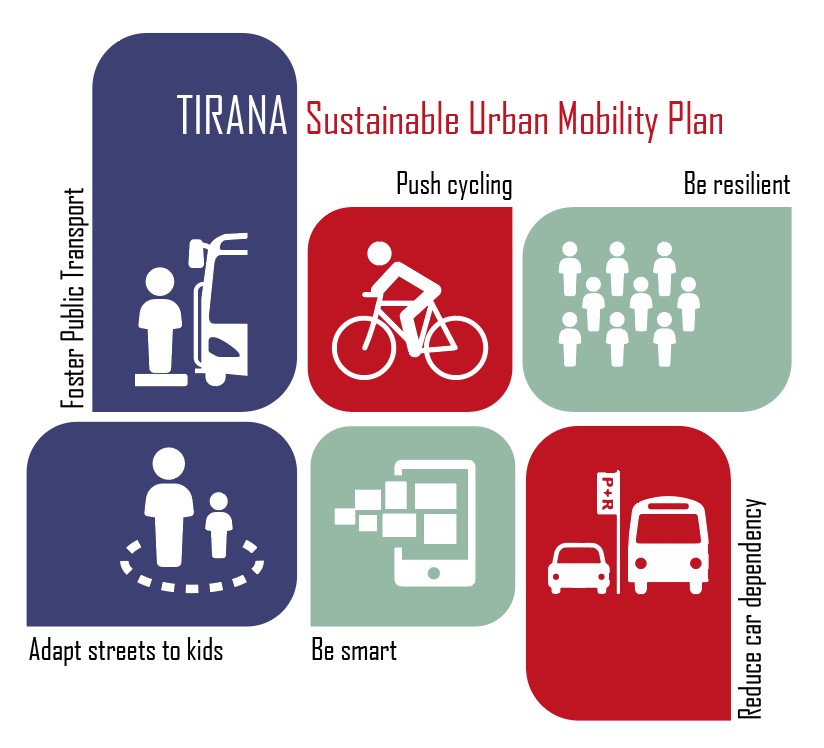
SUMP for the City of Tirana published on Eltis Portal

TRT supported the city of Tirana in the development of their first SUMP! The study was part of SUMSEEC II initiative, funded by the German Ministry for Economic Cooperation and implemented by GIZ. Have a look to the case study published today on the Eltis Portal! For more information also check the project page on our website. # Eltis Case studies presents and analyses successful local examples of sustainable urban mobility initiatives and strategies  
21 January 2021

Re-Thinking mobility poverty

The recently-terminated HiReach project has just published a book entitled “Re-thinking Mobility Poverty. Understanding User´s Geographies, Backgrounds and Aptitudes”. TRT, the HiReach coordinator, directly contributed of the writing several chapters. IThe book, which is based on the analytical phase of project, seeks to better conceptualise and define mobility poverty, addressing both its geographies and socio-economic landscapes. It examines the social construction of mobility poverty by delving into mobility patterns and needs as they are differently experienced by social groups in different geographical situations and also offers a comparison of the global phenomenon through fieldwork conducted in the six different HiReach study regions.