Davide Tessarollo

14 March 2023

HARMONY Guidelines on Modelling tools for SUMPs in the new mobility era

Despite the acceleration of new mobility solutions and the increasing relevance of models in urban transport planning, particularly in the context of decarbonisation and climate neutrality, a clear, concise and up-to-date guidance document on modelling tools for the urban mobility planner’s community was missing. TRT, as part of the WP8 (Process assessment, SUMPs recommendations and roadmaps) activities within the HARMONY project, drafted the document “Guidelines on Modelling tools for Sustainable Urban Mobility Plans (SUMPs) in the new mobility era” whose aim is to provide local planning authorities with guidance on transport modelling applications in their SUMP implementation process, building on the concept of SUMP, as outlined by the European Commission’s Urban Mobility Package and described in detail in the European SUMP Guidelines 2.0 (second edition). The project highlighted the importance of a bottom-up approach in urban planning, through the implementation of co-creation labs in six metropolitan areas (Athens, Oxfordshire, Rotterdam, Trikala, Turin, and Upper Silesian-Zaglebie Metropolis). Within this context, HARMONY Guidelines on Modelling tools are useful to assess new mobility technologies impacts in the urban environment, answering to questions related to transport models.
28 February 2023

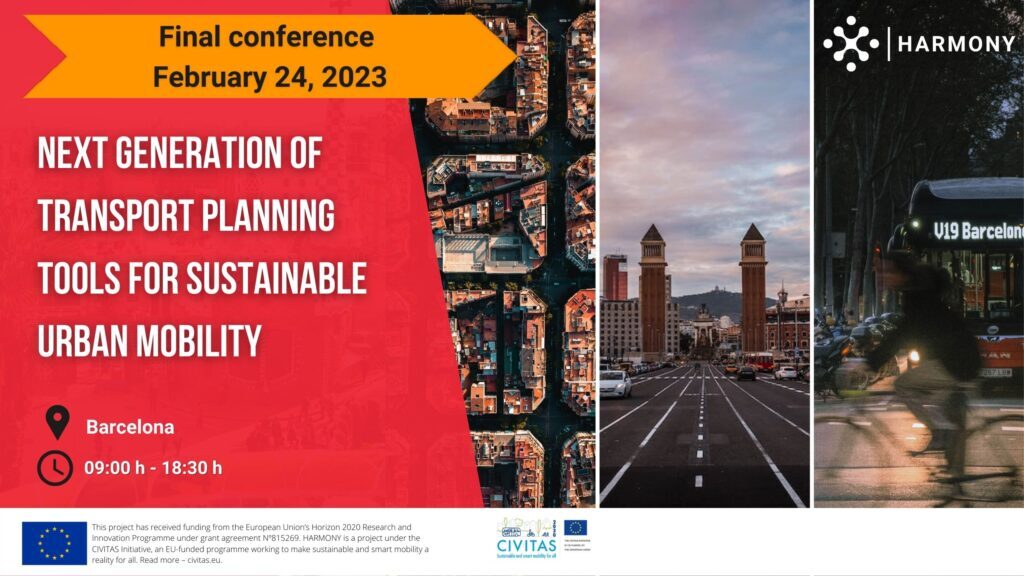
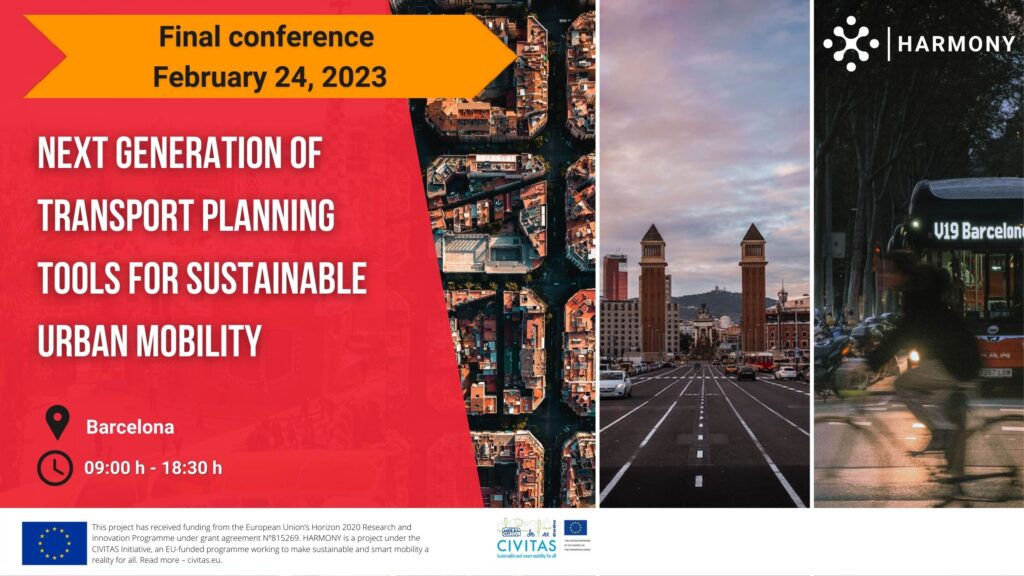
Harmony final conference

The H2020 funded project HARMONY concludes with the final conference in Barcelona. 20 partners from 9 different countries worked together to enable metropolitan area authorities to lead a sustainable transition to a low-carbon new mobility era. The HARMONY Model Suite has been implemented by linking models at strategical, tactical and operational levels, leading to a spatial and multimodal planning tool. A mobile application – the MOBY App – has been developed to collect urban transport data, to be used in the Activity-Based model, one of the most recent modelling algorithms to simulate mobility habits.
16 January 2023

HARMONY Model Suite: uno strumento integrato per la pianificazione della mobilità sostenibile a Torino

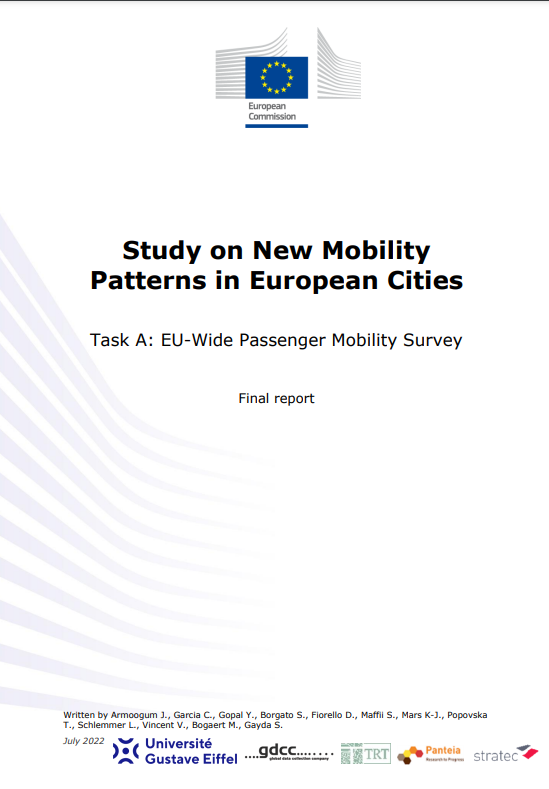
TRT is happy to announce the publication of a broad study on new mobility patterns, describing the mobility choices of European citizens and how the urban logistics sector is developing in 16 EU cities. The study, conducted for the European Commission – DG MOVE, was commissioned to collect reliable and extensive data on passenger mobility, urban logistics, fleet composition, transport activity and traffic flows in Member States. The passenger mobility survey showed that, on average, EU citizens travelled 27 km per day for an average duration of 80 minutes. The predominant means of transport in 2021 was the car, which was used for almost half of all trips. Excluding trips made by car, walking is the most popular way of moving around in most of the EU, with the Netherlands as a notable exception, where cycling is more popular. New mobility forms are gaining traction: ride-hailing (23%) and ride-sharing (12%) are attracting the most users; however, they are generally used on an occasional basis. The results of the survey were influenced by the COVID-19 pandemic, which affected travel behaviour and restricted travel options. Indeed, 64% of respondents found that the pandemic affected their mobility.
4 November 2022

HARMONY Model Suite: an integrated platform for sustainable mobility planning in Turin

WORKSHOP – Turin, November 14th, 2022 – 10.45-15.30   HARMONY is a European project funded by the European Commission within the Horizon 2020 Programme. It began in June 2019 and is scheduled to end in February 2023. The consortium, coordinated by the University College of London, consists of 21 partners from 9 European countries. HARMONY’s main goal is to develop a new generation of harmonised spatial and multimodal transport planning tools which comprehensively model the dynamics of the changing transport sector and spatial organisation, enabling metropolitan area authorities to lead the transition to a low carbon new mobility era in a sustainable manner.
26 October 2022

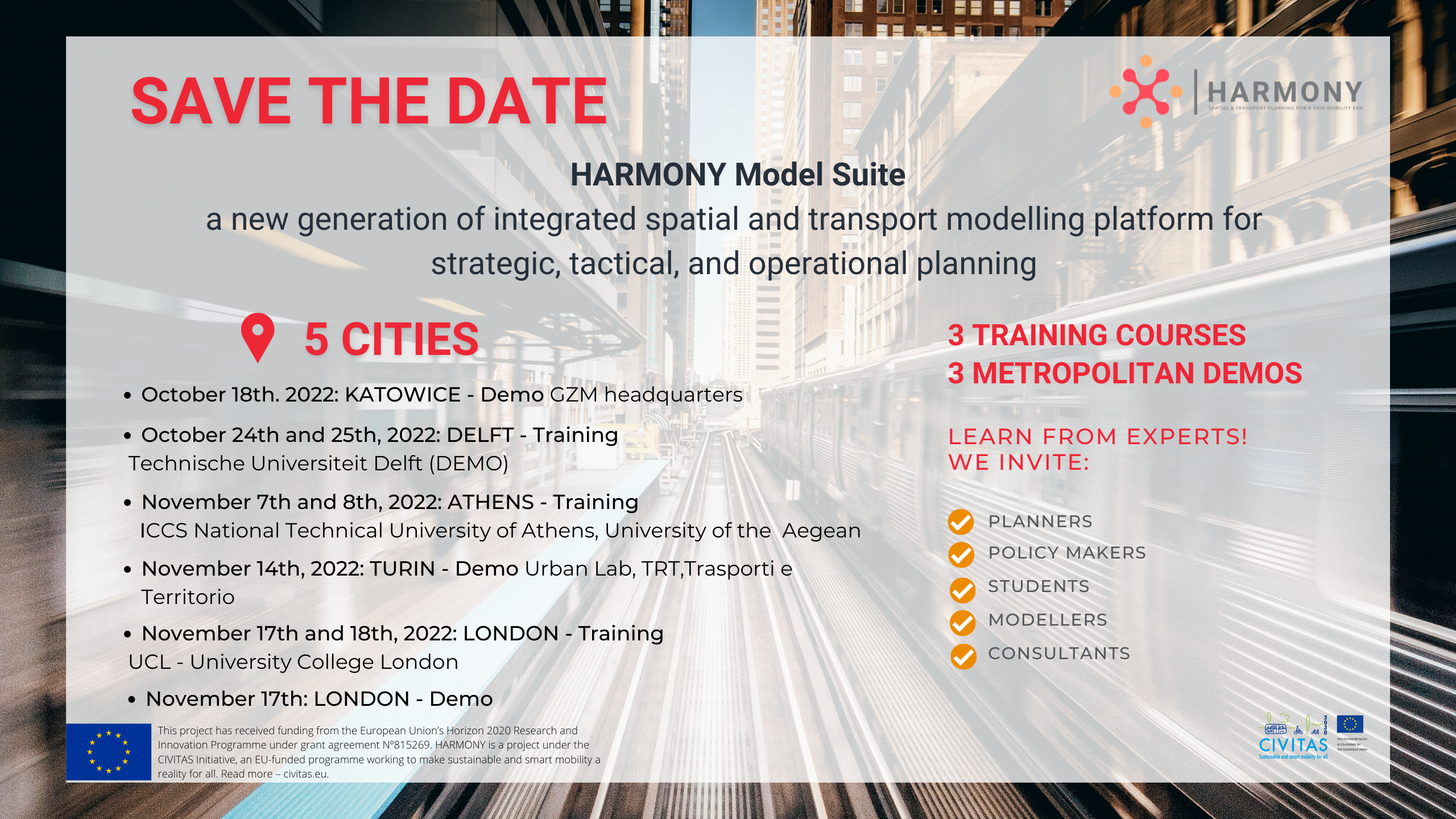
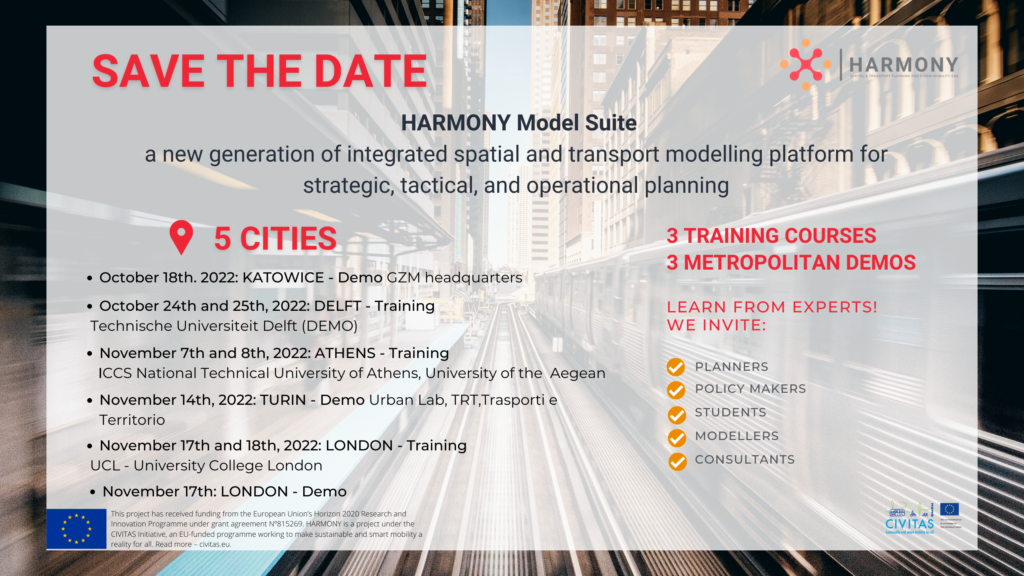
HARMONY H2020 Training Workshops

The H2020 funded project HARMONY aims to develop a new generation of harmonised spatial and multimodal transport planning tools, to represent new forms of mobility for freight and people, enabling metropolitan areas authorities to lead the transition to a low carbon new mobility era in a sustainable manner.
11 November 2021

Our study on Costs and Benefits of the Sustainable Urban Mobility Transition is online

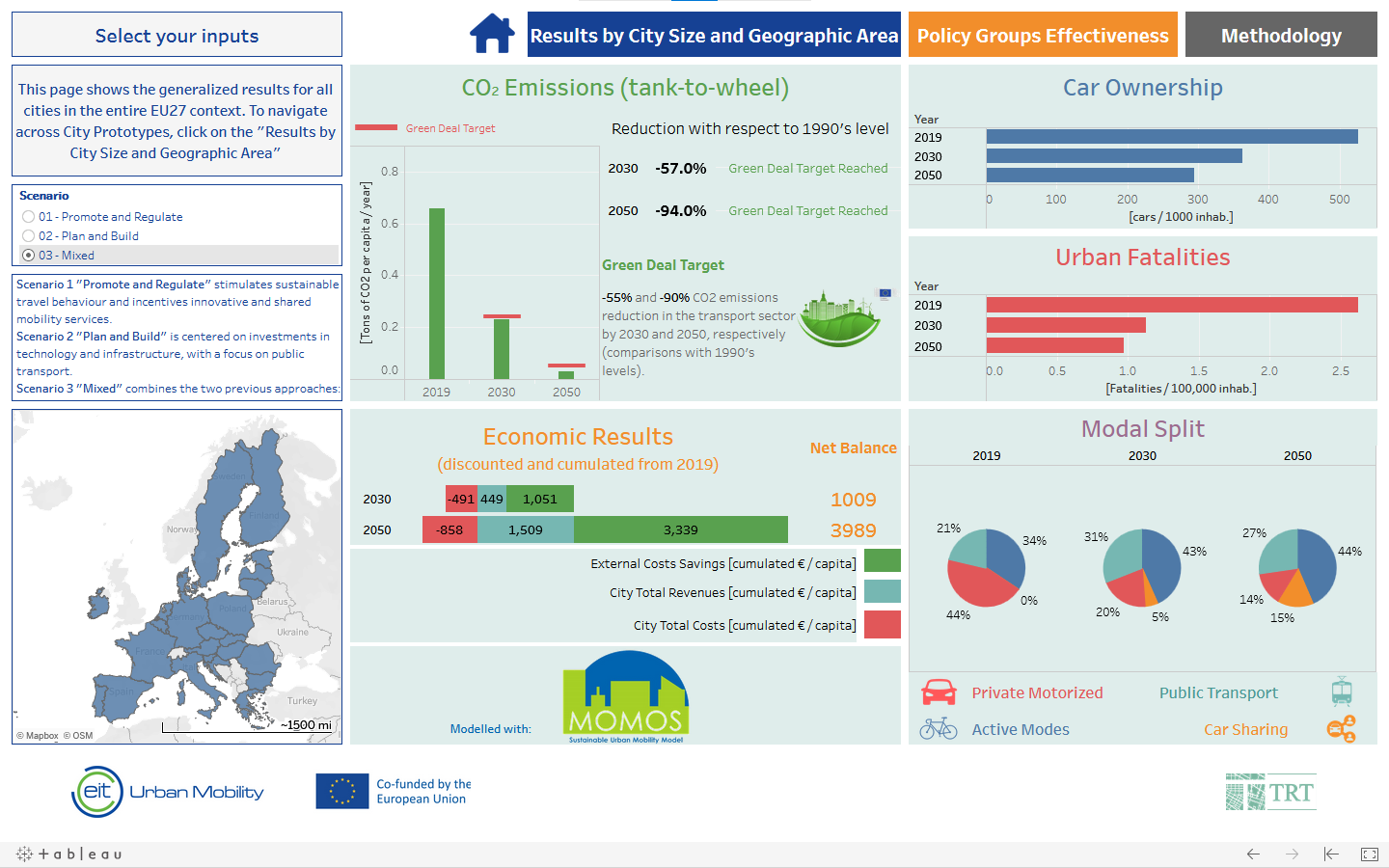
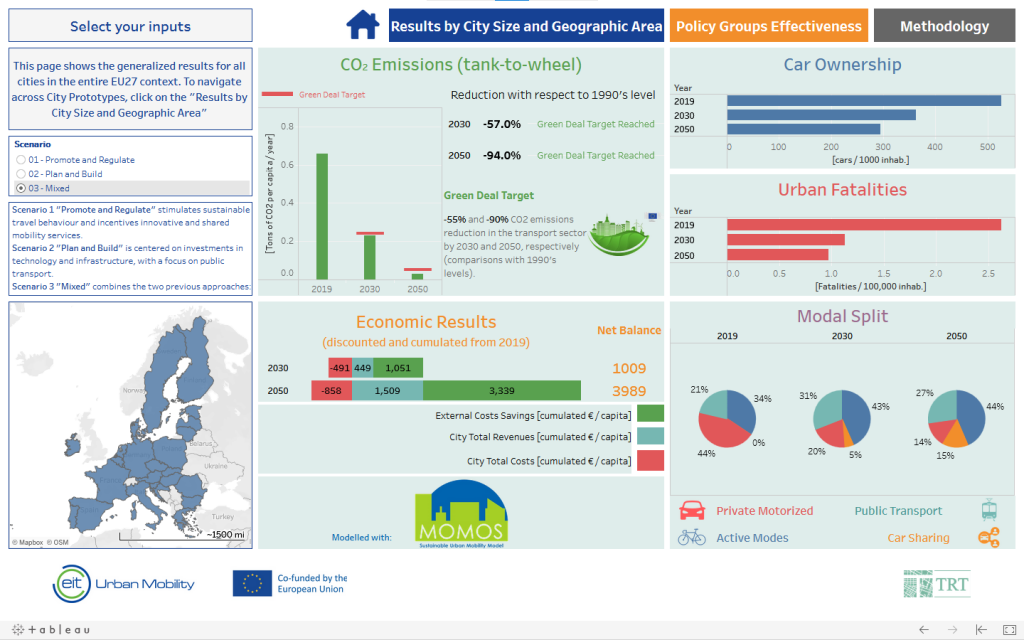
How much will the transition to sustainable urban mobility cost in European cities? Which benefits and changes in mobility will it bring? What will be the most cost-effective policies to accelerate this transition? These are some of the questions that a new study from TRT Trasporti e Territorio has been replying to. The study, commissioned by EIT Urban Mobility and released today, produced a quantification of the costs and benefits of the transition to sustainable urban mobility in European cities by 2030 and 2050. The analysis was carried out with the modelling tool MOMOS, which allowed to assess the impacts of different mobility transition scenarios.
7 October 2021

An analysis of the regulatory and policy framework to support MaaS, in the new issue of Smart City and Mobility Lab

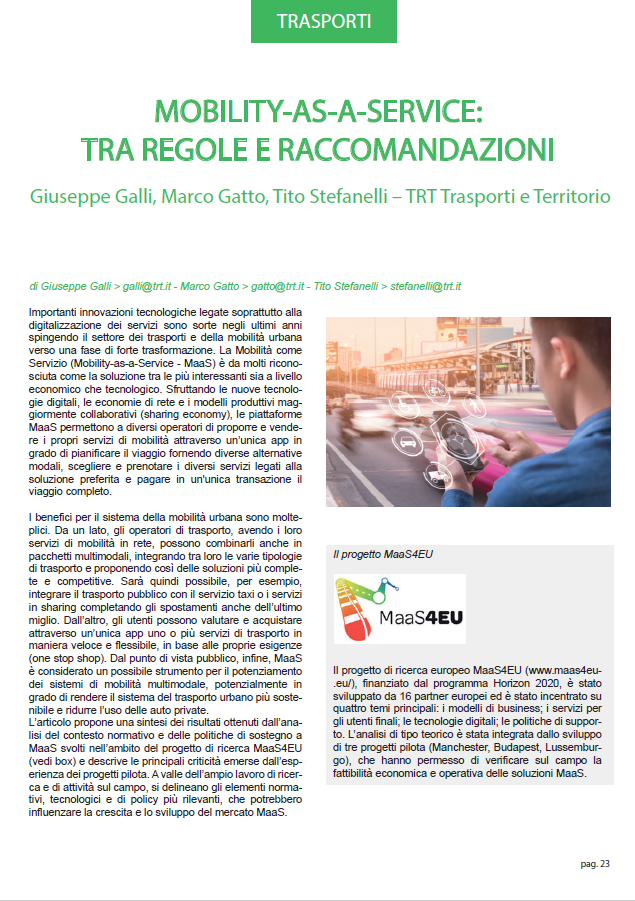
The article “Mobility-as-a-Service: regulations and recommendations” has been published in the MMYY edition of Smart City and Mobility Lab. Based on the extensive research activity and the experiences from three pilot projects (Manchester, Budapest, Luxembourg) developed within the research project MaaS4EU, the article discusses the regulatory, technological and policy elements that are key for the growth and development of the MaaS market. Read here (only in italian).
1 September 2021

The costs of freight transport during the Covid-19 pandemic

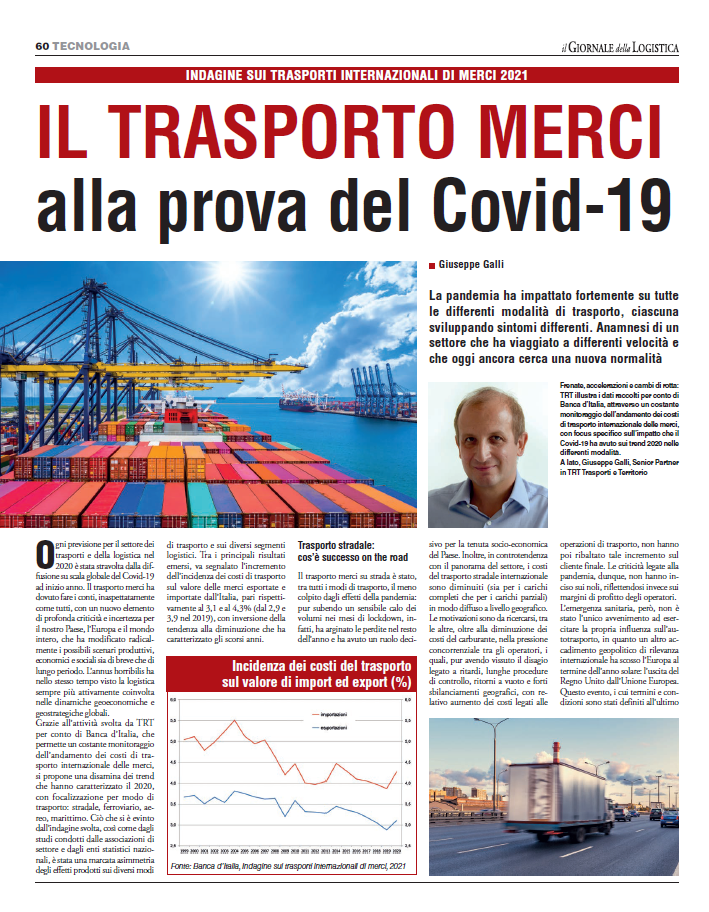
An article on freight transport during the Covid-19 pandemic was published in the July/August 2021 issue of Il Giornale della Logistica. Starting from the activity carried out by TRT on behalf of the Bank of Italy, which involves a constant monitoring of the costs of international freight transport to/from Italy, the article proposes an analysis of the trends that characterized 2020 with a focus on different transport modes: road, rail, air, sea. Read here (only in italian).        
26 February 2021

The Future European Energy System

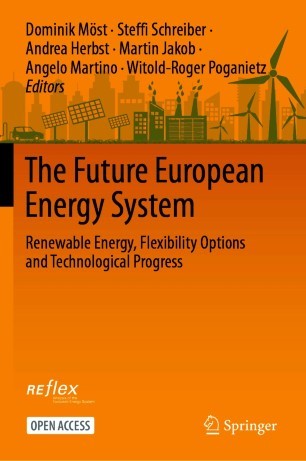
The future energy system in Europe needs to be decarbonized and thus be based almost exclusively on renewable energy sources. Therefore it is challenged by the intermittent nature of renewables and requires several flexibility options. The interaction between different options and the impact on environment and society are in the focus of this contribution. It has been the core objective of the Reflex research project funded by the H2020 EU research programme and is reflected in the book “The Future European Energy System – Renewable Energy, Flexibility Options and Technological Progress” appjust published by SpringerNature. The book analyzes the transition toward a low-carbon energy system in Europe under the aspects of flexibility and technological progress. By covering the main energy sectors – including the industry, residential, tertiary and transport sector as well as the heating and electricity sector – the analysis assesses flexibility requirements in a cross-sectoral energy system with high shares of renewable energies. The authors apply models and tools from various research fields, including techno-economic learning, fundamental energy system modeling, and environmental and social life cycle as well as health impact assessment, to develop an innovative and comprehensive energy models system (EMS). Moreover, the contributions examine renewable penetrations and their contributions to climate change mitigation, and the impacts of available technologies on the energy system.