Urban mobility for people and goods in Italy and Europe is one of our core competencies, built up over the years through studies, research projects and a consolidated experience in urban planning.
- Update of the study on the “Costs and Benefits of the Urban Mobility Transition” The Costs and Benefits of the sustainable urban mobility transition study was carried in 2021 by TRT with the purpose of assessing the impacts of different sustainable urban mobility scenarios in European cities while quantifying the costs and benefits of this transition in 2030 and 2050. The current study consists in an update and improvement of the previous analysis, aiming to: Refine the input data, the intervention levels and targets of the policy measures of the transition scenarios and their timeline of implementation. Improve and enlarge the policy measures applied to the scenarios Run a new modelling simulation to quantify the expected costs and benefits of the sustainable urban mobility transition in European cities by 2030 and by 2050. Draft specific policy recommendations for practitioners. Provide a set of relevant datasets for the development of an interactive tool The calculation is based on an improvement and extension of the MOMOS model, which allows to assess the impacts of different mobility transition scenarios. The quantification of results is applied to 12 city prototypes (representing more than 780 cities in EU27), considering different dimensions (small, medium, and large cities) and geographic areas (southern, central/western, northern, and eastern Europe). The project will consider three potential scenarios, based on a combination of policy measures taken from key EU initiatives and related to the specific emphasis of each scenario. The available measures are of a different nature and comprehensively cover the range of options that cities currently have available to promote the transition to sustainable urban mobility, belonging to eight different policy groups: Shared Mobility; Innovative mobility services; Vehicle fleet & Charging Infrastructure; Transport Infrastructure; Transport avoidance and behaviour; Pricing Schemes; Traffic management and control; urban logistics. The outputs of the study will consist in a series of indicators from three domains, estimated at base year 2022 as well as at future years 2030 and 2050: transport (modal split, car ownership), environment (CO2 and air pollutant emissions, fatalities), and economic (city costs, revenues, user and freight operator costs, and externalities). Also, building on the results for the 12 city prototypes and on a policy effectiveness comparison of the different groups of policy measures, a series of recommendations focused on mobility practitioners will be provided. For more information: Previous contract
- CO-design of e-commerce last-mile DElivery and return options with ZERO emissions CodeZERO is a Horizon Europe research project coordinated by TRT whose objective is to investigate and develop innovative and sustainable zero-emission solutions for last-mile e-commerce deliveries and return options by integrating the perspectives of all various stakeholders. In addressing the question of more sustainable delivery solutions, CodeZERO will not only embrace the reduction of greenhouse gas and pollutants’ emissions from e-commerce deliveries but will also focus on other types of negative impacts such as those on safety, occupancy of public space as well as on delivery costs and working conditions of transport companies’ employees. Attention will be also given to understanding how alternative sustainable solutions might promote diversity, equality, and inclusion and integrate them within the EU transport sector. CodeZERO adopts an interdisciplinary approach combining both desk and field research as well as quantitative and qualitative analysis, following four phases: Analysis phase: understand current delivery options, stakeholder needs and constraints, and environmental impacts; Design phase: Develop consumer awareness campaigns, mechanisms to encourage sustainable choices, and a range of sustainable delivery/return options. Additionally, create a toolset for local authorities to accelerate adoption; Test phase: Pilot test the designed solutions and awareness guidelines in four European cities: Milan (IT), Utrecht (NL), Antwerp (BE), and Oslo (NO); Consolidation phase: Refine communication guidelines and delivery/return options based on pilot data. Develop an interactive tool for stakeholders to analyse the impact of adopting CodeZERO solutions
- Contribution to the EU Urban Mobility Observatory, ex-ELTIS, facilitating the exchange of information, knowledge and experience in the field of sustainable urban mobility The EU Urban Mobility Observatory, previously known as ELTIS, was created more than 25 years ago, and it is now Europe’s main source of information on urban mobility. The Observatory, financed by the European Commission’s Directorate General for Mobility and Transport, facilitates the exchange of information, knowledge and experience in the field of sustainable urban mobility. It addresses individuals working in transport as well as in related disciplines, including urban and regional development, health, energy and environmental sciences. TRT collaborates with the EU Urban Mobility Observatory since 2017. The current contract, covering years 2024 and 2025, foresees for TRT to carry on the following activities: collection of regular updates and lessons learned from existing EU- funded urban mobility projects covering several EU funding programmes and initiatives with the objective to pinpoint valuable contributions and enhanced insights to enrich the EU Urban Mobility Observatory. Special emphasis is placed on key topics of interest within the thematic domains of all six EGUM sub-groups. Update and further develop the portal, developing new contents such as news in the field of urban mobility and case studies across Europe Provide administrative support to the EGUM sub-groups, particularly on “Urban Vehicle Access Regulations (UVARs)” and “Active Mobility and safety of vulnerable road users” Support on the follow-up on the Commission Recommendation on national SUMP support programmes Support on updating the SUMP Guidelines and quality review of SUMP reference materials For more information: Previous contact ELTIS + SUMI – 2022 – 2023 Previous contract ELTIS – 2017 – 2021
- CIVITAS MUSE – Coordination and Support Action for the CIVITAS Initiative The scope of CIVITAS MUSE is to support the CIVITAS community to increase its impact on urban mobility policy making and advance it to a higher level of knowledge, exchange, impact and sustainability, while guaranteeing essential high-quality support. Their main objectives include: to act as a destination for knowledge developed by the CIVITAS Community over the past twenty years To expand and strengthen relationships between cities and stakeholders at all levels To support the enrichment of the wider urban mobility community by providing learning opportunities To represent CIVITAS on the international stage TRT is responsible of the activities related to projects monitoring and evaluation, as well as for the development of policy recommendations. More specifically, the key objectives of TRT work are: Monitor results and implementation activities across CIVITAS and urban mobility projects with reference to what is new and emerging from the CIVITAS Community on urban mobility innovations and policy making. Enhance, consolidate, and bring to the next level the substantial body of knowledge that has and is continuously being produced by urban mobility projects, to improve its accessibility to practitioners. Provide a common realistic, user-friendly and effective evaluation framework as the reference point for mobility measures and concepts, supporting projects in its implementation to harmonise evaluation activities. Provide focused policy support to the CIVITAS Community, informed by Policy Groups contributing to Green Deal objectives, elaborating policy building blocks and content for MUSE learning and communications. For more information, check the previous Coordination and Support Action for the CIVITAS Initiative, CIVITAS Elevate
- Modelling European cities’ pathways to zero-emission urban mobility by 2030 through the development of potential transition scenarios This study modelled European cities’ pathways to zero-emission urban mobility by 2030 through the development of potential transition scenarios. Each scenario is built on different set of sustainable policy measures, whose impacts is quantified through a series of indicators as output results. The assessment is realized through MOMOS a quantitative tool which allows to simulate and quantify in a simplified way the impacts of potential mobility transition scenarios in cities. Four potential scenarios, each one with a different focus and a specific combination of policy measures, have been simulated and applied to five real European cities: Brussels, Madrid, Milan, Greater Manchester, and Warsaw. An in-depth data collection defined and reproduced the city characteristics at the base year, including socio-demographic aspects as well as mobility features. The main output of the study consisted in the calculation of the CO2 emissions reduction associated to each scenario. Besides that, a series of core indicators have also been calculated for the 2030 horizon. These included: modal split, public and private fleet electrification, car ownership, road safety, and air pollutants emissions. In addition, multi-criteria cost effectiveness analysis estimated costs and benefits associated to the four transition scenarios. Such analysis was based on four components: (implementation and maintenance) costs of the policy measures, environmental benefits, users’ transport costs and travel time, and revenues for the public administration and service providers. For more information: Clean cities website on the (E)Mission zero study, including technical reports and factsheet results. Briefing of the (E)Mission zero study Interactive tool to explore results of the (E)Mission zero study
- Formazione e Capacity Building per i Piani di Mobilità Urbana Sostenibile (PUMS) nei Paesi dell’UE TRT, supported by a consortium of six companies (DTV Consultants, TREDIT, TIS, Stratec, Goudappel, and Eurocities), has been appointed by the European Investment Bank (EIB) to provide SUMP Training and Capacity Building activities in multiple EU countries The primary goal of the project is to enhance the expertise of urban and regional transport planners, as well as newcomers, focusing on Sustainable Urban Mobility Plans (SUMPs) and offering centralized support for their implementation at the local and regional levels. The project entails a comprehensive program encompassing almost 30 training sessions and workshops in less than 2 years, covering SUMPs, National SUMP Support Programmes (NSSP), and Urban Mobility Indicators (UMI) monitoring and reporting mechanisms. The project aims to improve the technical and policy expertise of urban transport planners regarding SUMPs and facilitate their implementation at city or regional levels. It targets local training for TEN-T urban nodes, Cities Mission cities, and small/medium-sized EU cities, alongside capacity-building workshops to assist in establishing NSSPs at the national/regional levels. This initiative is crucial for implementing the Commission Recommendation on NSSPs, bridging capacity gaps in smaller cities, and ensuring national engagement and support. Aligned with the New EU Urban Mobility Framework, the training sessions focus on various SUMP aspects, including governance, legislation, funding, monitoring, evaluation, guidelines, methodology, education, and knowledge exchange through NSSPs. The training approach blends fundamental SUMP knowledge with the latest mobility, technology, and societal developments. The ultimate goal of the project is to strengthen SUMP implementation and governance across Europe by addressing key aspects of modern mobility planning, including monitoring tools, legal frameworks, and financial commitment, while tailoring activities based on Member States’ specific needs and interests. The SUMP training and NSSP workshops are delivered by 4 key experts: Tom Rye, Christiaan Kwantes, Kristina Gaučė, and Aljaž Plevnik. In addition, they are supported by a pool of Non-Key Experts with a vast experience in the different fields of the urban mobility domain. The SUMP trainings cover a wide range of topics: CORE MODULES Basics of SUMP methodology and practice The link between Strategic Plans, Programming, Pipeline and project preparation Urban nodes and the interface between local and strategic transport ELECTIVE MODULES Organisational and institutional aspects Multimodal plan scenario building in SUMPs Indicators, targets and monitoring Citizen/Stakeholder engagement and communication SUMPs for small and medium-sized cities Demand and Accessibility analysis through the SUMP Transport decarbonisation Environmental aspects Climate change adaptation and resilience Collective passenger transport Active modes and micromobility Freight and logistics Demand management Spatial planning Road safety and street design Inclusive and accessible mobility The NSSP workshops encompass several aspects, including the introduction of NSSP concepts, EC guidance, guest speakers, Q&A sessions, breakout group discussions, systemic barriers, national legislations, SUMP financial support, National SUMP platforms, SUMP guidance, and monitoring and evaluation at the national level. The first phase of the project lasted from September 2024 and was completed in June 2025, which saw the organisation of 12 training […]
- Sustainable Urban Mobility Plan and Urban Plan for Cycling Mobility of the Metropolitan City of Naples The Metropolitan City of Naples has commissioned the temporary grouping of companies consisting of TRT Ingegneria (agent), Sintagma (Principal) and TPS Pro (agent) to draft the Sustainable Urban Mobility Plans (SUMP) and the related “Biciplan” (Urban Plan for Cycling Mobility). The SUMP is draft in accordance with the guidelines issued by the former MIT today MIMS. Launched in September 2021, the drafting of the SUMP involves several phases: Definition of the “territorial knowledge framework”; Definition of Plan targets and objectives; Definition of policies, strategies and actions; Construction of scenarios and definition of the Plan Proposal; VAS and VIA (strategic and impact – environmental assessments). Along the drafting, the participatory process plays a fundamental role in all the activities underpinning the SUMP according to its own Participation and Communication Plan. TRT contribution in the SUMP drafting includes – in addition to participation along the entire process of the Plan elaboration – the drafting of the Biciplan and two thematic studies: freight transport and urban logistics and transport of people with reduced mobility. The Urban Plan of Cycling Mobility (Biciplan) promotes the use of bicycles as a mode of transport for daily, touristic and recreational activities, improving the safety of cyclists. The Biciplan identifies the strategic metropolitan network with itineraries that connect, in synergy with public transport, the urban centres as well as main attraction and intermodal poles. Sustainable urban freight transport and logistics address the rationalization of freight transport on a metropolitan scale cutting negative impacts and externalities linked with the distribution and the transportation of goods in urban areas. Transport of people with reduced mobility analyses measures to ensure maximum accessibility, autonomy and ease of travel through universally accessible means by removing architectural and virtual barriers. The fundamental objective is the definition of coordinated actions concerning the structure of services, accessibility to transport infrastructures (railway and underground service stations, interchange parking lots, ports, airports, etc.) and the increased participation of people with reduced mobility to public spaces. For more information (only available in italian) Documenti consultabili sul sito del PUMS di Città Metropolitana di Napoli News (only available in italian) Napoli: Borrelli incontra progettisti del PUMS. Tra i temi il tram veloce per la zona Nord, 13 maggio 2022
- European Urban Mobility Observatory and support (ELTIS) and Urban Mobility Scoreboard (SUMI – Sustainable Urban Mobility Indicators) ELTIS, the European Urban Mobility Observatory, is a long-standing web portal (eltis.org), which has facilitated the exchange of information and best practice in the field of urban mobility in Europe for over 20 years. Financed by DG MOVE, ELTIS has expanded its remit over time, evolving from an information repository, to become the EU’s Urban Mobility Observatory. As such, ELTIS now provides a broad range of essential services (e.g. training and support tools) and became a one-stop shop for sustainable urban mobility plan (SUMP) guidance, following the integration of the European Platform on SUMPs into a new portal hosted on the European Commission website (Urban Mobility Observatory). To support the use of the SUMP guidance material available on ELTIS, the SUMI (Sustainable Urban Mobility Indicators) project aimed at developing a set of indicators to enable cities to identify deficiency areas and enhance alignment with EU policy goals. The ultimate goal has been the definition of indicators covering the seven indicator areas mentioned in the draft amended TEN-T Regulation, together with the development, implementation, and analysis of responses to a European-wide urban mobility data and indicators survey of cities proposed to be ‘urban nodes’ in the draft TEN-T Regulation. This project extends the legacy of the ELTIS portal, managed for the period 2022-2023, and updates and enhances SUMI to support the amendment of TEN-T Regulation. After having been already involved in both the previous ELTIS (2017-2021) and SUMI (2018-2020) projects, TRT has been awarded for the combined ELTIS-SUMI 2 project, as part of an international consortium led by Ricardo (UK), with Rupprecht Consult (DE), POLIS (BE), ECORYS (ML), TEPR (UK), Vision5 (AT), UITP (BE), TML (BE) and Marlon (BE). TRT contributes to the project as it comes to: publishing news items and case studies on the ELTIS Portal, and drafting new SUMP Topic Guides / Practitioner briefings, to facilitate the continued dissemination of best practice information to urban mobility professionals across Europe, chairing and organising meetings of the EU SUMP Platform Coordinating Group, bringing together representatives of the main ongoing and EU funded projects on SUMP, reviewing, updating and simplifying the set of SUMI indicators related to the indicator areas of the amended TEN-T Regulation, exploring data availability among the cities defined as urban nodes across Europe. For more information: SUMI website Previous ELTIS contract Previous SUMI contract [tw_button icon=”” link=”http://www.trt.it/en/Projects/” size=”small” rounded=”false” style=”flat” hover=”default” color=”#223468″ target=”_self”]Projects[/tw_button]
- Study on costs and benefits of the sustainable urban mobility transition The study had the objective to assess the impacts of different sustainable urban mobility transition scenarios, producing a quantitative analysis of their costs and benefits for European cities by 2030 and 2050. The calculation is based on an improvement and extension of the MOMOS model, which allows to calculate the costs and benefits of the transition through a set of indicators. To take into account differences among 779 European cities, the quantification of results has been applied to 12 city prototypes, which considered different dimensions (small, medium, and large cities) and geographic areas (southern, central/western, northern, and eastern Europe). The project considered three potential scenarios, based on a combination of policy measures taken from key EU initiatives: Promote and regulate, based on changing behaviour and promotion; Plan and build, focused on investments in technology and infrastructure; Mixed, which combines policies from the previous two scenarios. The three scenarios were built on specific combinations and applications of policy measures, belonging to six different policy groups: Shared Mobility and Demand Management; Innovative Services; Green Public Transport and Logistics Fleets & Charging Infrastructure; Pricing Schemes; Transport Infrastructure; Traffic management and control. The outputs of the study consisted in a series of indicators from three domains: transport (modal split, car ownership), environment (CO2 emissions, fatalities), and economic (city costs, revenues, and externalities). Also, a policy effectiveness comparison determined the best policy measures, in terms of associated cost/revenues and CO2 reduction, according to different city sizes. For more information: Full results of the study can be explored with this interactive tool. The study’s Full Report can be downloaded here. Additional info can also be found on the EIT Urban Mobility website For more information: New contract Interactive tool to explore results of 2021 study 2021 study’s Full Report EIT Urban Mobility website on 2021 study
- New mobility patterns in European cities The objective of the study is to provide an extensive data collection covering the areas of passenger mobility, urban logistics, fleet composition, transport activity and traffic for the EU Member States. The project is composed of three tasks: An EU-wide survey covering all mobility, including both urban and non-urban parts, based on the methodology recommended by Eurostat with a specific focus on new ways of mobility in cities (shared mobility, active mobility and use of alternative fuelled vehicles and modes). The task includes a statistical meta-analysis of similar surveys done at EU and at national, major regional and local level to derive evolution over time of mobility patterns. A targeted survey on urban logistics in the major EU urban centres, addressed at businesses that provide delivery services for own account or for hire, to understand the composition and the mileage of the fleet, the characteristics of the vehicles, the corresponding activity, the fuel/energy consumption, the Origin-Destination characteristics of the supply chain and the carbon footprint resulting from their activities in cities. A complete and consistent dataset of fleet, activity and traffic data and relevant indicators on the economic, environmental and usage aspects of transport, for the period 2005-2018, covering all road, airborne, rail and waterborne passenger and freight transport. TRT led the systematic review of existing mobility surveys in Europe, analysed the results of the passenger mobility survey (Task A), supported the activities for the urban logistics survey (Task B), and developed the rail dataset (Task C).
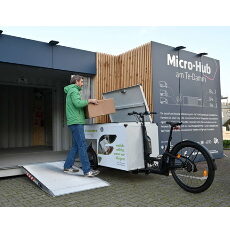
- Feasability study of urban freight transport, sustainable access to Reggio-Emilia historic centre The feasibility study of urban freight transport (UFT) sustainable access to Reggio-Emilia historic centre is a project contracted by Reggio Emilia Municipality. The project is underpinned by the results of the RESOLVE initiative (funded by Horizon 2020) that in the last three years, together with local administration surveys, has monitored average city centre accesses of both retailers and logistic operators. The study aims to understand the feasibility of urban consolidation centres (UCC) or micro consolidation centres (MCC) to favour last-mile sustainable operations throughout cargo bikes. This is gained by gathering a detailed level of information concerning local user necessities via online surveys and focus groups. Also, the analysis intends to evaluate the quality of infrastructure considering its compatibility with cargo bikes needs. Reggio-Emilia cyclelogistics feasibility study partly relies on local retailers and logistic operators who will be invited to join the Cyclelogistics Partnership. The joint venture is meant to define daily operative requirements as well as to form a permanent group of initiative forerunners and users. Such requirements will determine the characteristics of the consolidation centres in terms of dedicated structure (permanent, semi-permanent, temporary) and type of furniture/spaces that must consider the services offered and freights categories. The operative scheme would consist of the intermodal last-mile distribution obtained by the transhipment of parcels from heavier vehicles towards cargo bikes. Such a scheme would prevent or reduce the access of little optimised vehicles as well as polluting, harmful and space-consuming ones in the historic centre. Therefore, offering improved city centre attractivity without harming local supply needs, rather optimizing vehicles according to given spaces and offering more sustainable albeit efficient logistics operations.
- Sustainable Urban Mobility Plan (SUMP) of Ravenna (Italy) and sectorial mobility plans As a result of a tendering procedure, TRT Trasporti e Territorio, in association with META Mobilità Economia Territorio Ambiente and ITL Istituto sui Trasporti e la Logistica, has been selected by the City of Ravenna to prepare their Sustainable Urban Mobility Plan (SUMP) and the related sectorial mobility plans. Team’s activity is focussed on the preparation of the following documents, among other: Sustainable Urban Mobility Plan, which is articulated in several methodological steps related to: 1) monitoring and assessment of the current SUMP’s results; 2) background analysis of the mobility-related framework and its environmental, social and economic impact in Ravenna; 3) identification of the strategies for the construction of the SUMP scenarios; 4) design of detailed alternative scenarios for the SUMP; 5) evaluation procedure, implementing a ex ante transport model (VISUM). The environmental sustainability of the SUMP is verified through the application of the SEA procedure. Public Transport Plan, coherently developed with the SUMP, which includes a technical and economic feasibility study for the implementation of a low- or zero-emissions public transport system. General Urban Traffic Plan, prepared from objectives, strategies and measures previously defined in the selected short-term scenario of the SUMP. Urban Parking Plan, Functional Classification of the Road Network, Electric Mobility Plan, Road Safety Plan, Cycling Mobility Plan, Strategic document on urban logistics. The drafting of the Plans makes use of innovative methods for the quantification of Ravenna’s transport demand (for example, using data derived from the analysis of the cellular network), which are flanked by more traditional site surveys (vehicle counts, origin-destination surveys, counts on PT lines and at stops, etc.). Finally, all phases are accompanied by a vast communication and participation campaign, which sees the involvement of citizens and stakeholders through public meetings and online questionnaires.
- User-friendly information tool on urban and regional vehicle access regulation schemes UVAR-BOX is the EU project which has been established to tackle fragmented or unavailable information on up-to-date and relevant UVARs (Urban Vehicle Access Regulations) policies in European cities. The 24-month project successfully ended in 2023 and developed the Datex II standard for UVARs and a tool, the UVAR-BOX, to facilitate the input of UVAR data into the Datex II standard, which can be read automatically by navigation systems and mobile applications available to European drivers. UVAR policies pursue various objectives such as improving air quality, livability and reducing congestion. The project aimed to harmonize and disseminate information on UVAR policies in fleet management tools and navigation devices. Its widespread application and use will support both road users to plan journeys across the EU, and local authorities and Member States to set up standardized communication procedures in line with European regulations on the dissemination of mobility-related information (ITS directive and single digital gateway). TRT, as part of a large consortium, had the role of Italian Country Coach to support Italian public administrations in this digitization process. For more information Project brochure – Link Country Coaches web page – Website DATEX II: the standard for traffic and mobility information – Video
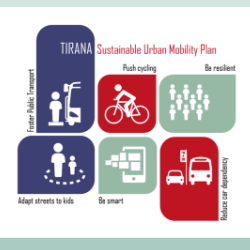
- The first Sustainable Urban Mobility Plan for the capital city of Tirana, Albania The study is part of a larger initiative called SUMSEEC II (Energy-efficient Urban Mobility in South-eastern European Countries), funded by the German Ministry for Economic Cooperation and implemented by GIZ. TRT supported the Municipality of Tirana in the development of their first SUMP, according to the latest European guidelines. The process started in October 2019, and was finalized in July 2020. The planning process pursued a strong collaboration with the different city departments and local stakeholders. Four large workshop were organized at relevant milestones, to guarantee the participatory approach that characterize a SUMP. The first part of the process was aimed at building a comprehensive analysis of the current city status based on previous studies, evidences collected on the field, discussions and feedbacks gathered from the stakeholders in dedicated workshop and surveys held until January 2020. The second part, focused on the drafting of the planning document itself, was accompanied by series of online focus groups and questionnaires that guaranteed and facilitated the participative process despite the lockdown in Tirana during the COVID-19 pandemic outbreak in Spring 2020. The proposed planning scenario is the result of the assessment of three alternative options by means of a Multi-Criteria Analysis. It includes a set of coordinated measures structured in six key strategies identified as founding policy pillars that respond to Tirana’s mobility challenges. For more information “SUMP for the City of Tirana”. Case study published on Eltis Platform
- HiReach, a project funded by the Horizon 2020 EU research program, addressed the specific mobility needs of segments of the population who are vulnerable to transport poverty and social exclusion Context and overall objectives of the project HiReach addressed the specific mobility needs of those segments of the population vulnerable to transport poverty and social exclusion such as people with temporarily or permanent reduced mobility, children, young and elderly people, women, migrants, ethnic minorities, low income, unemployed and people living in isolated and deprived areas. The project also analysed geographical and spatial elements affecting transport poverty to figure out inclusive mobility options that can properly work in urban-peripheral, peri-urban, rural, and remote or deprived territories. By combining different attributes of available transport concepts and bottom-up initiatives with smart operational schemes and IT applications, HiReach was aimed at the creation of viable business models for small scale, modular and easily replicable mobility services that can be provided at affordable prices or with minimum subsidies, targeting low-density and transport poor segments of the population. The HiReach mechanism for exploring, generating and testing inclusive mobility solutions was based on the creative work of startups and innovative entrepreneurs, but also on social innovation through the direct involvement of different social groups as co-owners of the proposed solutions. The overall ambition was to generate project results in strict linkage with developers and final users. Fieldwork activities have been conducted in 6 European study regions: Counties of Esslingen and Göppingen (Baden-Württemberg, DE), Naxos and Small Cyclades (GR), Inner Area Southern Salento (Puglia Region, IT), Guarda (PT), Buzau (RO), North and South-East Luxembourg. TRT was the project coordinator, leading a 9-partner international consortium. Summary of the project work The first analytical phase of the project explored travel behaviour and social habits of targeted vulnerable groups while assessing their travel demand and mobility needs. An extensive desk research across the EU Member States condensed available data, recent trends and scientific literature associated with transport poverty by targeting spatial specificities, mobility socio-economic landscape(s) as well as visible and hidden mobility needs and attitudes. This step required also the (re)-elaboration of the concept of transport poverty including a complex assessment of inequality and disadvantage, distinguishing between transportation-related disadvantage, social disadvantage and social exclusion. A cornerstone of the HiReach approach was the micro-analysis conducted on the field in six different countries. A set of 47 interviews with experts and stakeholders and the direct involvement of 166 vulnerable users through different focus group sessions served as validation of desk research activities and mobilization of local communities as co-owners of the solutions. In particular, TRT conducted fielwork activities in the Southern Salento area, focusing on the transport challenges of women and people with reduced mobility. A visual and descriptive representation of the identified needs and attitudes, featuring also mixed vulnerability characteristics and traits, was transposed into the elaboration of 6 Personas (see HiReach Insight Package). The following exploratory phase critically assessed the limits and drawbacks of the current supply of public […]
- CIVITAS REVEAL, Horizon 2020 project. Adding Urban Vehicle Access Regulations (UVARs) to the standard range of urban mobility transition approaches of cities across Europe ReVeAL is a “Research and Innovation Action” Horizon 2020 project financed by the European Commission. Its overreaching mission is to enable cities to optimise urban space and transport network usage through the selection as well as the implementation of new and integrated packages of UVAR (Urban Vehicle Access Regulation) measures. During the project, six pilot cities representing different sizes and challenges that are common to many other European cities, developed, implemented, tested and evaluated a set of UVAR measures. Cities were Helmond (NL), Jerusalem (IL), London (UK), Padova (IT), Vitoria-Gasteiz (ES) and Bielefeld (DE). The ReVeAL key output is a toolkit that help cities develop good practice UVARs, to help take urban road space from motorised vehicles and give them to people and sustainable mobility. The Toolkit consists of: A Decision Support Tool: 15 questions on the city’s goals and the area being considered for the UVAR, which gives a prioritisation of the building blocks (measures) that might be appropriate for your city. Fact Sheets on each Building Block: The factsheets include the definition of the building block, aspects relevant to timing, phasing and upscaling, time window options, complementary measure and enforcement options, equity issues and future considerations. There are also links to the other building blocks that might be relevant to use with each building block. Links to ReVeAL Guidance: The ReVeAL guidance covers aspects that are broader than a single building block such as the cross-cutting themes, and/or go into more detail on implementational issues than the factsheets allow. The different aspects are linked from the factsheets where relevant, as well as available in an online document. TRT was leading the “Monitoring and evaluation” work package with the aim of designing the evaluation framework, monitoring the implementation processes, as well as evaluating and assessing the impacts in the six pilot cities. TRT was also “pilot coordinators for the actions implemented in London and Padova. TRT experts were also involved development of the tool content and guidance, both as “transition area mentor” for mobility concepts and as “measure field leader” in the field of pricing measures. Finally, TRT was responsible for the technical development of the online Tool. For more information, Official website of the project. It contains an overview of the main elements of the project, the presentation of the 6 pilot cities and other useful resourches.